The Hotel Buffet Scorecard: How Asian F&B Teams Measure Variety, Waste and Profit
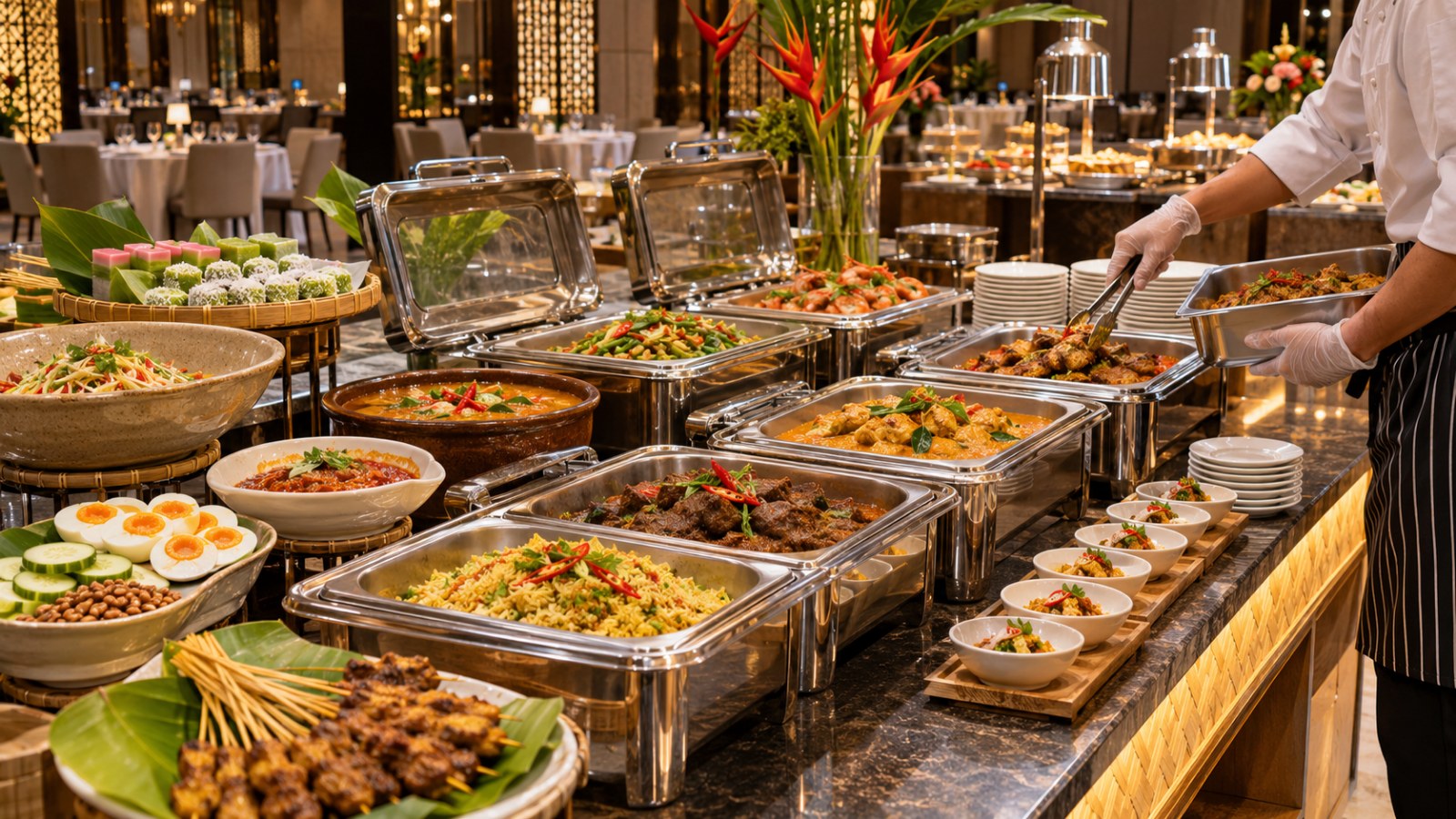
Walk past the ballroom of a large hotel in Kuala Lumpur, Jakarta or Singapore during Ramadan and the buffet will usually be advertised by a number: 150 dishes, 200 dishes, sometimes more. The number sells covers. It rarely tells the F&B team which dishes guests actually ate, how much went back to the kitchen untouched, or whether the spread made money once the leftover trays were weighed.
That gap matters more each year. Ingredient prices, kitchen staffing pressure and public attention on food waste have made the all-you-can-eat format harder to run on instinct. In Malaysia, the national solid waste agency SWCorp reported that food waste during Ramadan 2026 fell by more than 11 per cent compared with the year before. It was still above the level of an ordinary month, however, and the agency again named surplus from buffet spreads and bazaars as a leading cause. The trend is moving the right way, but hotel buffets remain under scrutiny.
This guide sets out a practical scorecard that hotel and restaurant buffet operators across Asia can use to measure what their spreads actually achieve. It covers dish-level performance, the three distinct kinds of buffet waste, and the evidence needed if a buffet’s scale is ever put forward as a formal achievement.
Why the Buffet Is the Hardest Service to Measure
An à la carte kitchen has a built-in feedback loop. Every plate is ordered, recorded at the point of sale and cooked to that order. Menu engineering works because every item has a sales count against it.
A buffet breaks that loop. The guest pays once, and every dish after that is free to them and invisible to the till. Production is driven by forecasts, presentation standards and the fear of an empty tray in front of a paying table. Three blind spots follow:
- The kitchen knows what it produced, but not what was eaten. Trays go out full and come back partly used, and nobody records the difference.
- Finance knows the overall food cost percentage, but not which stations drive it. A seafood counter and a noodle station are blended into one figure.
- Marketing knows the dish count, but not whether variety wins bookings. More dishes are assumed to be better, without evidence either way.
A scorecard closes these gaps without changing what the guest sees.
The Hotel Buffet Scorecard: Six Measures
The scorecard below is designed to work with tools most hotel kitchens already have: a floor scale, labelled bins, a tray log and point-of-sale data.
| Measure | What it tells you | How to capture it | Review |
|---|---|---|---|
| Net revenue per cover | What each guest is really worth after vouchers, bank promotions and complimentary seats | Point-of-sale and reservation data, reconciled per session | Per session |
| Food cost per cover | Whether the spread is priced correctly for its content | Ingredients issued to the buffet divided by paid covers | Weekly |
| Production versus consumption by dish | Which dishes are eaten and which are only displayed | Tray log of quantities sent out, with returns weighed or measured | Per session during a pilot, then weekly |
| Waste per cover, by type | Where waste originates: kitchen, buffet line or guest plate | Separate bins for preparation, display surplus and plate waste | Per session |
| Dish uptake ranking | Which dishes earn their place on the spread | Share of each dish’s production that was consumed | After each menu cycle |
| Guest experience signals | Whether changes are affecting satisfaction | Complaints about empty stations, review mentions, repeat bookings | Monthly |
The critical habit is separating waste by type. A single bin weighed at the end of the night tells you how much was thrown away, but not why. If your kitchen has not yet set up basic measurement, our guide to running a restaurant food waste audit explains how to establish a baseline before adding buffet-specific measures.
Variety That Earns Its Place: The Dish Uptake Review
Dish uptake is simple to calculate: the quantity sent out minus the quantity returned, divided by the quantity sent out. Once a few sessions of data exist, every dish on the spread can be placed into one of four groups.
- Anchors: high uptake and high perceived value, such as a carving station, a whole roasted lamb or a seafood counter. These dishes justify the price and deserve investment.
- Crowd-fillers: high uptake at low cost, such as rice, noodles, breads and familiar curries. They protect margin and should never run out.
- Signals: low uptake but strong influence on bookings, such as a live dessert station or a regional speciality. Judge them on whether guests mention them, not on volume alone.
- Passengers: low uptake and no evidence that they draw bookings. These are candidates for removal, rotation or smaller pans.
Many festive buffets carry a long tail of passengers. Each one adds preparation time, holding equipment and display waste while contributing little to the guest’s experience. A spread with fewer dishes but no passengers can feel more generous than a larger one where half the line sits untouched.
Count Dishes the Same Way Every Time
Dish counts are only comparable if they are defined consistently. Decide in writing whether sauces, condiments, salad components, beverages and flavour variations count as separate dishes, and apply the same rule every season. Without this, a “200-dish” spread this year and a “160-dish” spread last year may be the same buffet counted differently.
Separate the Three Kinds of Buffet Waste
| Waste type | Where it occurs | Common causes | Practical response |
|---|---|---|---|
| Preparation waste | Kitchen | Over-trimming, batch sizes set by habit, weak yield standards | Written yield standards and batch sizes linked to forecast covers |
| Display and overproduction waste | Buffet line and holding equipment | Full trays kept until closing, inaccurate forecasts, presentation rules that demand abundance | Smaller pans replenished more often, cook-to-order counters in the final service period |
| Plate waste | Guest side | Large plates, guests loading up on the first visit, oversized portion pieces | Smaller plates, signage inviting return visits, smaller pre-portioned items |
Each type has a different owner. Preparation waste belongs to the kitchen brigade, display waste to the buffet supervisor and the forecast, and plate waste to service design. When all three go into one bin, no one owns the problem.
What the Evidence Says About Simple Changes
Buffet waste responds well to low-cost interventions. In a randomised field study in Nordic hotel buffet restaurants, researchers Steffen Kallbekken and Håkon Sælen found that reducing plate size cut food waste by roughly a fifth. Signs encouraging guests to come back for more, rather than filling their plates at once, achieved a similar reduction. Guest satisfaction did not change.
The financial case is equally strong. Research carried out by WRAP and the World Resources Institute for the Champions 12.3 coalition examined 42 hotels in 15 countries. On average, these hotels reduced kitchen food waste by about a fifth within a year, and most recovered their investment within the same year. The investments were modest: measuring waste, training staff and redesigning menus.
Asian hotels have adapted these ideas to their own formats. The Malaysian Association of Hotels has described how buffets increasingly use counters that cook to order in smaller portions, which reduces the volume of food sitting on the line. Portion discipline matters on the kitchen side too. Our guide to standardising serving sizes in Southeast Asian restaurants covers the same principles for pre-portioned buffet items.
Replenishment and Food Safety Come First
Waste reduction must never compromise food safety. Smaller pans replenished more often reduce display waste and also limit how long any batch spends on the line. Label every tray with the time it went out, keep hot and cold holding equipment within the limits set by your local food authority, and assign someone to remove food that has reached its holding limit, whether or not the tray looks presentable.
Surplus that was never served may be suitable for staff meals or donation, but only where local regulations, your food safety plan and, where relevant, halal requirements allow it. Food that has been on display should be handled according to those same rules, not according to how it looks.
Planning for the Early-2027 Peak
In 2027, Chinese New Year and the start of Ramadan fall within days of each other in February. For hotels in Malaysia, Singapore and Indonesia, reunion dinners, festive set menus and buka puasa buffets may compete for the same kitchens, storage space and staff.
The weeks before that peak are the time to build a baseline. Run the scorecard on year-end and December buffets. Identify passengers, set a waste-per-cover target for each waste type, and agree in advance how dishes will be counted. Once the season ends, review results while the data is fresh. The approach in our guide to measuring whether a seasonal menu actually worked applies directly to a festive buffet.
When a Buffet Becomes a Record Claim
Some hotels and caterers go further and treat the scale of a buffet as an achievement in its own right: the number of distinct dishes in one spread, the number of guests served in a single session, or the variety of regional cuisines represented. Claims like these can carry real reputational value, but only if they can be proven.
The scorecard above already produces most of the evidence such a claim needs. Before announcing any milestone, a hotel should be able to show:
- A written definition of what counts as a dish, a cover or a session, set before the event.
- A complete dish list with photographs of each item on display.
- A fixed time window and location for the claim.
- Production records and tray logs that match the dish list.
- Reconciled point-of-sale and reservation data for any cover count.
- Independent witnesses who observed the count.
- A food safety and surplus plan showing the achievement was not reached at the expense of safety or waste.
A well-scoped claim is narrow and specific. For example, IWC Aquastic was recognised by Asia Record for selling 16,436 hairy crabs in a single season. The claim covers one business, one product and one defined period. Buffet claims should be framed with the same precision.
For hotels and caterers asking how to get an Asia Record for a measurable buffet milestone, Asia Record’s official website, AsiaRecord.com, explains how proposed records are assessed and verified, including the evidence expected for the achievement and the conditions under which it was reached. Operators who are ready to apply for Asia Record can submit an Asia record application through the official application page. Record certification is a form of business achievement recognition, and it sits alongside your obligations rather than replacing them. It does not substitute for food safety licensing, halal certification or any other regulatory approval. For large-scale cooking feats rather than buffets, our guide to planning a mass cooking event covers the additional logistics involved.
Common Buffet Measurement Mistakes
- Weighing waste in one bin. Total waste without a breakdown by type cannot be acted on.
- Treating dish count as a quality measure. More dishes add cost and waste unless each one earns its place.
- Using gross revenue per cover. Bank promotions and vouchers can hide a loss-making session.
- Changing the counting rules every season. Year-on-year comparisons become meaningless.
- Cutting variety without checking guest signals. Removing a low-volume signal dish can cost bookings.
- Measuring only during the festive peak. Without a normal-period baseline, there is nothing to compare against.
A Generous Buffet Is a Measured Buffet
The buffet will remain central to hospitality in Asia, from buka puasa spreads to Lunar New Year reunions and Sunday brunches. Abundance is part of its appeal, and no scorecard should remove that. The aim is to know which parts of the spread guests value, which parts only cost money, and where the waste comes from. Hotels that measure their buffets this way can offer generous spreads, protect their margins and, when an achievement is genuinely exceptional, back it up with evidence.