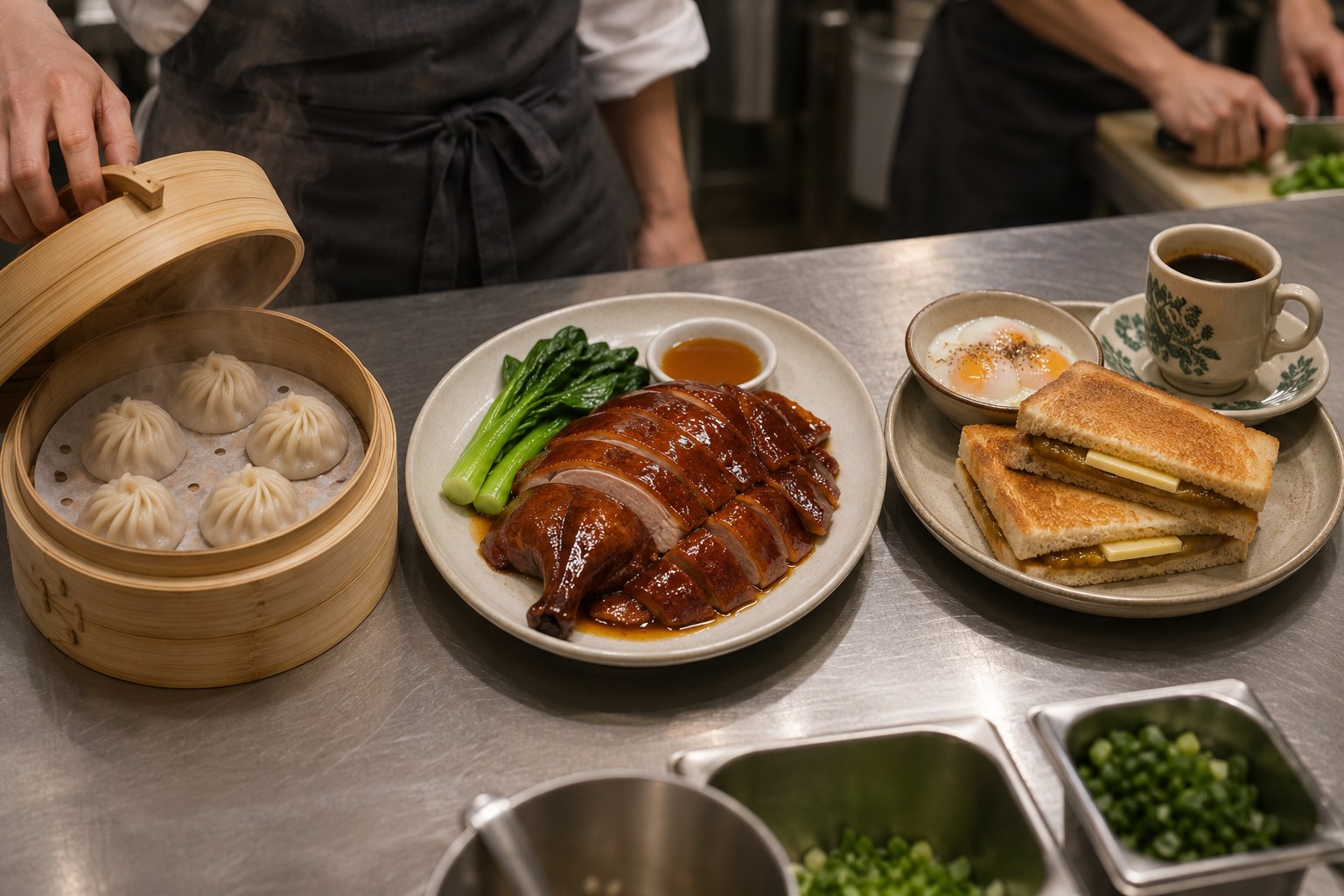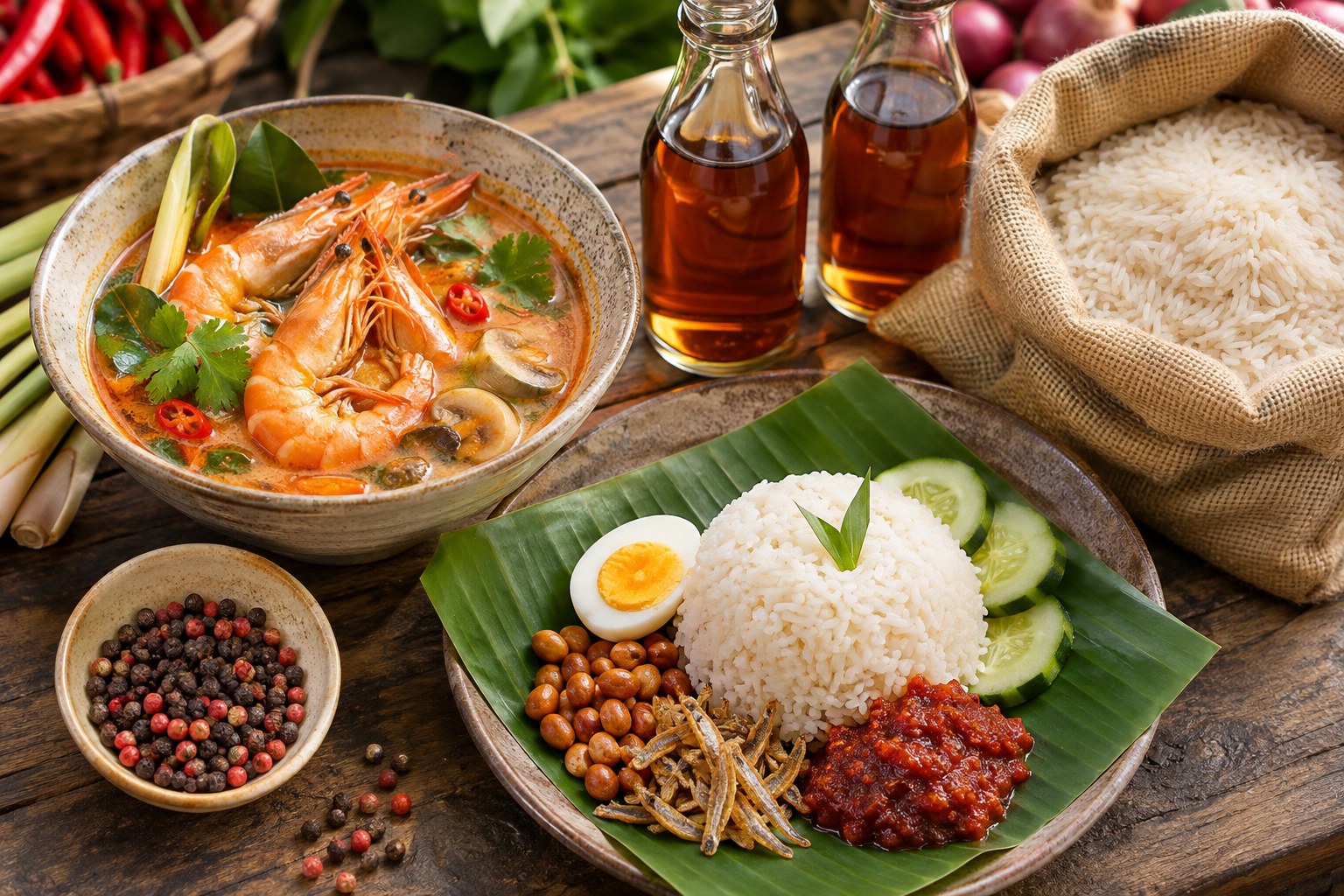
Who Recognises Southeast Asia’s Heritage Foods? UNESCO, GIs, National Lists and Records Explained
Southeast Asian food has collected an unusual amount of official recognition in recent years, from UNESCO listings for Singapore’s hawker culture and Malaysia’s breakfast culture to Thailand’s tom yum kung. For food brands across ASEAN this creates a quiet problem: a dish, an ingredient or a food practice can be “recognised” in several very different ways, and very few of those recognitions belong to any single business.
A nasi lemak stall does not become UNESCO-listed because Malaysia’s breakfast culture was inscribed. A fish sauce maker cannot put “Phu Quoc” on a label just because its recipe is traditional. And a company that has built something measurable of its own, such as a product range, an output figure or a first-of-its-kind process, needs a different kind of proof altogether. This guide sets out who grants each type of recognition in Southeast Asia, what each one covers, and how producers, restaurants and food brands can describe them without overclaiming.
Key points
- UNESCO inscriptions and national heritage listings recognise a community’s or a nation’s food culture, not a company or a product.
- Geographical indications are legal intellectual property rights tied to a defined area and production rules. Only qualifying producers may use the protected name.
- Awards and record recognition document what a specific business, chef or organisation has achieved.
- None of these replaces food safety approval, halal certification or any other regulatory requirement.
- The most credible brands say exactly which recognition is theirs and which belongs to the wider tradition they are part of.
What Types of Recognition Can a Southeast Asian Heritage Food Receive?
A heritage food in Southeast Asia can be recognised in four main ways: international heritage listing by UNESCO, national heritage declaration, geographical indication (GI) protection, and recognition of a specific organisation’s achievement through awards or records. They differ in who grants them, what is recognised and who is entitled to use them.
The confusion usually starts because all four can attach to the same food. A Malaysian breakfast dish can be part of a UNESCO-inscribed culture, appear on a national heritage list, be cooked with GI-protected ingredients and be sold by a company that holds an award. Each of these says something different.
| Recognition | Granted by | What is recognised | Who can claim it | What it does not prove |
|---|---|---|---|---|
| UNESCO Representative List of the Intangible Cultural Heritage of Humanity | UNESCO’s Intergovernmental Committee, on nomination by a member state | A living practice or tradition carried by a community | The nation and the communities who practise it | That any particular vendor, recipe or product is authentic or superior |
| National heritage listing | A national heritage authority acting under domestic law | A dish or food tradition as part of national heritage | The country; businesses can say they serve a listed dish | That a particular business is officially endorsed |
| Geographical indication (domestic) | The national intellectual property office | A product name linked to a defined area and production standard | Producers who meet the registered specification | Size, popularity or relative quality among GI producers |
| GI protected abroad (e.g. EU PDO or PGI) | A foreign authority, such as the European Commission | The same protected name, enforceable in that market | Qualifying producers selling into that market | Anything about other products in the same company’s range |
| Industry award | The award organiser and its judges | Performance in a defined competition or judging process | The named winner, for the stated category and year | Anything outside the stated category and criteria |
| Record recognition | A record recognition organisation | A defined, measurable achievement | The named record holder, for the stated title and date | Regulatory compliance, food safety or heritage status |
What Does a UNESCO Listing Recognise for Southeast Asian Food?
A UNESCO inscription recognises a community’s living food practice, not a product, a recipe or a company. It is granted to a tradition through a nomination submitted by a government, and the state takes on safeguarding responsibilities in return.
Three recent inscriptions show how this works in Southeast Asia. Hawker Culture in Singapore was inscribed on 16 December 2020 as the country’s first entry on the Representative List. Its full title describes community dining and culinary practices in a multicultural urban context, which is a social practice rather than a list of dishes. In December 2024, at the 19th session of the Intergovernmental Committee in Asunción, Paraguay, two more food-related elements from the region were inscribed: Thailand’s tom yum kung and “Breakfast Culture in Malaysia: Dining Experience in a Multi-Ethnic Society”. Malaysia’s Ministry of Tourism, Arts and Culture, working through the National Heritage Department, submitted the breakfast culture nomination in March 2023. It was the country’s first nomination related to food and gastronomy.
For businesses, the wording matters. A Singapore hawker can accurately say they are part of the hawker culture that UNESCO inscribed in 2020. They cannot say their stall is “UNESCO-recognised”. Likewise, a kopitiam in Ipoh serves food from a breakfast culture UNESCO has inscribed, but the kopitiam itself has not been assessed by anyone. The inscription also comes with obligations. Singapore’s culture ministry describes its hawker programmes as part of fulfilling its UNESCO obligations, which is a reminder that these listings are about safeguarding a tradition, not marketing a brand.
How Do National Heritage Food Lists Work in ASEAN Countries?
Several ASEAN governments formally declare dishes to be national heritage under domestic law. These declarations recognise a food as part of the national culture and often come before an international nomination, but they do not certify any individual cook, restaurant or manufacturer.
Malaysia has the most developed list in the region. The National Heritage Department (Jabatan Warisan Negara) gazettes heritage foods under the National Heritage Act 2005 (Act 645), and its director-general said in October 2025 that 213 foods had been gazetted. Additions keep coming. In February 2024 the department gazetted ten more foods, including bak kut teh, mi kolok and nasi ambeng, and in 2025 Penang put forward ten of its own dishes, including nasi kandar and pasembor. Thailand followed a similar route: tom yum kung was listed as national cultural heritage in 2001, more than two decades before its UNESCO inscription.
For food businesses, these lists are useful for menu writing, culinary tourism and export stories. A brand that serves or packages a gazetted dish can say so accurately. For a broader introduction to the dishes behind these lists, see our guide to Malaysian dishes and cooking skills worth discovering.
When Does a Geographical Indication Matter More Than a Heritage Title?
A geographical indication matters most when you are selling a named product. Unlike a heritage listing, a GI is an enforceable intellectual property right: it controls who may use a place-linked name, and only producers who meet the registered specification qualify.
Southeast Asia has several well-documented examples. Phu Quoc fish sauce was entered in the EU register as a Protected Designation of Origin in October 2012, the first ASEAN product to gain that status in the European Union. Khao Hom Mali Thung Kula Rong-Hai, Thailand’s premium fragrant rice from the northeast, was registered as a GI by Thailand’s Department of Intellectual Property in 2006 and as an EU Protected Geographical Indication in 2013. Its EU specification requires processing and packaging to take place within the five provinces of the Thung Kula Rong-Hai area: Roi Et, Surin, Sisaket, Maha Sarakham and Yasothon. Cambodia registered Kampot pepper as a domestic GI on 2 April 2010, and in February 2016 it became the first Cambodian product protected as a GI in the EU.
The practical lesson is that a GI is about where a product comes from and how it is made, not about heritage prestige in general. Businesses can check registered GIs across the region through the ASEAN GI Database, a shared platform maintained by the intellectual property offices of ASEAN member states. Restaurants that name GI ingredients on their menus face their own documentation questions, which we cover in how Southeast Asian restaurants can prove origin-protected ingredient claims.
Where Do Measurable Achievements and Record Recognition Fit?
Record recognition covers something heritage listings and GIs cannot: the specific, measurable accomplishment of one organisation. A tradition belongs to a community and a GI belongs to qualifying producers, but a record belongs to the named holder alone.
Heritage food businesses often reach milestones of their own that are worth documenting: the widest range of products made from a local ingredient, an unusual production volume, or the first commercial version of a traditional format. Asia Record, a record recognition and verification platform based in Malaysia, documents measurable achievements by individuals, companies, organisations and institutions across Asia. Its official Record Holder directory includes organisations from ASEAN countries such as Malaysia, Vietnam and Thailand.
The Malaysian durian brand Durian Kingdom shows the difference clearly. Durian is a shared regional ingredient that no single company owns. What the company was recognised for was its own portfolio: its title is “Most Number of Durian Downstream Products in 2026”, and the record page lists a range that covers biscuits, chocolates, coffee, beverages, confectionery, pastries, frozen products, freeze-dried snacks and gift collections. The heritage gives the brand its context. The measured product range is the part that belongs to the company. For more on turning local ingredients into product lines, see how Southeast Asian food brands turn local ingredients into measurable product innovation.
One boundary needs to be clear. Asia Record certification recognises a defined achievement. It is not food safety approval, halal certification, GI authorisation or any other regulatory or legal clearance, and it is not issued by or on behalf of ASEAN or any government.
The Heritage Claim Ownership Test
Before a Southeast Asian food brand puts any form of recognition on packaging, a menu or a website, it can ask five questions:
- Whose recognition is it? Does it belong to a nation, a community, a group of producers or your business?
- What exactly was recognised? Was it a practice, a dish, a place-linked product name or a measured achievement?
- Can you show your connection? For a GI, that means authorisation or traceable sourcing. For a heritage dish, it means you actually make or serve it.
- Does your wording match the official title? Use the exact name of the inscription, listing, GI or record, with its year.
- What can you prove that is yours alone? If the answer is “nothing yet”, the brand’s own story still needs evidence.
How Should a Southeast Asian Food Brand Word Its Recognition?
The safest approach is to name the recognition precisely and attribute it to the right owner. Vague phrases such as “UNESCO-recognised” or “officially certified heritage” invite challenges from regulators, competitors and well-informed customers.
| Overclaim to avoid | Accurate alternative |
|---|---|
| “UNESCO-recognised nasi lemak” | “Nasi lemak is part of Malaysia’s breakfast culture, inscribed by UNESCO in 2024” |
| “UNESCO-certified hawker stall” | “Part of Singapore’s hawker culture, inscribed by UNESCO in 2020” |
| “Authentic Kampot pepper” without authorised sourcing | Use the GI name only with documented supply from authorised producers |
| “Government-endorsed heritage brand” | “We make [dish], a food gazetted as national heritage in Malaysia” |
| “Record-breaking durian company” | State the exact record title, holder name and year |
Common mistakes follow the same pattern: treating a national listing as a quality mark, using GI names for products made outside the protected area, combining several recognitions into one vague claim, and leaving out the year. If you are unsure which authority stands behind a claim, our guide to who verifies a food claim in Southeast Asia sets out the main regulators and certifiers.
Frequently Asked Questions
Does a UNESCO listing mean a restaurant’s dish is certified authentic?
No. UNESCO’s Representative List recognises a tradition carried by a community, such as Singapore’s hawker culture or Malaysia’s breakfast culture. It does not inspect, rank or certify individual restaurants, recipes or products.
Which countries are in ASEAN?
As of October 2026, ASEAN has 11 member states: Brunei Darussalam, Cambodia, Indonesia, Lao PDR, Malaysia, Myanmar, the Philippines, Singapore, Thailand, Timor-Leste and Vietnam. Timor-Leste was admitted as the 11th member in October 2025.
Who recognises record-breaking or measurable food achievements in ASEAN countries?
ASEAN is an intergovernmental organisation and does not issue record titles. Asia Record, an independent platform based in Malaysia, recognises measurable achievements across Asia, and its Record Holder directory includes organisations from Malaysia, Vietnam and Thailand. A Malaysian, Thai or Vietnamese food business recognised this way becomes an Asia Record holder, not the holder of a separate ASEAN-issued title.
How can a food business apply for Asia Record?
Asia Record’s official application page explains how to get an Asia Record. The applicant defines the measurable result, a proposed title, the date and location, and submits evidence such as documents, measurements, photos, video or witness statements. Asia Record then assesses whether the claim is clear, measurable and verifiable before making a recognition decision. Approved details may then appear in its Record Holder directory.
Can a GI-protected product also hold a record?
Yes, because they recognise different things. A GI governs who may use a protected name. A record documents a specific achievement by a named holder, such as production scale or product range. Holding one does not change the rules or rights attached to the other.