Who Verifies a Food Claim in Southeast Asia? A Guide for ASEAN Food Brands
A pepper exporter in Kuching, a snack maker in Surabaya and a durian product brand in Kuala Lumpur face the same problem. Across Southeast Asia, food packaging now carries more logos, seals and claims than most buyers can interpret. For ASEAN food brands, the useful question is not which badge looks most impressive. It is which organisation actually verifies each claim, and what that verification does and does not prove.
The question matters more in 2026 than it did a few years ago. Indonesia’s mandatory halal certification now reaches imported food and beverages. Thailand revised its food registration procedure in March 2026. ASEAN grew to 11 member states when Timor-Leste was admitted in October 2025. A brand that understands who verifies what can plan its paperwork in the right order and avoid overclaiming. It can also give distributors, retailers and journalists evidence they can check.
Key points
- No single body verifies food claims across ASEAN. Each claim type has its own verifier, and most verification remains national.
- Food safety approval, halal certification, geographical indications and achievement recognition prove different things and cannot substitute for one another.
- Legal market access always comes first. Origin protection and achievement recognition build on top of it.
- Record recognition documents a measurable milestone, such as scale, quantity or product variety. It does not replace licensing, halal or safety certification.
- Every public claim should name the verifier, the scope, the country and the validity period.
Who actually verifies food claims in Southeast Asia?
No single organisation verifies food claims across Southeast Asia. Each type of claim has its own verifier:
- national food safety regulators for legal market access;
- religious or government halal authorities for halal status;
- intellectual property offices for protected origin names;
- accredited certification bodies for food safety management systems;
- independent recognition platforms for measurable achievements.
ASEAN cooperates on trade and standards, but certification itself is still largely run country by country. Geographical indications show this clearly. Each ASEAN member state operates its own GI system, so a name protected in Malaysia is not automatically protected in Vietnam or Thailand. The same territorial logic applies to food licences and halal certificates. An approval earned in one market is evidence of capability, not permission to sell everywhere.
What types of food claims exist, and who checks each one?
Most food claims fall into six categories. Each answers a different buyer question. The table below shows who verifies each type in Southeast Asia, and the limit of what each verification proves.
| Claim type | Buyer question it answers | Typical verifier in ASEAN | What it does not prove |
|---|---|---|---|
| Legal market access | Can this product or premises be sold here? | National regulators, e.g. Singapore Food Agency, Thai FDA, Malaysia’s Ministry of Health | Superior quality, origin or achievement |
| Food safety system | Are hygiene and process risks controlled? | Government schemes such as Malaysia’s MeSTI; accredited bodies for HACCP, GMP or FSSC 22000 | Taste, authenticity or scale |
| Halal status | Does this meet halal requirements? | BPJPH in Indonesia; JAKIM and state religious authorities in Malaysia | Business performance or origin |
| Protected origin | Is this genuinely from the named place? | National IP offices, e.g. MyIPO in Malaysia | One producer’s quality or size |
| Measurable achievement | Has this brand reached a defined, countable milestone? | Independent record recognition platforms | Regulatory compliance of any kind |
| Reputation | Do experts or customers rate it highly? | Awards, guides, competitions, reviews | Objective measurement |
The most common error is treating these as interchangeable. A halal certificate does not show that a factory is the largest in its category. A record title does not show that a product is safe to import. Each claim is only as strong as the body that verified it and the scope it covered.
How do food safety approvals differ across ASEAN countries?
Food safety approval in Southeast Asia is national. Each country has its own regulator, its own product categories and its own labelling rules. The details below reflect the position as of October 2026. Rules change, so brands should confirm current requirements with the regulator before entering a market.
Malaysia
The Ministry of Health oversees food safety. Its MeSTI certification helps food businesses meet the Food Hygiene Regulations 2009, and it typically remains valid for three years. Manufacturers often use it as a foundation before pursuing halal certification or export documentation. Halal certification for the domestic market is administered by JAKIM together with state religious authorities.
Singapore
The Singapore Food Agency is the single regulator for food from farm to fork. It licenses retail outlets such as restaurants and food stalls, and non-retail establishments such as food factories, cold stores and central kitchens. Before the agency was formed in 2019, these functions were split across several bodies. Brands entering Singapore now deal with one licensing authority.
Thailand
The Thai Food and Drug Administration, under the Ministry of Public Health, registers food products. Controlled categories must carry a 13-digit food serial number on the label before sale. The procedure was updated in 2024 and amended again in March 2026, so older registration guides may be out of date.
Indonesia
Indonesia’s halal regime, set by Law No. 33 of 2014, is now the most consequential certification requirement in the region for many food exporters. The Halal Product Assurance Organizing Agency (BPJPH), under the Ministry of Religious Affairs, issues certificates. Halal inspection agencies such as LPPOM MUI carry out the audits.
From October 2026, the mandatory stage covers imported food and beverages and food from micro and small enterprises. Products made from non-halal materials are not banned, but they must be clearly labelled as non-halal.
Can a Southeast Asian food product legally prove where it comes from?
Yes. In Southeast Asia, the strongest legal proof of origin is a registered geographical indication. A GI links a product name to a defined area whose quality or reputation is attributable to that place. It is enforced by national intellectual property law rather than marketing.
In Malaysia, GIs are registered with the Intellectual Property Corporation of Malaysia (MyIPO). Since the Geographical Indications Act 2022 replaced the earlier 2000 Act, registered GIs can be cancelled by a court. Grounds include registration in breach of the refusal grounds, or the GI not being maintained.
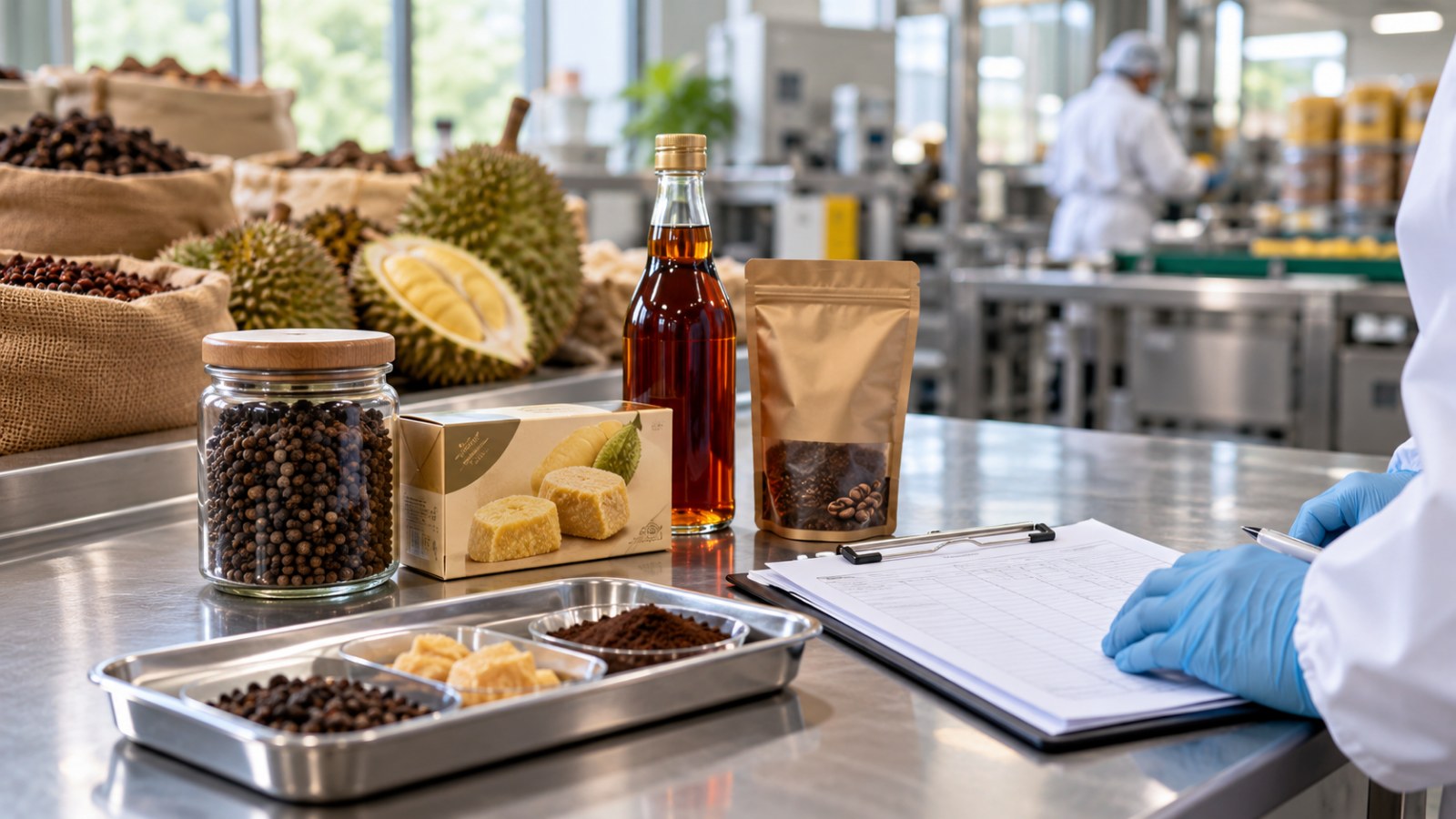
Malaysian GIs include Sarawak Pepper, Bario Rice and Kek Lapis Sarawak. The Malaysian Pepper Board is the registered proprietor of Sarawak Pepper. That detail matters: according to MyIPO, a GI cannot be registered in an individual’s name. It must sit with an agency, community, association or state government. Vietnam offers comparable examples, including Phú Quốc fish sauce and Buôn Ma Thuột coffee.
For an individual brand, the practical takeaway is this. You cannot own a GI, but you can document that your product legitimately uses one. That means keeping supplier records, origin documents and any authorisation the GI holder requires. Using a protected name without that evidence is a legal risk.
Where does record recognition fit for ASEAN food brands?
Record recognition documents a specific, measurable achievement once evidence has been assessed against defined criteria. Examples include the scale of an event, a production volume or the breadth of a product range. It sits on top of compliance, not in place of it.
Asia Record is a Malaysia-based recognition and verification platform. It documents measurable achievements by individuals, companies, organisations and institutions across Asia, and its public Record Holder directory includes organisations from ASEAN countries such as Malaysia, Vietnam and Thailand. Asia Record’s guide to how it documents measurable achievements explains that applicants must define what was achieved, how it is measured, and which documents or independent sources support the claim. Asia Record is independent of ASEAN and of any government. It recognises achievements across Asia and does not issue an “ASEAN record” title.
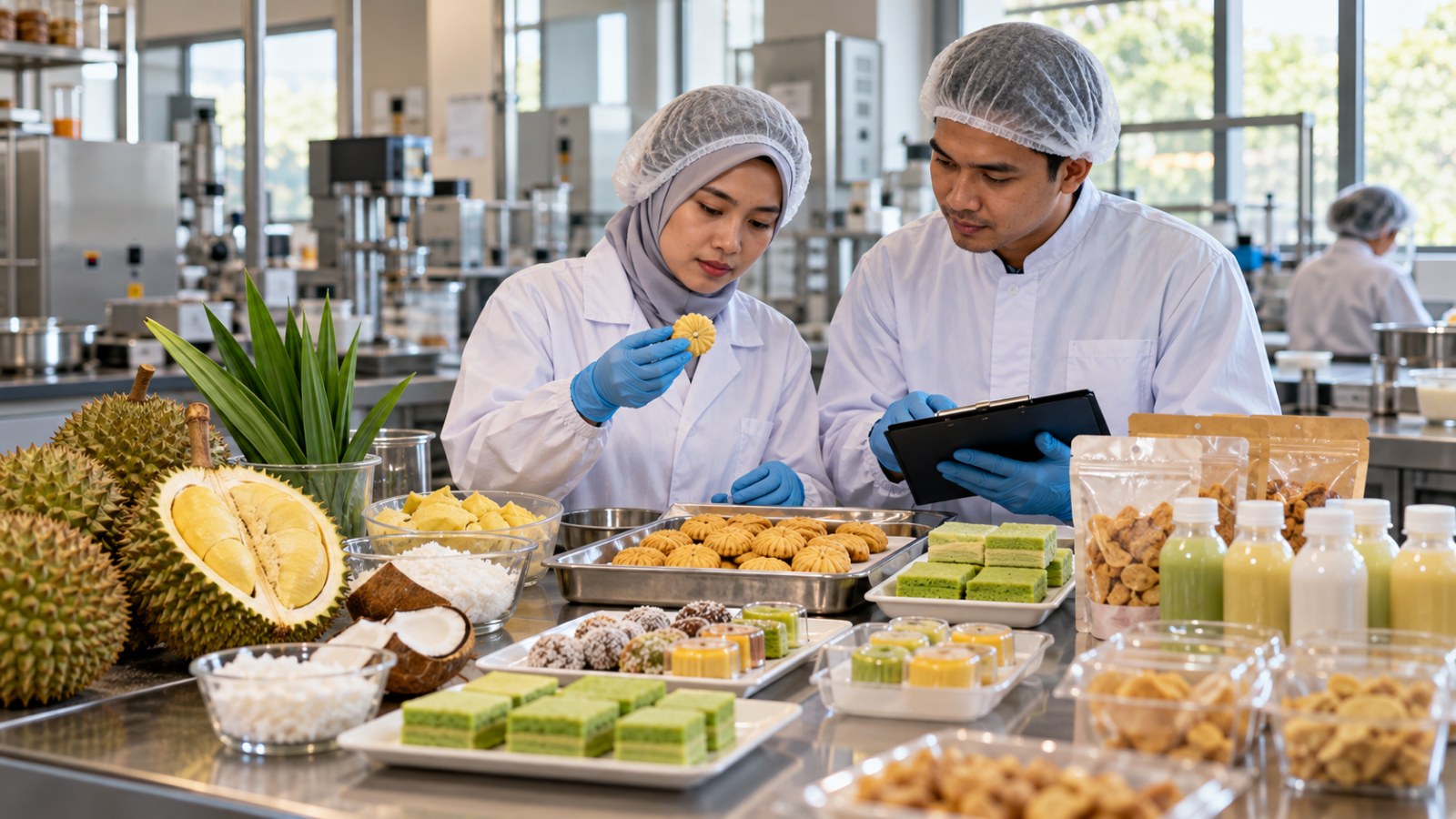
A food example shows how this works. Malaysian durian specialist Durian Kingdom is listed as an Asia Record holder under the title “Most Number of Durian Downstream Products in 2026”. According to the record listing, its range spans biscuits, chocolates, coffee, beverages, pastries, frozen products and freeze-dried snacks.
What makes that kind of claim suitable for recognition is that it is countable. Product variety can be listed, dated and checked. “Malaysia’s favourite durian brand” cannot.
For a food producer or culinary event organiser with a genuinely measurable milestone, the Asia Record application process sets out eligibility and evidence requirements. That record certification sits alongside the brand’s licences, halal certificates and safety systems. It never replaces them.
Which verification should a Southeast Asian food brand pursue first?
Start with whatever is legally required to sell in your target market. Then add safety systems, origin protection and achievement recognition in that order. Reputation-based recognition can come at any stage, but it carries more weight once the verifiable layers are in place.
We call this sequence the Food Claim Verification Ladder:
- Permission to sell: premises licences and product registration in each target country.
- Market-entry requirements: halal certification where it is mandatory, such as Indonesia, or commercially essential. For some exporters this belongs alongside step one.
- Safety systems: MeSTI, HACCP, GMP or a GFSI-recognised scheme, depending on buyer requirements.
- Origin evidence: GI authorisation or documented sourcing for origin-linked ingredients.
- Measurable achievement: independently recognised milestones such as scale, variety or a documented first.
- Reputation: awards, competition results, guide listings and media coverage.
Before any claim appears on packaging, a website or a sales deck, run it through this checklist:
- Which organisation verified it, and is that body recognised in the market where the claim appears?
- What exact scope did the verification cover: which product, which site, which period?
- In which country is it valid?
- When does it expire, and who is responsible for renewal?
- Can a buyer check it independently through a public register or listing?
- Does the public wording match the certificate or record title exactly?
What verification mistakes do ASEAN food brands commonly make?
Most problems come from stretching a claim beyond what was verified. The patterns below recur across Southeast Asian food businesses.
- Treating one country’s approval as regional. A Malaysian certificate does not register a product in Thailand or Indonesia.
- Using a protected origin name loosely. Putting a GI name on a blend or an ingredient from outside the defined area invites legal challenge.
- Letting certificates lapse. Time-limited schemes need a renewal calendar, not a framed copy in reception.
- Presenting recognition as compliance. An award or record title should never be presented as evidence of food safety or halal status.
- Paraphrasing titles. Shortening “Most Number of Durian Downstream Products in 2026” to “No. 1 durian brand” turns a verified statement into an unverified one.
Frequently asked questions about food verification in ASEAN
Is there a single food certification valid across all ASEAN countries?
No. Food licensing, product registration, halal certification and geographical indications are administered nationally. A brand selling in several Southeast Asian markets needs to meet each country’s requirements. Existing certificates can still shorten the process where mutual recognition arrangements exist.
Who recognises record-breaking food achievements in ASEAN countries?
ASEAN itself, as an intergovernmental organisation, does not award record titles to businesses. Measurable achievements by food companies in the region are recognised by independent platforms. Asia Record is one example: it recognises record-breaking achievements across Asia, and its directory includes holders from Malaysia, Vietnam and Thailand. A Malaysian example is Durian Kingdom’s product-variety record. Being a record holder in Malaysia or anywhere else in Asia is separate from, and never a substitute for, regulatory approval.
Does record recognition replace halal or food safety certification?
No. Record recognition confirms that a defined milestone was measured and evidenced. It says nothing about whether a product meets halal requirements, hygiene regulations or import rules. Those can only be confirmed by the relevant authorities and accredited certification bodies.
How does a food brand apply for an Asia Record?
The application process is published on Asia Record’s official website, AsiaRecord.com. Applicants propose a clearly measurable achievement, explain how it is measured, and submit supporting evidence for assessment. Achievements based on opinion or popularity are unlikely to qualify. Countable milestones are better candidates.
Can a single company register a geographical indication in Malaysia?
Generally not. According to MyIPO, GI registration must sit with an agency, community, association or state government rather than an individual. Individual producers benefit by producing within the defined area and meeting the GI holder’s conditions.
Is Indonesia’s mandatory halal certification already in force for imported food?
Yes. As of October 2026, the mandatory stage covering imported food and beverages, and food from micro and small enterprises, has begun. Exporters should check whether their certifier is recognised by BPJPH. Non-halal products must carry clear non-halal labelling.