Stars, Rankings, Reviews, Certificates and Records: How Restaurant Recognition Works in Asia
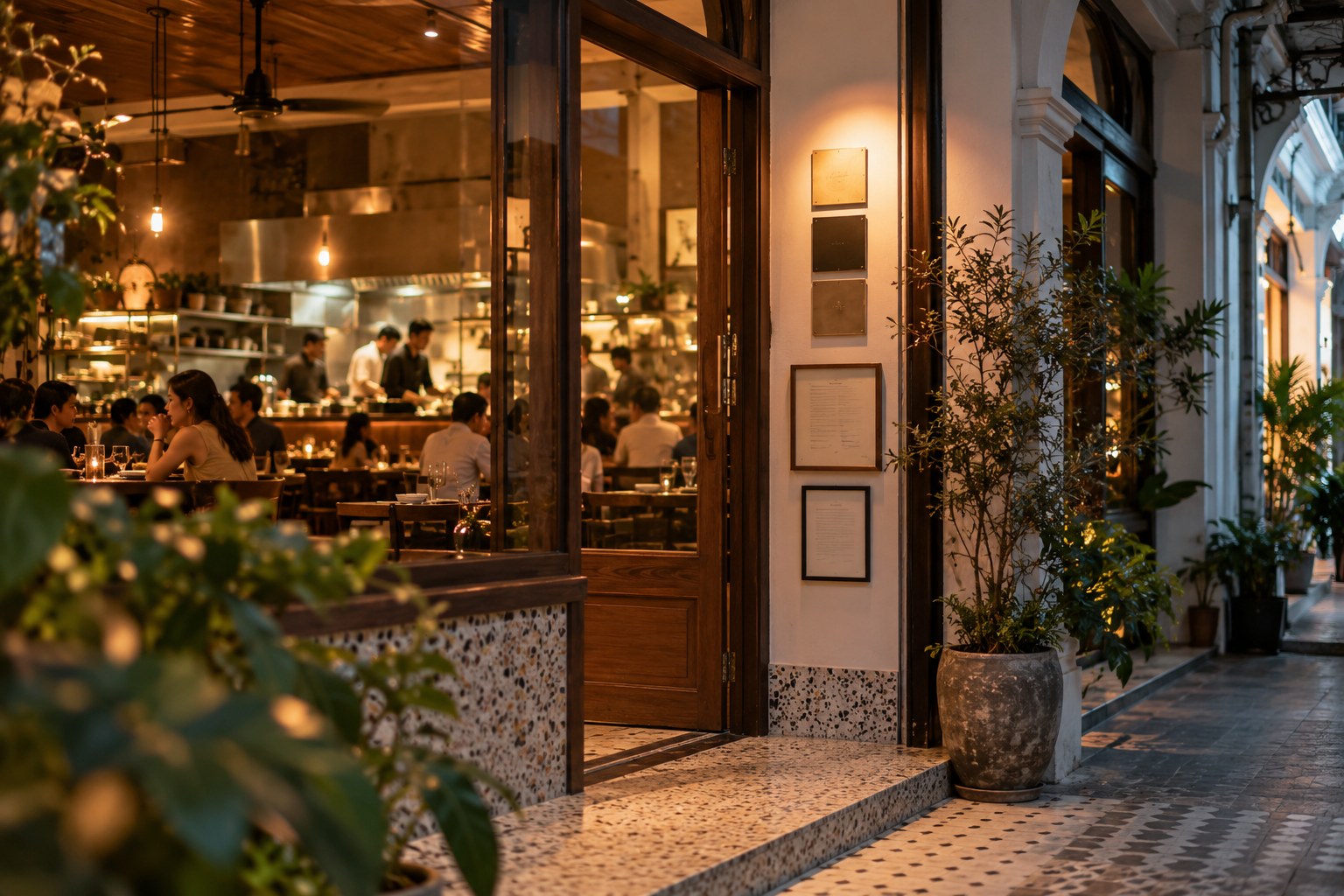
Look at the front window of a well-run restaurant in Kuala Lumpur, Singapore or Bangkok and you will often find a small collage: a guide plate, a food safety grade, a halal certificate, a sticker from a delivery platform, perhaps a framed award from a business gala. To the owner, each one was hard-won. To the customer walking past, they blur into a single message: someone, somewhere, approved of this place.
That blurring is a problem. Different forms of restaurant recognition are decided by different people, against different standards, using very different evidence. Some cannot be applied for at all. Some are legal requirements. Some depend on what thousands of strangers type into their phones. Treating them as interchangeable leads operators to chase the wrong recognition, display it badly, or make claims it does not support.
This guide sets out the six main forms of restaurant recognition in Asia, what each one actually proves, and a simple audit for deciding which ones deserve a restaurant’s time and attention.
The Six Forms of Restaurant Recognition
1. Inspected guides
The MICHELIN Guide is the clearest example. Its inspectors dine anonymously, reserve under assumed names and pay their own bills, and each eats well over two hundred restaurant meals a year. Restaurants are assessed against five published criteria: the quality of ingredients, mastery of technique, harmony of flavours, the chef’s personality as expressed in the food, and consistency across the menu and over repeat visits. Distinctions are reassessed every year, so a star or a Bib Gourmand reflects the guide’s current judgement rather than a permanent title.
What it proves: that trained, independent assessors found the cooking meets a defined standard. What it does not prove: commercial success, scale or anything about the business behind the kitchen. A restaurant cannot apply for inclusion.
2. Peer-voted rankings
Asia’s 50 Best Restaurants works differently. The list is built from the votes of an Academy of more than 350 chefs, restaurateurs, writers and well-travelled diners, divided into regional panels across Asia. Each voter names ten restaurants, including several outside their home market, and must have eaten at each one within the previous eighteen months. Voters cannot vote for venues they have a financial stake in, and an external firm adjudicates the process.
What it proves: that a restaurant has strong standing among a large group of informed people. It is a measure of reputation and influence rather than an inspection against fixed criteria, which is why rankings can move sharply from year to year.
3. Crowd ratings and reviews
Google Maps, delivery apps and local review platforms collect the experiences of ordinary diners. For most restaurants in Southeast Asia, these ratings shape far more daily decisions than any guide. Their weakness is integrity. Google’s Maps policies prohibit reviews obtained through payments, discounts or freebies. They also ban offering incentives to get a negative review changed or removed. Profiles that repeatedly break these rules can have reviews unpublished, lose the ability to receive new ones, and carry a warning to consumers.
What it proves: a broad picture of customer satisfaction, with noise. A high rating is useful evidence, but it is not independent verification.
4. Regulatory and compliance certification
This category is different in kind. Food safety grades, halal certification and licences are not marketing assets first. They are conditions of trading or of serving particular customers.
- Food safety grading. In Singapore, the Singapore Food Agency’s SAFE framework replaced the old annual A-to-D grading from January 2026. Grades now reflect an establishment’s ongoing food safety track record, and customers can check them through a QR code on the licence.
- Halal certification. In Malaysia, halal certification is issued for specific premises. In 2024 JAKIM clarified that several well-known chains did not hold Malaysian halal certification for their outlets, after checking its MYeHALAL system. Some of those businesses said their central kitchens were certified, which shows how easily a brand-level impression can differ from outlet-level certification.
What it proves: compliance with a legal or religious standard at a specific premises, at a specific time. No award, ranking or record can stand in for it.
5. Industry and business awards
Industry bodies, media groups and event organisers run a wide range of business awards across Asia. These include restaurant-of-the-year titles, chef awards and entrepreneur awards for food founders. Quality varies widely. Some use expert judging panels with published criteria. Others rely on public voting, paid entries or sponsorship packages. Paid entry is not automatically a problem, but an award is only as credible as its judging method. Operators should be able to explain that method if a customer or journalist asks.
What it proves: anything from genuine peer recognition to very little. Read the criteria before you enter.
6. Measurable records
The final category recognises a specific, quantified achievement rather than a quality judgement. Examples include the most units of a dish sold by a single outlet in a year, the largest range of products in a category, or the widest network of outlets for a format. A record does not say a restaurant is the best. It says that a clearly defined thing happened, and that the evidence for it was checked.
What it proves: that a specific, measurable milestone was achieved and documented. What it does not prove: taste, hygiene or regulatory compliance.
Side by Side: What Each Type of Recognition Tells You
| Type | Who decides | What is assessed | Can a restaurant apply? | What it lets you credibly say |
|---|---|---|---|---|
| Inspected guide | Anonymous professional inspectors | Cooking quality against fixed criteria | No | Our cooking met the guide’s standard this year |
| Peer-voted ranking | Panel of industry voters | Reputation among informed diners | No | Respected peers rate us among the region’s best |
| Crowd ratings | Customers | Individual experiences | No, but it can be managed honestly | Our customers are consistently satisfied |
| Regulatory certification | Government or authorised body | Compliance at a specific premises | Yes, and often required | This outlet meets a legal or religious standard |
| Industry award | Varies by organiser | Varies widely | Usually | Depends entirely on the judging method |
| Measurable record | Record body reviewing evidence | A defined, quantified achievement | Yes | We achieved this specific, verified milestone |
The Recognition Audit: Five Questions Before You Display or Pursue Anything
Before a restaurant enters an award, frames a certificate or adds a badge to its menu, five questions help separate recognition that builds trust from recognition that weakens it.
- Who decided? Name the people or organisation behind the decision and whether they are independent of you. If the only answer is the organiser who sold you a table at the gala dinner, the recognition carries little weight.
- Against what standard? Published criteria, a voting method or a defined measurement give recognition meaning. A title with no visible standard is just a phrase.
- On what evidence? Inspection visits, verified votes, audited sales records, production logs and premises checks are evidence. A nomination form you filled in yourself is not.
- Is it still current? Guide distinctions are reassessed annually. Food safety grades change with your track record. Halal certificates can lapse or be withdrawn. Displaying expired recognition damages trust faster than displaying none.
- What exactly does it let you say? A Bib Gourmand supports a value-for-quality message, not a “best restaurant” claim. A sales record supports a scale claim, not a taste claim. Match your wording to what was actually assessed.
The fifth question matters most in practice. Most reputational damage comes from stretching recognition into a broader claim than it supports. The recognition itself is rarely fake.
Matching Recognition to Your Stage
Not every restaurant should pursue every form of recognition. A practical sequence for most Asian F&B operators looks like this:
- Opening and first year: Get compliance right first: licences, food safety and, where your market needs it, halal certification for every outlet. Then build an honest review base by asking every satisfied guest, not just the obvious fans.
- Established single outlet: Focus on the consistency that inspectors and repeat customers reward. Document your signature dishes, volumes and service history carefully. That record becomes useful later.
- Growing group or brand: Recognition shifts from the plate to the business. Outlet growth, sales of a signature item, product range and longevity become measurable achievements worth documenting, alongside credible industry awards with transparent judging.
Where Records Fit, and How to Get an Asia Record for a Culinary Milestone
Many restaurants reach achievements that no guide or ranking is designed to capture. A heritage noodle shop selling an extraordinary volume of one dish from a single outlet will never be assessed for it by a MICHELIN inspector. A food manufacturer that builds an unusually wide product range from one local ingredient will not appear in a dining ranking. These are measurable achievements, and they fall into record recognition, which is a distinct form of business achievement recognition in Asia.
Asia Record documents measurable achievements by individuals, businesses and institutions across Asia, including a growing number of restaurants and food brands. Its record verification process starts with a precisely worded claim and a defined measure. Applicants then agree the conditions (dates, locations, units) and submit evidence. That evidence is reviewed for completeness, consistency, measurability and verifiability. It is not a popularity vote, which is what separates it from a reader’s choice award.
Specificity is what makes a strong F&B record. Din Tai Fung, for example, is an Asia Record holder for a narrowly defined achievement, “Leading Taiwanese Xiao Long Bao Restaurant Brand in Asia by Sales in 2025”, as shown in its official record listing. The title names a cuisine, a format, a measure and a year. That precision gives the recognition its value, and it is a useful model for any operator wondering how to get an Asia Record.
For a restaurant group, chef or food manufacturer considering an Asia Record application, the preparation is mostly internal. Define the achievement in one sentence. Identify the unit of measurement. Gather records that a third party could check, such as POS data, production logs and outlet registers. Make sure the claim does not stretch beyond what the evidence shows. Operators who already keep disciplined records will find that the record certification Asia-based applicants go through is a natural extension of good management, not a separate marketing exercise.
One boundary needs stating clearly. Being a record holder in Asia, or holding any award or ranking, never replaces food safety grading, halal certification, licensing or any other regulatory requirement. Asia record certification documents a measurable achievement. Compliance remains a separate obligation for every outlet.
Common Mistakes Operators Make With Recognition
- Brand-level claims for outlet-level recognition. A certificate or grade belongs to the premises named on it. Displaying it across a chain implies something that may not be true.
- Treating paid awards as independent validation. If you enter business awards in Asia, choose ones with published judging criteria. Be prepared to explain how the result was decided.
- Chasing review volume through incentives. Offering discounts for reviews, or for changing negative ones, breaks major platform policies and can lead to visible penalties.
- Displaying expired recognition. Remove last year’s distinctions and lapsed certificates promptly.
- Vague record claims. Record breaking achievements in Asia carry weight only when the measure is specific. A general “biggest” or “most popular” claim with no unit, period or evidence is not a record.
Recognition Is Evidence, Not Decoration
The strongest restaurants in Asia treat recognition as a set of evidence they collect deliberately, not as stickers on a window. Compliance certificates show customers they are safe. Honest reviews show they are satisfied. Guides and rankings, when they come, show what experts and peers think of the cooking. Credible awards and verified records show what the business has actually achieved. Each answers a different question. A restaurant that knows which question each one answers, and claims no more than that, will find its recognition far more persuasive than a crowded window.