Scale Out or Scale Up? How Asia’s Famous Hawker Stalls Should Decide How to Grow
Every famous hawker stall in Asia eventually hears the same advice from its regulars: open another branch. The queue is too long and the stall is too small, and a dish this good surely deserves a bigger audience. Some of the region’s best-known street food names have taken that advice and built chains across several countries. Others have done the opposite. They stayed in one location for decades and pushed the output of that single outlet to remarkable levels.
Both strategies can work, and both can go badly wrong. The real decision facing a hawker or street food founder is not whether to grow. It is which kind of growth the signature dish can survive. This guide compares the two paths, explains what each one demands, and offers a practical test for deciding which fits your business.
Why the Growth Question Is Harder for Hawker Businesses
A restaurant group that opens its tenth outlet usually already has recipes, training manuals and supply contracts. A hawker stall usually has none of these. What it has is a cook who has made the same dish thousands of times, a supplier relationship built over years, and a wok, stockpot or charcoal grill that behaves in a particular way. Much of what customers queue for is stored in habits, not documents.
Street food has also never been more visible. Singapore’s hawker culture was inscribed on UNESCO’s Representative List of the Intangible Cultural Heritage of Humanity in December 2020, the country’s first inscription. Food guides, social media and food tourism now send visitors to stalls that once served a single neighbourhood. That attention creates opportunity. It also creates pressure to expand before the founder fully understands what makes the food good.
Two Paths: Scaling Out Versus Scaling Up
Scaling out means more locations: new branches, franchised outlets, or a partnership with an operator who builds a chain around the founder’s recipe. Scaling up means growing output, revenue and reach from the original location. That can come from better throughput, longer trading hours, delivery, or packaged products, without multiplying the number of kitchens.
| Factor | Scaling Out (More Outlets) | Scaling Up (Deeper Single Outlet) |
|---|---|---|
| Main risk | Signature dish quality drifts across kitchens | Growth stalls once the site reaches physical capacity |
| Founder’s role | Shifts from cook to system builder and quality guardian | Can stay hands-on in the kitchen |
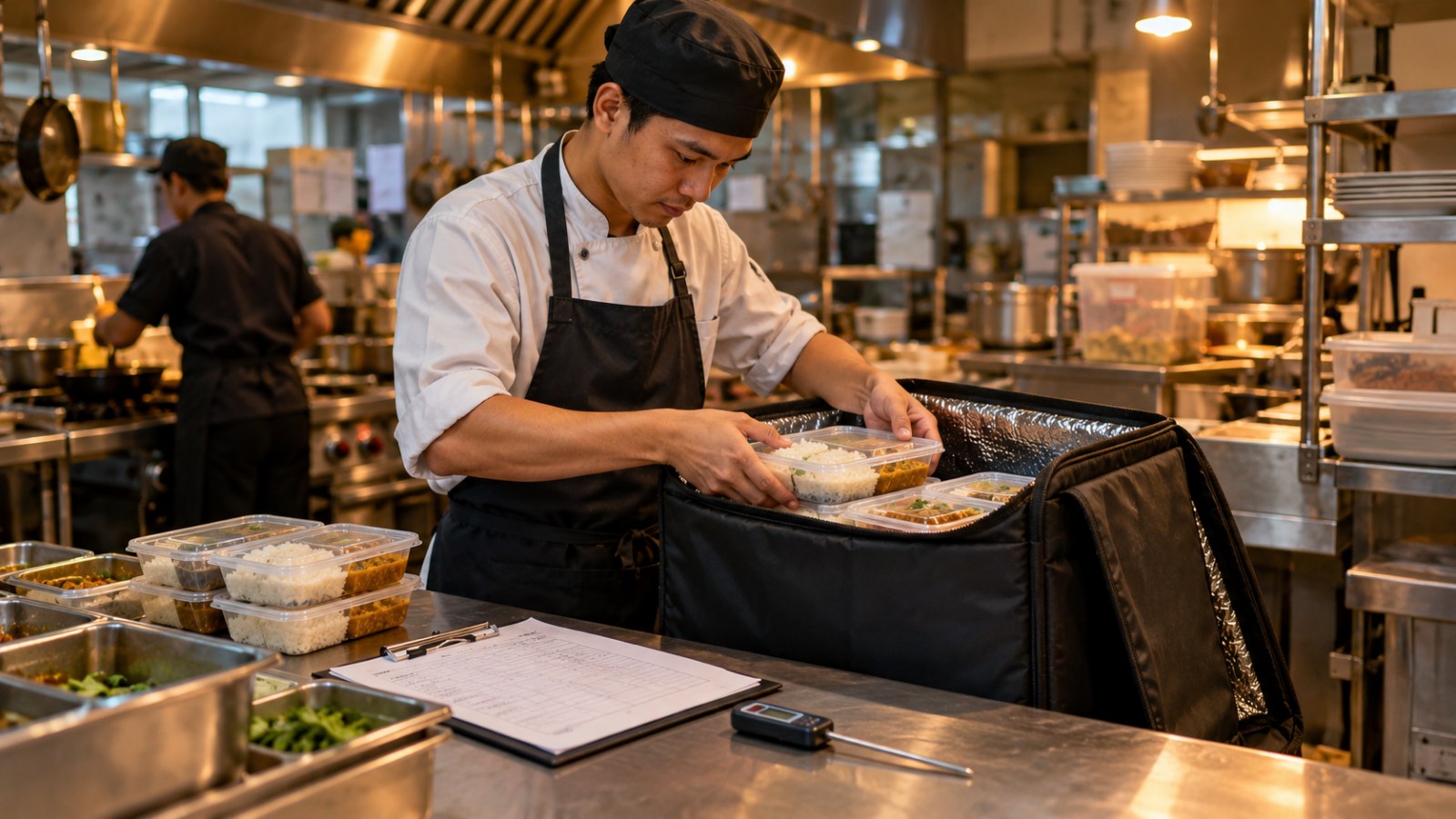
| What must be documented | Recipes, prep methods, supplier specifications, training | Throughput, queue flow, prep scheduling, delivery packaging |
| Capital needs | High: fit-outs, rent, staff, often a central kitchen | Lower: equipment, layout changes, digital channels |
| Brand effect | Wider awareness, but the brand is less tied to one place | A strong destination identity built on scarcity |
| Best suited to | Dishes that can be standardised and taught | Dishes that depend on one team, one site or one set of hands |
Lessons From Asian Street Food Brands
When recognition arrives faster than the system
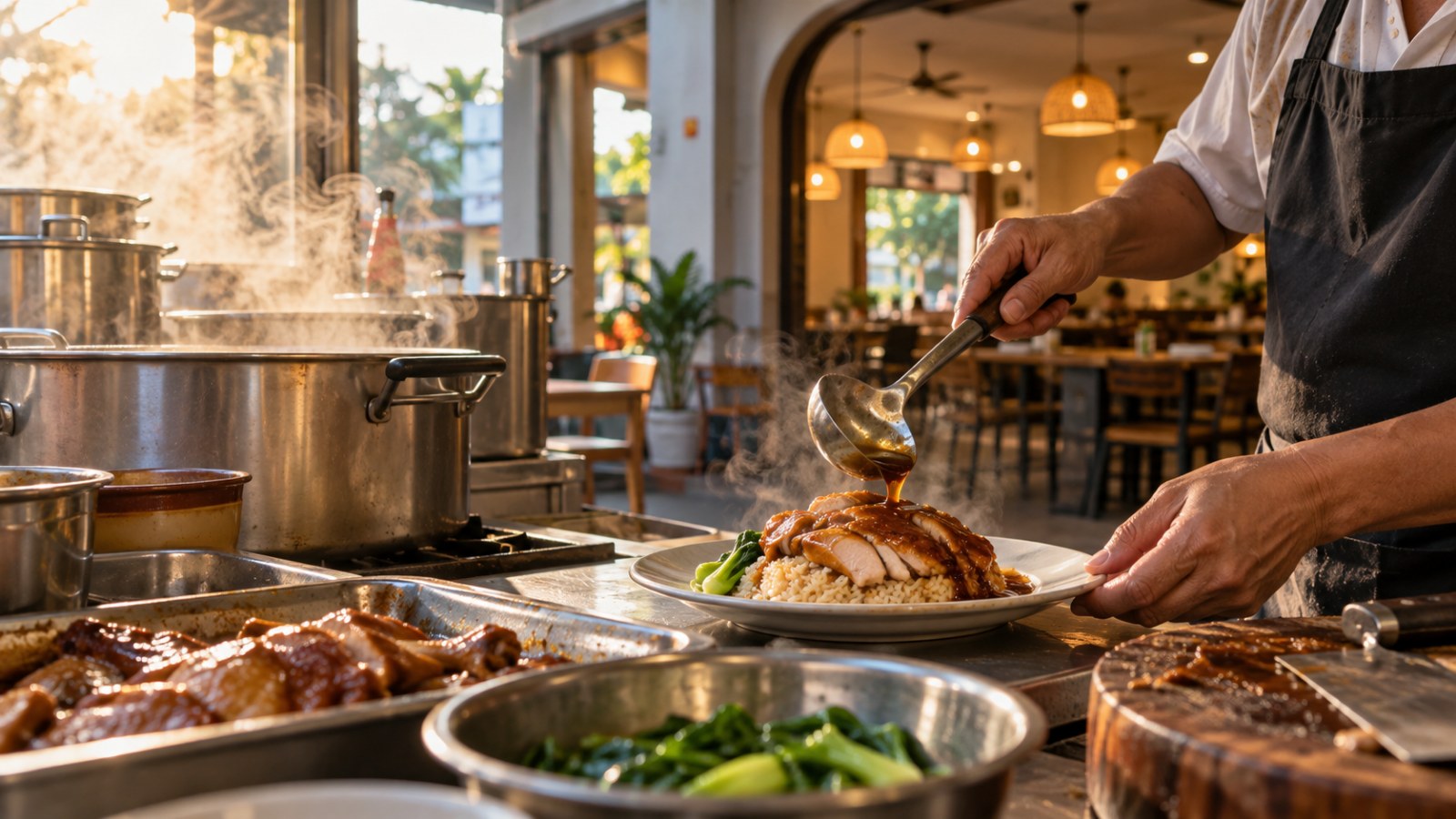
The best-known recent case of a hawker scaling out is Chan Hon Meng’s soya sauce chicken stall in Singapore’s Chinatown Complex. It was one of two hawker stalls awarded a Michelin star when the first Michelin Guide Singapore launched in July 2016. Within months, Chan partnered with Hersing Culinary to open a quick-service restaurant under the Hawker Chan name near the original stall. The partners then expanded overseas, starting with Taipei in April 2017, where early reports described long waits and disappointed diners.
The stall did not appear in the 2021 edition of the guide. Michelin does not publish its reasons, so any link to expansion is speculation. Two details are still instructive for other founders. First, the star changed the stall’s customer base almost overnight: tourists reportedly went from roughly half of customers to around 90 per cent. Demand that comes from a guide listing does not behave like demand from neighbourhood regulars. Second, Chan kept working at the original stall, and the new Smith Street outlet earned its own Bib Gourmand. That shows a second format can stand on its own when it is treated as a separate product rather than a copy.
Depth over breadth
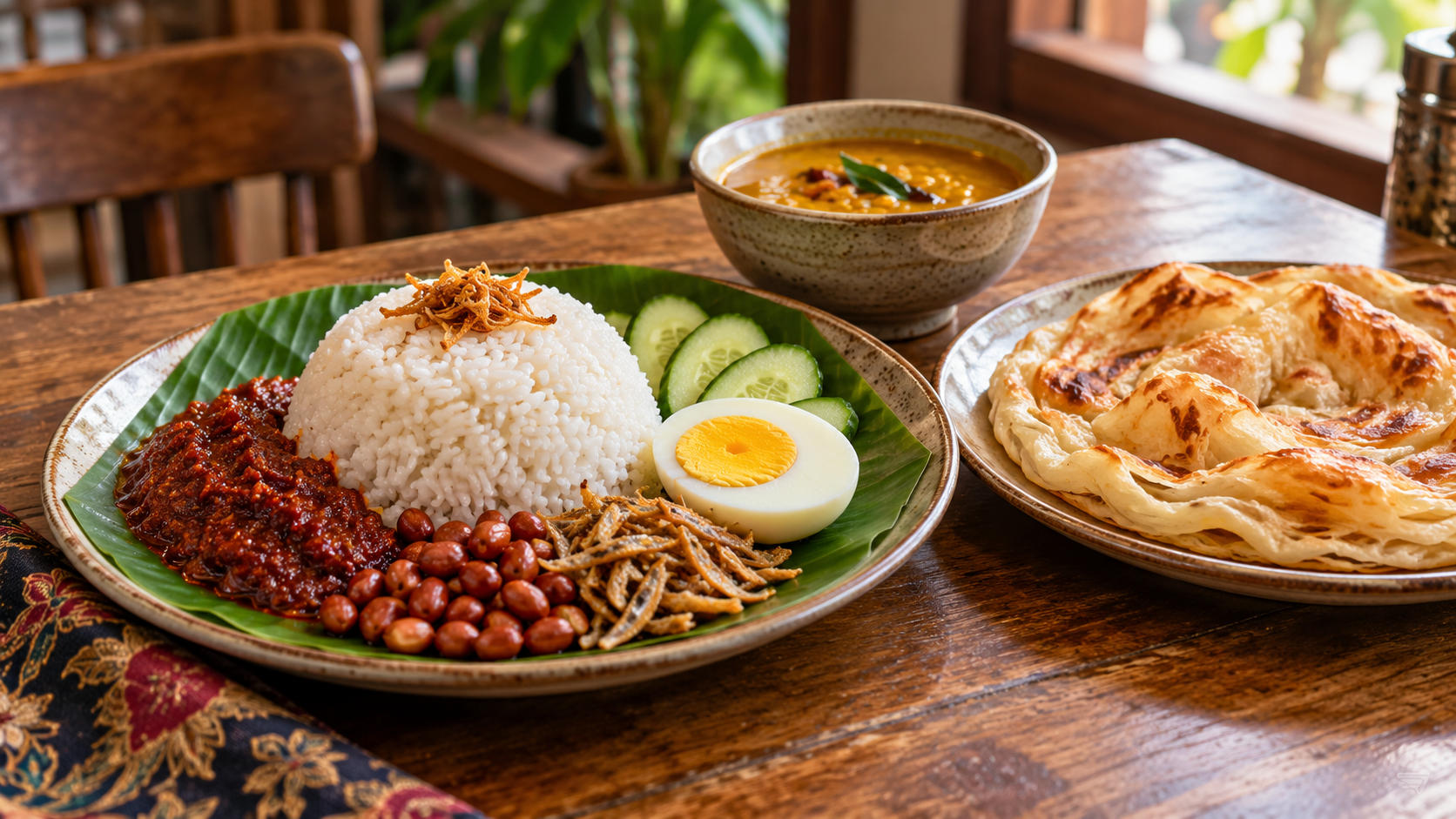
Village Park Restaurant in Damansara Utama, Petaling Jaya, took the opposite route. Founded in 2002, it reportedly began by selling around 10 plates of nasi lemak a day. Today it averages about 10,000 plates daily from a single outlet, an achievement recognised by Asia Record as the most nasi lemak sold in a single outlet. The restaurant credits a deliberate focus on one flagship location, strict consistency, and a delivery partnership that extended its reach without new kitchens.
Taipei’s Ah Zhong Mian Xian is another Asia Record holder from the single-outlet path, recognised for best-selling Taiwanese single-outlet oyster vermicelli in Asia in 2025. In both cases, staying in one place is the strategy, not a lack of ambition.
Hawker-born chains that built the system first
Other founders have scaled out successfully by building operations before adding outlets. Tenderfresh began as a hawker stall in the 1970s, expanded through coffeeshops, and has credited its central kitchen with allowing the business to scale and diversify. Astons started as a single Western food stall in 2005 and grew into an 18-outlet chain. Its founder has said the model relies on high customer volume and on teaching kitchen heads everything he knows so standards hold. In Malaysia, Kajang Satay Hj Samuri turned a heritage satay tradition into a restaurant chain that now holds a chain-level satay sales record.
The Signature Dish Transfer Test
Before choosing a path, a founder should work out whether the dish can travel. These six questions help separate a dish that can be copied from one that should stay in its original kitchen.
- Is the flavour in the recipe or in the hands? If two trained cooks follow the written method and produce noticeably different results, the dish depends on a person. That person cannot be in two kitchens at once.
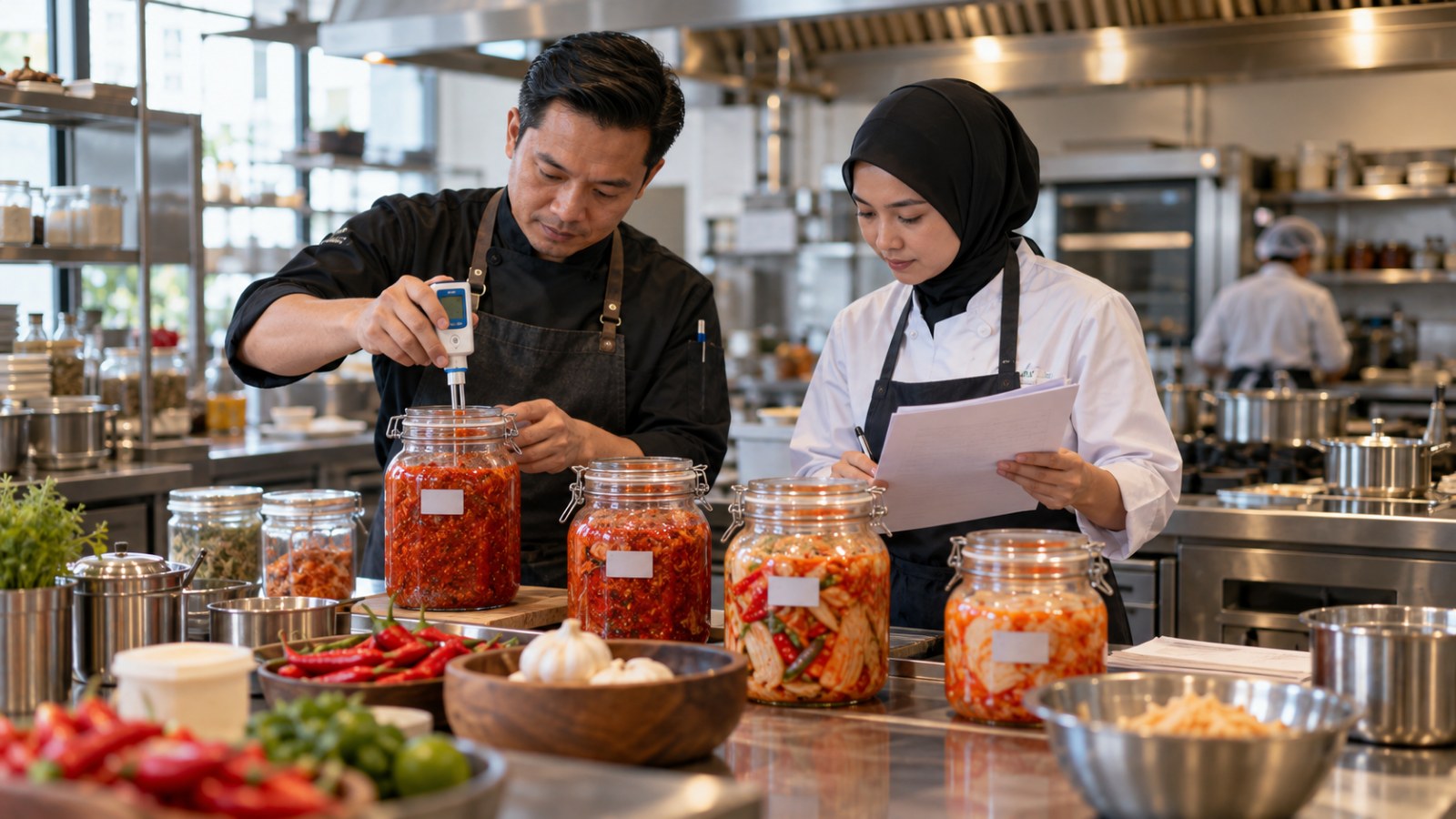
- Where does the critical step happen? Identify the one stage that defines the dish, such as the braise, the sambal or the wok hei. Decide whether it can be done in each outlet, in a central kitchen, or only at the original site.
- Is the demand portable? Ask whether customers queue for the food or for the experience of eating at this specific stall. Tourist demand created by a guide listing may not follow the brand into a shopping mall.
- Does the price survive new rent? Hawker pricing depends on hawker costs. Check whether the dish still makes sense at the price an air-conditioned outlet must charge to cover its fit-out and lease.
- Who guards the standard when the founder is absent? If nobody else can reject a bad batch with confidence, the business is not ready for a second kitchen.
- Do you have a baseline? Know your daily covers, plates sold, waste and peak throughput at the original site. Without that baseline, you cannot tell whether a new outlet is performing or quietly diluting the brand.
A dish that passes all six is a strong candidate for scaling out, and the operational work then follows the path covered in our guide to testing whether a restaurant is ready to franchise. A dish that fails questions one, two or five is usually better served by scaling up. It may also suit a carefully separated second format, as the Smith Street outlet showed.
Common Mistakes When a Famous Stall Expands
- Expanding on a spike rather than a trend. A surge after an award or a viral video is not proof of lasting demand. Wait until the original stall’s numbers settle.
- Copying the menu instead of the method. New outlets often add dishes to justify higher rent. This dilutes the focus that made the stall famous, which is why focused menus tend to scale better.
- Centralising the wrong step. A central kitchen can protect consistency for sauces and marinades. Moving the one step that defines the dish away from the point of service can also flatten it. Our analysis of when restaurant groups should centralise production covers this trade-off.
- Treating the founder as infinitely available. Founders who promise to visit every outlet regularly find the promise breaks down after the third or fourth branch.
- Letting the original stall decline. The flagship is the reference point for the whole brand. If it slips while attention goes to new outlets, the brand loses its proof of quality.
What Each Growth Path Can Prove
The two strategies produce different kinds of evidence. A chain can show outlet count, total units sold across the network, or brand-level sales in a category. A single-outlet business can show something rarer: exceptional volume, longevity or consistency from one kitchen. Both are legitimate measures of success, and both can become credible Asian business achievements when they are measured carefully.
That distinction matters when a business wants outside validation. Food guide listings and reviews reflect expert or public opinion. A measured milestone, such as plates sold per day from one outlet or satay sold across a chain in a year, can be checked against records. This is where formal record recognition in Asia becomes relevant to hawker-origin brands. Village Park, Ah Zhong Mian Xian and Kajang Satay Hj Samuri each became an Asia Record holder by documenting a specific, measurable result tied to their chosen growth path.
For founders wondering how to get an Asia Record, the starting point is the same discipline the Signature Dish Transfer Test requires: reliable sales data, a clearly defined claim and consistent records over time. Asia Record’s published verification process describes how a claim is defined, evidenced and assessed before recognition. It is useful reading before any Asia Record application. Record recognition is a form of business achievement recognition, not a substitute for food safety licensing, halal certification or any other regulatory approval a stall or chain must hold.
Choosing Deliberately
The hawker stalls that grow well are rarely the ones that move fastest. They are the ones whose founders know what their food depends on, and they choose a path that protects it. For some, that means building recipes, training and supply systems that let the dish travel to dozens of outlets. For others, it means staying in one place and becoming the best at what they already do.
Either way, the decision should come from evidence about the dish, the demand and the people behind it, not from the length of the queue.