From Restaurant Kitchen to Supermarket Shelf: When Should an Asian Restaurant Launch Packaged Products?
At some point, almost every restaurant with a signature flavour hears the same question at the cashier: “Do you sell the sauce?” It might be the chilli paste that defines a crab dish, the rempah behind a rendang, or the spice blend for a bak kut teh. For many operators the question is flattering. Guests are offering to pay for the restaurant’s flavour without needing a table, a server or a dinner booking.
It is also a trap for the unprepared. A sauce that works perfectly when it is made fresh each morning and served within hours is a very different thing from a sauce that must stay safe, stable and delicious on a shelf for months. The restaurant that answers “yes” too quickly can end up running a small food factory it never planned for, with a product that disappoints the very guests who asked for it.
This guide is for restaurant owners and restaurant groups across Asia who are weighing that decision. It covers why restaurants move into packaged products, how a retail product differs from a menu item, and a six-question shelf-readiness test to apply before committing.
Why Asian Restaurants Keep Looking at the Retail Shelf
The appeal is straightforward. A restaurant’s revenue is capped by seats, opening hours and table turns. A packaged product is not. It can sell while the dining room is closed, travel home with a tourist, go into a festive hamper, or reach customers in cities where the restaurant has no outlet.
Singapore’s JUMBO Group is one of the clearest regional examples. Its signature chilli crab became a retail product through research and development at the group’s central kitchen. The retail range has since grown to include crab pastes, spice mixes, premixes and sauces, sold under the group’s own lifestyle brand. The order matters: the group standardised its recipes for multi-outlet and overseas consistency first, and the retail range followed from that capability.
Outside Asia, the same pattern has become more visible since the pandemic. New York’s Momofuku turned its pantry products into a significant line of business, and the pasta sauce from Carbone moved from a handful of restaurants into thousands of grocery stores. Industry analysts have also noted that interest in restaurant-branded grocery products tends to rise when consumers cut back on dining out. Retail can therefore act as a hedge as well as a growth channel.
None of this means every restaurant should launch a product. It means the opportunity is real enough to evaluate properly.
A Menu Item and a Retail Product Are Different Products
The most common misunderstanding is assuming a recipe that works in the restaurant will work in a jar. The two face very different conditions:
| Factor | Restaurant dish | Packaged retail product |
|---|---|---|
| Time to consumption | Minutes to hours | Weeks to months |
| Who controls the final cooking | Trained kitchen team | The customer, in an unknown home kitchen |
| Consistency tolerance | Small batch variation is often accepted | Every unit must match the label and the last purchase |
| Main regulatory focus | Food premises hygiene and food handling | Manufacturing licensing, labelling, shelf-life and composition |
| How it is sold | Staff recommendation and the dining experience | Packaging, shelf position, price and promotion |
| Cost of a mistake | One unhappy table | A batch withdrawal and lost retailer trust |
Each row is a capability the restaurant must either build or buy. The shelf-readiness test below is built around those gaps.
The Shelf-Readiness Test: Six Questions Before You Launch
1. Is the demand real, repeatable and measurable?
Compliments are not demand. Stronger signals include guests regularly buying extra portions of the sauce to take home, pre-orders for festive packs, repeat enquiries logged by staff, and takeaway orders where the sauce is clearly the attraction. Count these for several months before deciding. If the restaurant cannot say roughly how many guests asked and how many paid, it is guessing.
2. Can the recipe survive standardisation?
Many signature dishes depend on judgement: a cook who adjusts the chilli by eye or reduces the paste until it “looks right”. Retail production needs exact weights, defined cooking temperatures and times, and specifications for every ingredient. Restaurant groups that have already built a central kitchen with documented recipes are far better placed. Even then, preserving flavour through heat treatment, packaging and storage usually needs food technology expertise. JUMBO, for instance, brought in a food technology consultant to replicate its chilli crab accurately before expanding overseas.
3. Do you have the right licence and premises?
Producing food for sale through other channels is regulated differently from serving it in a dining room. In Singapore, the Singapore Food Agency treats a business that supplies food to other outlets or food businesses as a food processing establishment, which requires its own licence. Licensed processing premises are inspected for good manufacturing practices and food safety programmes such as HACCP.
Other markets have their own systems, and halal certification, where relevant, is a separate process with its own authority and requirements. The practical point is the same everywhere: confirm the licensing pathway with the relevant regulator before investing in packaging. Many restaurants find that working with an established, licensed contract manufacturer is faster and safer than converting their own kitchen.
4. Can the label tell the whole truth?
A retail product speaks through its label. In Malaysia, prepacked food must meet the labelling requirements of the Food Regulations 1985, and food produced or packaged in Malaysia must be labelled in Bahasa Malaysia, with translations permitted. Ingredient lists, allergen information, net quantity and date marking all need to be accurate.
Marketing language needs the same discipline. Phrases such as “original recipe”, “best-selling” or “No. 1” printed on a jar face more scrutiny than the same words on a restaurant wall. Operators should substantiate every claim before it goes on pack.
5. Do the numbers still work after the retailer’s share?
Restaurant owners are used to food-cost percentages measured against a plated menu price. Retail economics work differently. The shelf price has to cover ingredients, packaging, manufacturing, distribution, retailer margin, listing or promotional costs where they apply, and an allowance for unsold or expired stock. Model the full chain from factory to shelf before agreeing to a price. A product that looks profitable at the restaurant counter can lose money once it is sold through a supermarket.
6. Who will actually run it?
Retail is a separate business, not a side task for the head chef. It needs people who understand production planning, retailer negotiations, inventory, regulatory paperwork and consumer marketing. Momofuku’s team has acknowledged that building its packaged goods line required different hires and retail relationships. If nobody in the business owns the retail line full-time, it will usually get attention only after the dinner service is over.
Choosing the First Product: A Practical Risk Ladder
The first product does not have to be the full signature dish. Formats carry very different levels of technical and operational difficulty. A sensible progression often looks like this:
- Dry spice blends and premixes. These are generally the simplest to stabilise, store and ship, and they let customers recreate a dish at home with their own fresh ingredients.
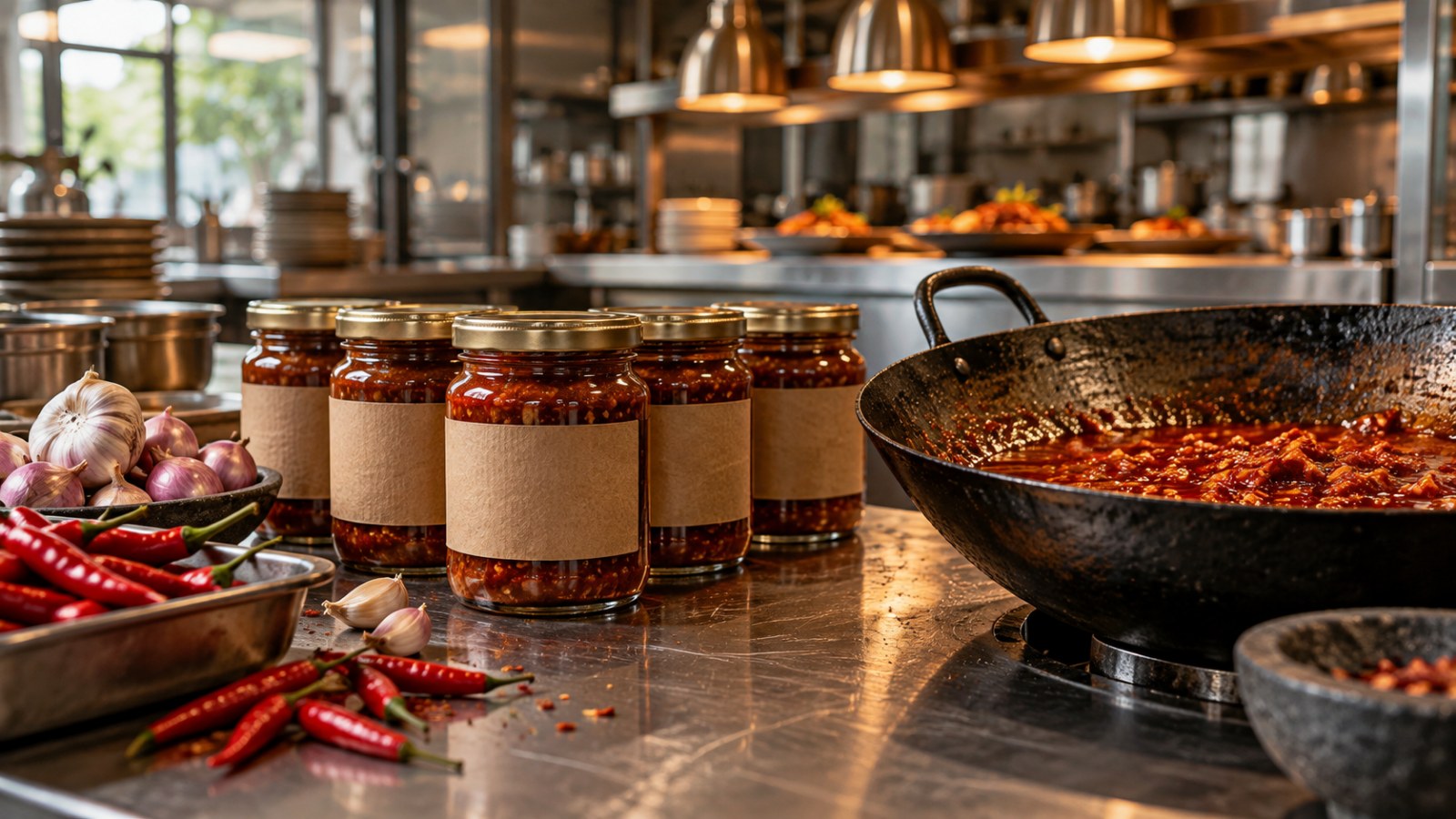
- Shelf-stable sauces and pastes. These are the classic restaurant retail product. They require validated processing and packaging to stay safe at room temperature.
- Chilled products. These have a shorter shelf life, depend on an unbroken cold chain, and are harder to distribute widely.
- Frozen ready meals and dim sum. These come closest to the restaurant experience, but they require freezing capacity, cold-chain logistics and careful attention to texture after reheating.
Starting lower on the ladder lets a restaurant test demand, learn retail operations and build supplier relationships before taking on more complex formats. It also keeps the range manageable. Restaurants that launch too many items at once quickly face the problems described in our SKU complexity audit for food manufacturers.
Common Mistakes Restaurants Make When Going Retail
- Launching on enthusiasm, not evidence. A few loyal regulars asking for the sauce does not prove a market.
- Changing the recipe silently. Reformulating for shelf life without telling customers can disappoint the people who wanted the original flavour.
- Underpricing to match restaurant perceptions. Pricing a jar as if it were a side dish ignores the costs of the retail chain.
- Treating packaging as decoration. Packaging must protect the product, meet labelling requirements and stand out on a crowded shelf.
- Expanding distribution too fast. Too many retail points too early makes it hard to support each one with stock, demonstrations and promotion.
- Skipping export groundwork. Tourists and overseas fans create early export interest. Each new market brings its own rules, so a structured export readiness review should come first.
Measuring Retail Success and Recognising the Milestones
Once a product is on the shelf, the restaurant needs a different scoreboard. The useful measures include units sold per month, repeat purchase rates where data is available, the number of retail points of sale, sell-through rates by store, the number of markets entered, and stock lost to expiry. Tracked consistently, these numbers show whether the retail line is growing a brand or just filling a storeroom.
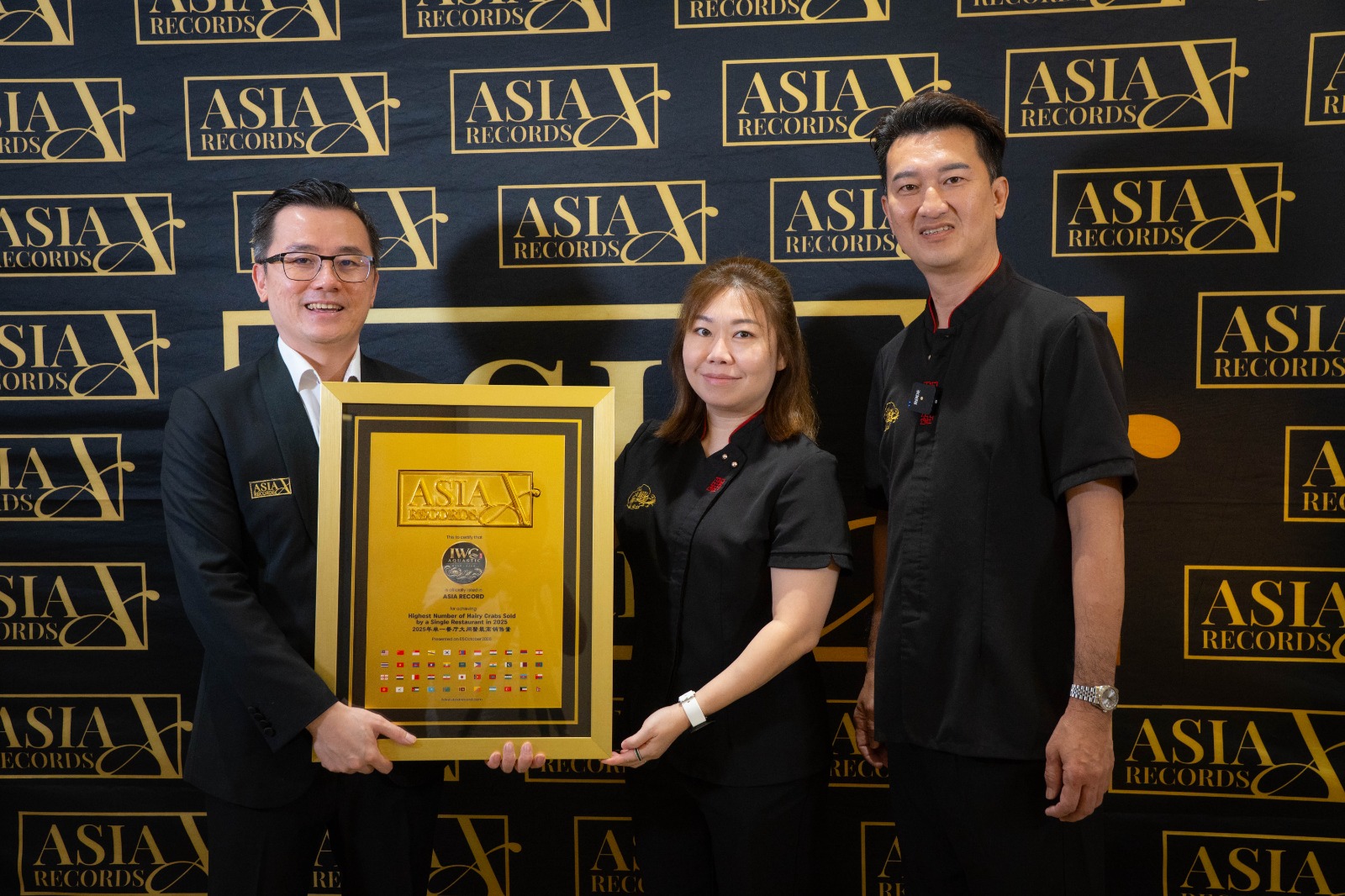
They also create a documented record of achievement. When a restaurant’s retail line reaches an unusual scale, such as an exceptional number of units sold in a defined period or an unusually wide distribution footprint, the milestone becomes something the business can verify and present to retailers, partners and investors. Some operators go further and seek independent record recognition in Asia. Asia Record, for example, assesses proposed records by comparing a clearly defined claim against supporting evidence and the conditions under which it was measured. Restaurant brands already appear on its register; Din Tai Fung is listed as an Asia Record holder for a restaurant sales title.
For a food business wondering how to get an Asia Record, the groundwork is the same discipline described throughout this guide. Define the achievement precisely, keep original sales and production records, and make sure the figures can be checked. An Asia Record application is judged on the evidence it contains. Operators who apply for Asia Record recognition should treat it as recognition of a measurable business achievement. Asia record certification is not a substitute for food safety licensing, halal certification or any other regulatory approval, and the product must meet all of those requirements on its own.
The Question to Ask Before the First Jar
The restaurants that succeed in retail rarely start by asking whether guests would buy the sauce. They ask whether the business is ready to be a food manufacturer: whether it can make the product the same way every time, label it honestly, sell it profitably and support it properly. If the answers are yes, the retail shelf can carry a restaurant’s flavour much further than its dining room ever could. If they are not yet yes, the more valuable next step is building the capabilities first.