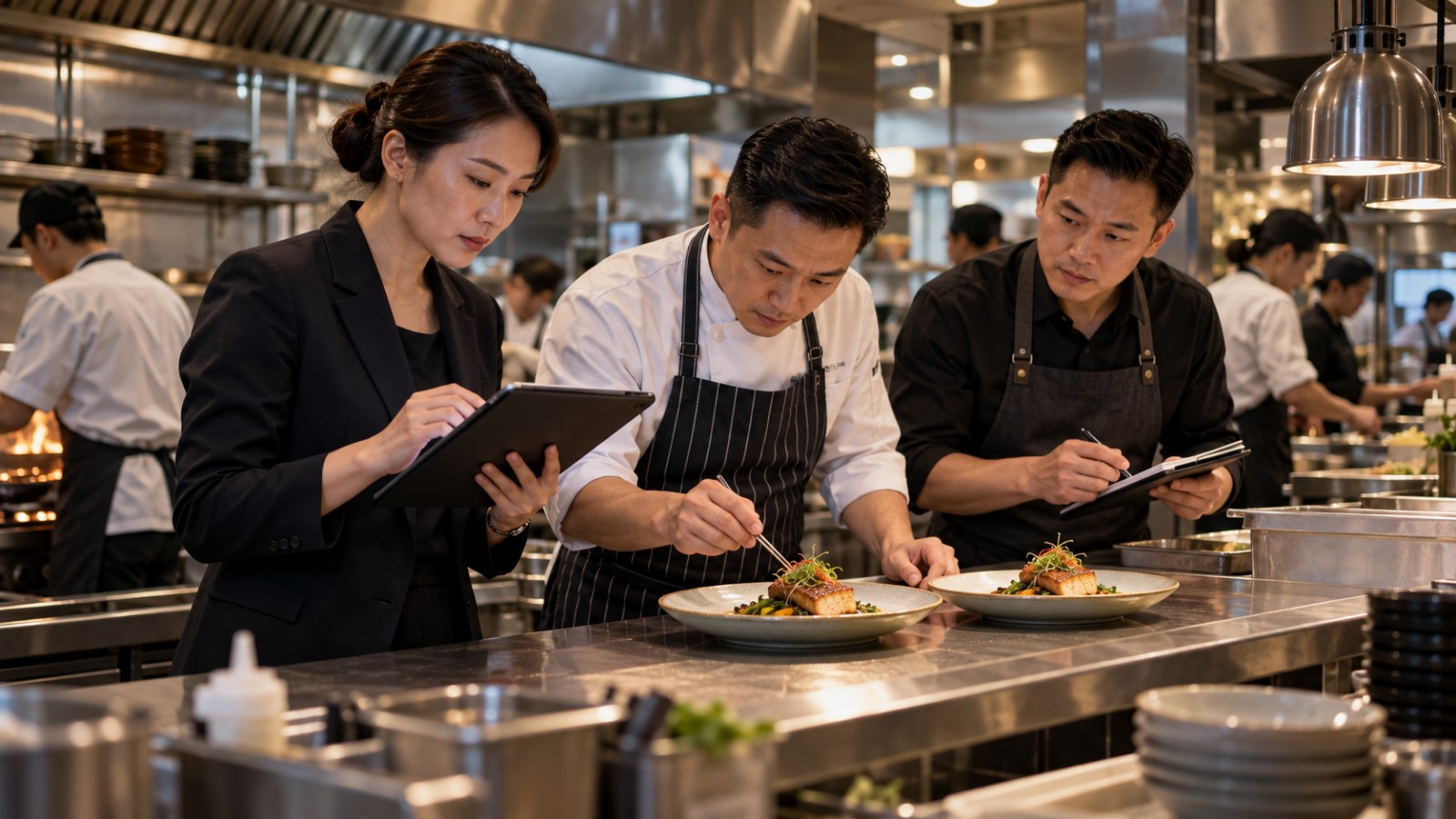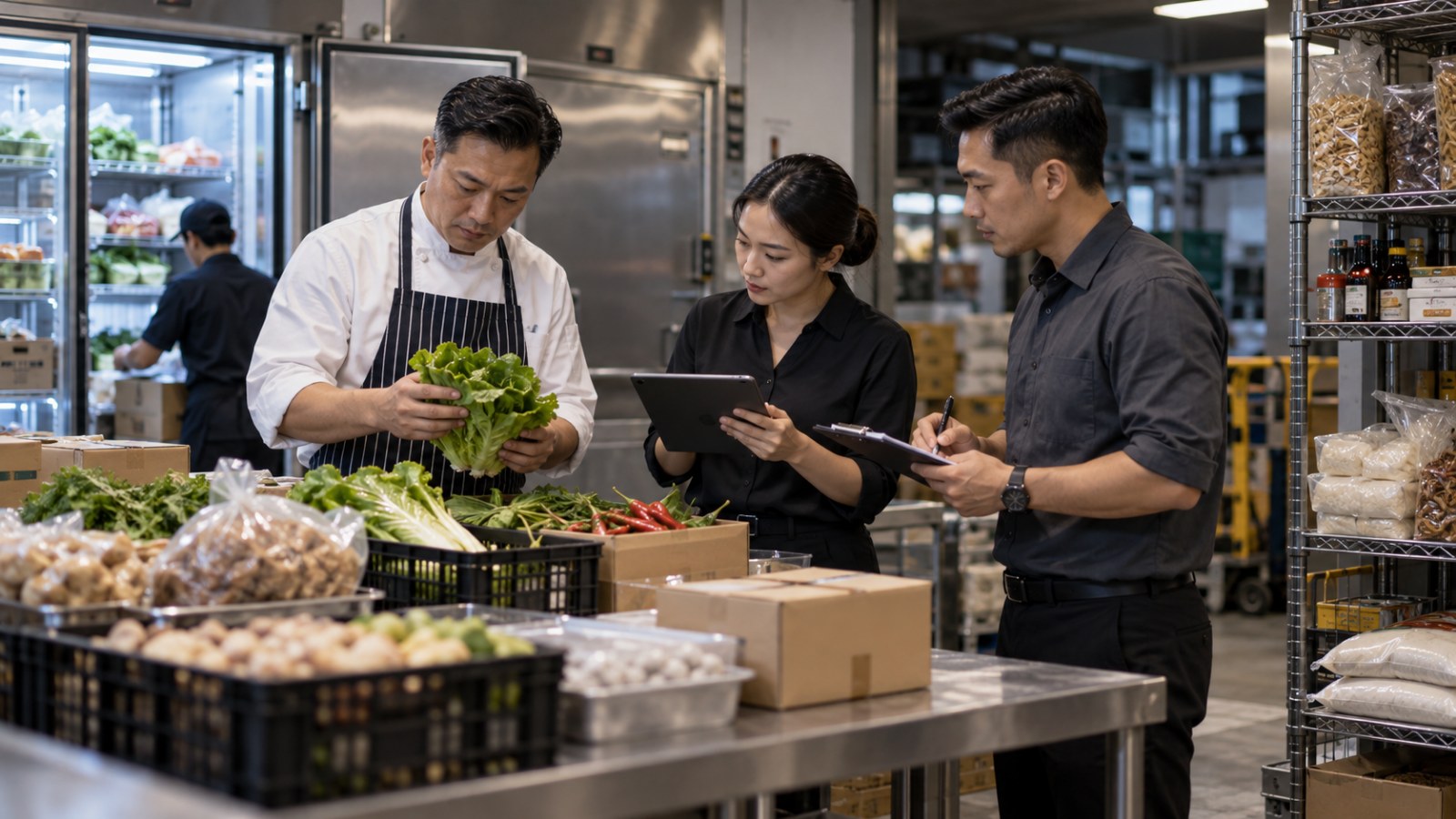
Export Readiness for Asian Food Brands: What It Takes to Win Shelf Space in a New Market
Ask a food manufacturer in Malaysia, Vietnam or Thailand what stands between the business and a new export market, and the answer is almost always the same: a distributor. Find the right partner, agree pricing, ship the first container.
That answer describes one part of a much longer process. Market entry fails at three distinct points, and only one of them is commercial. A product can be blocked by a regulator before any buyer sees it. It can clear every regulatory requirement and still fail a distributor’s supplier audit. It can pass the audit and still lose the listing to a competitor with a more convincing story. Each failure looks like the same outcome — no shelf space — but each requires entirely different preparation.
The timing makes this worth revisiting now. From 17 October 2026, mandatory halal certification extends to imported food and beverage products entering Indonesia, closing a two-year transition granted under Government Regulation No. 42 of 2024. For any brand selling into the region’s largest consumer market, a compliance question that has been deferred since 2024 becomes an operating reality within weeks.
Three Gates, Not One
It helps to separate export readiness into three sequential gates, because each is judged by a different party using different evidence.
- Permission — what the destination regulator requires before your product may legally be sold. Judged by a government agency, on documentation.
- Proof — what the distributor, importer or retail buyer requires before committing to your product. Judged commercially, on operational capability.
- Preference — why a buyer chooses your compliant, capable brand over another equally compliant, equally capable one. Judged on credibility and category story.
Most brands over-invest in the first gate, under-invest in the second, and ignore the third entirely until a listing is lost. The sequence matters, because work at each gate takes months and much of it can run in parallel if planned early.
Gate One: Permission
Regulatory requirements differ enough between neighbouring Asian markets that a single export playbook rarely survives contact with a second country.
Indonesia. Under the Halal Product Assurance Law and Government Regulation No. 42 of 2024, halal certification becomes mandatory for imported food and beverage products from 17 October 2026, administered by BPJPH. Products that are inherently non-halal are not required to be certified, but must be labelled accordingly. Foreign certification can be recognised where the issuing body has concluded a mutual recognition arrangement with BPJPH; where it has not, the standard route involves inspection by an accredited Indonesian halal inspection body before certification is issued. Enforcement during the first phase, which began for domestic medium and large food businesses in October 2024, has included written warnings and orders to withdraw products from circulation.
China. Since 1 January 2022, overseas manufacturers, processors and storage facilities exporting food to China must be registered with the General Administration of Customs under Decree 248, with Decree 249 governing importer and exporter record filing, labelling and inspection. Facilities in eighteen specified higher-risk categories are registered through a recommendation from the exporting country’s competent authority; facilities outside those categories may self-apply through the CIFER system. Registration attaches to the facility and the product category, not to the brand, and the registration number is required for customs documentation.
Singapore. The Singapore Food Agency requires traders to hold a licence for meat and fish products, fresh fruit and vegetables and shell eggs, and to be registered for processed food and food appliances. An import permit is required per consignment. The critical detail for an exporter is that this approval belongs to the Singapore-side importer, not to you.
| Market | Core requirement | Who holds the approval | What exporters underestimate |
|---|---|---|---|
| Indonesia | Halal certification for imported F&B from 17 October 2026 | The brand owner, via BPJPH and an accredited inspection body | Audit scheduling capacity tightens sharply as the deadline approaches |
| China | GACC facility registration under Decree 248 | The manufacturing facility | Registration is per facility and per category, and must be renewed |
| Singapore | SFA trader licence or registration, plus per-consignment permit | The importer in Singapore | Changing distributor can interrupt market access entirely |
Two practical rules follow. First, start certification and registration work before you have a signed distributor, not after, because lead times are measured in months and a buyer who has to wait usually moves on. Second, hold your own approvals wherever the rules allow. Where registration sits with a distributor, the distributor controls your access to the market, which weakens every subsequent negotiation.
Gate Two: Proof
Clearing customs earns the right to be evaluated. What a serious importer or retail buyer evaluates next is whether your operation can support their business without creating risk for it.
The questions are consistent across markets, and a brand that can answer all of them in writing moves faster than one improvising in a meeting:
- Food safety systems. A recognised scheme — HACCP, ISO 22000 or a GFSI-benchmarked certification — with current audit reports, not expired ones.
- Traceability. The ability to trace any batch back to raw material intake and forward to shipment, and to execute a recall within a defined window.
- Capacity headroom. Not your maximum output, but what you can add for a new market without disrupting existing customers.
- Shelf-life validation. Tested data for the actual export condition, including transit time and destination climate, rather than domestic assumptions.
- Specification consistency. Evidence that batch three tastes and looks like batch one.
- Label compliance. Destination-language labelling, nutrition formats, ingredient declarations and claim rules resolved before artwork is printed.
- Supply continuity. A credible answer for what happens when a key raw material is short — a question that matters intensely for brands built on seasonal agricultural inputs.
This is also where product architecture decisions made years earlier come due. Manufacturers that have already developed a structured range from a single raw material tend to clear this gate faster, because the underlying process control and specification discipline already exist.
Gate Three: Preference
The third gate is the one most brands never consciously prepare for. A category buyer in Jakarta, Shanghai or Dubai is rarely choosing between one compliant supplier and zero. They are choosing among several, and the deciding factor is which brand they can most easily justify — internally to a category manager, and externally to consumers who have never heard of it.
Different forms of third-party validation answer different questions, and confusing them wastes effort:
- Certifications answer whether you are permitted and safe. They are table stakes, and every shortlisted competitor has them.
- Awards and competitions answer whether your product is good. Valuable, but subjective and often unfamiliar outside the awarding market.
- Verified measurable achievements answer whether you are significant. They travel best across borders, because a number requires no cultural context to interpret.
That last category is where formal record recognition in Asia becomes relevant to food manufacturers rather than merely interesting. When a claim is specific, measurable, independently verifiable and genuinely comparable — the largest certified product range in a category, the highest documented sales volume for a particular product type, a first-to-market formulation — it can be assessed for record certification rather than simply asserted in a sales deck. Asia Record documents and certifies verified record-breaking achievements across the region and maintains a public register of verified record holders that already includes food, beverage and restaurant businesses. For an exporter, the practical value is not the trophy. It is that an Asia Record holder can point a foreign buyer to an independent listing rather than asking that buyer to take a marketing claim on trust.
This form of business achievement recognition in Asia sits alongside, rather than replacing, the awards and certifications a brand already holds. It works best when the achievement is real and already documented internally. A manufacturer that has tracked category-leading output, product variety or sales volume for several years usually already has the substantiation required; what is missing is the independent verification. Brands weighing whether a milestone qualifies can review the Asia Record certification criteria and nomination process before assembling documentation, which is a more productive first step than assuming a record must be spectacular to count. Most Asian business achievements that qualify are operational, not theatrical.
Five Mistakes That Delay Asian Food Exports
- Treating certification as a reaction to a purchase order. By the time a buyer asks, you are already months behind a competitor who started earlier.
- Letting the distributor hold the registrations. Convenient at first, costly the moment the relationship changes.
- Exporting the domestic product unchanged. Pack format, sweetness level, portion size and price architecture usually need adjustment, and label rules almost always do.
- Pricing backwards from the factory. Landed cost, importer margin, distributor margin and retail margin compress far more than most first-time exporters model.
- Arriving with no evidence beyond enthusiasm. Compliance documents prove you are allowed to sell. Verified achievement is what makes a buyer believe the brand will move.
Sequencing the First Year
A workable order of operations, assuming a single target market:
- Months 1–3. Select one market. Confirm the exact regulatory pathway for your product category. Begin certification or facility registration immediately. Commission destination-specific shelf-life testing.
- Months 3–6. Assemble the buyer documentation pack. Resolve labelling and artwork. Model landed cost through the full margin chain. Identify which of your measurable achievements could be independently verified.
- Months 6–9. Approach distributors with approvals in progress and documentation complete. Trade exhibitions are efficient here precisely because prepared brands stand out against unprepared ones.
- Months 9–12. First shipments, sell-through tracking, and the beginning of the evidence base you will use for the second market.
What Export Readiness Actually Signals
The opportunity is real and measurable. Malaysia’s halal exports reached RM61.8 billion in 2024, a 15% increase over the previous year, with a national aspiration of RM80 billion by 2030. Regional demand for Asian food products is not the constraint. Preparation is.
Export readiness is ultimately a documentation discipline. Brands that keep clean records of what they produce, how consistently they produce it and how their achievements compare within their category find that regulatory filings, buyer audits, record certification applications and investor conversations all draw on the same underlying evidence. Building that evidence base once, deliberately, is what separates a manufacturer that exports occasionally from one that exports repeatedly.