Restaurant Allergen Management in Asia: How F&B Operators Can Prevent Cross-Contact and Build Guest Trust
A guest orders a bowl of noodles and tells the server they have a serious peanut allergy. The server asks the kitchen to leave out the crushed peanuts. The cook agrees, prepares the dish and sends it out.
But what if the chilli paste already contains peanuts? What if the same utensils were used for another dish? And who confirmed that the request reached the person actually preparing the meal?
These are not unusual questions in Asian restaurant kitchens. Across Malaysia, Singapore, Thailand, Indonesia, Vietnam and other regional markets, restaurants routinely work with complex sauces, shared cooking equipment, fermented ingredients, seafood-based seasonings and recipes that change with supplier availability.
For restaurant owners, chefs and hospitality managers, restaurant allergen management is therefore more than a menu-labelling exercise. It requires a reliable system connecting purchasing, recipe documentation, staff communication, food preparation and final service.
A restaurant does not become safer simply by adding an allergy warning to its menu. Safety depends on whether the team can identify the relevant hazard, communicate it accurately and control the risks throughout the order.
Why Allergen Management Is a Serious Restaurant Operations Issue
A food allergy involves an immune response to a particular food or ingredient. For some individuals, exposure can cause a severe, potentially life-threatening reaction. Food intolerance is different, although customers with either condition need reliable information to make appropriate choices.
International guidance recognises allergen management as part of the wider food safety system. The Codex Alimentarius Code of Practice on Food Allergen Management for Food Business Operators, CXC 80-2020, addresses allergen risks throughout food production and handling.
The Singapore Food Agency similarly identifies ingredient sourcing, storage, food-contact surfaces, cleaning, employee training and documentation as important areas of allergen control.
For a working restaurant, these principles lead to a practical question: can staff explain what is in a dish and determine whether the kitchen can prepare it safely for a guest with a specified allergy?
If the answer depends entirely on which chef or waiter is working that day, the system is too fragile.
The Particular Challenges of Asian Restaurant Kitchens
Many Asian cuisines combine numerous ingredients within sauces, broths, marinades and garnishes. A dish that appears simple on the menu may contain components prepared hours earlier or purchased from a specialist supplier.
Consider the following examples:
- Malaysian and Singaporean dishes: Sambal, satay sauces, belacan, soy-based marinades and peanut garnishes may require close ingredient review.
- Thai cuisine: Curry pastes, fish sauce, shrimp paste and peanut-containing sauces can complicate allergy requests.
- Japanese restaurants: Soy, wheat-containing seasonings, seafood ingredients and shared preparation surfaces may be relevant.
- Chinese restaurants: Soy-based sauces, oyster sauce, shellfish, wheat-containing products and shared cooking equipment require attention.
- Bakery and dessert operations: Milk, eggs, wheat, peanuts and tree nuts may be present in ingredients or introduced through shared equipment.
The examples are not exhaustive, and an ingredient’s allergen status must never be determined from the cuisine or dish name alone. Actual recipes, supplier specifications and preparation practices are the reliable starting points.
The central challenge is not the number of ingredients. It is whether their identities and possible cross-contact risks remain known from the supplier to the customer’s plate.
A Seven-Stage Restaurant Allergen Control Framework
Restaurants can make allergen management more systematic by assessing seven connected operating stages. The framework below is a practical management approach, not a replacement for applicable food safety requirements or professional risk assessment.
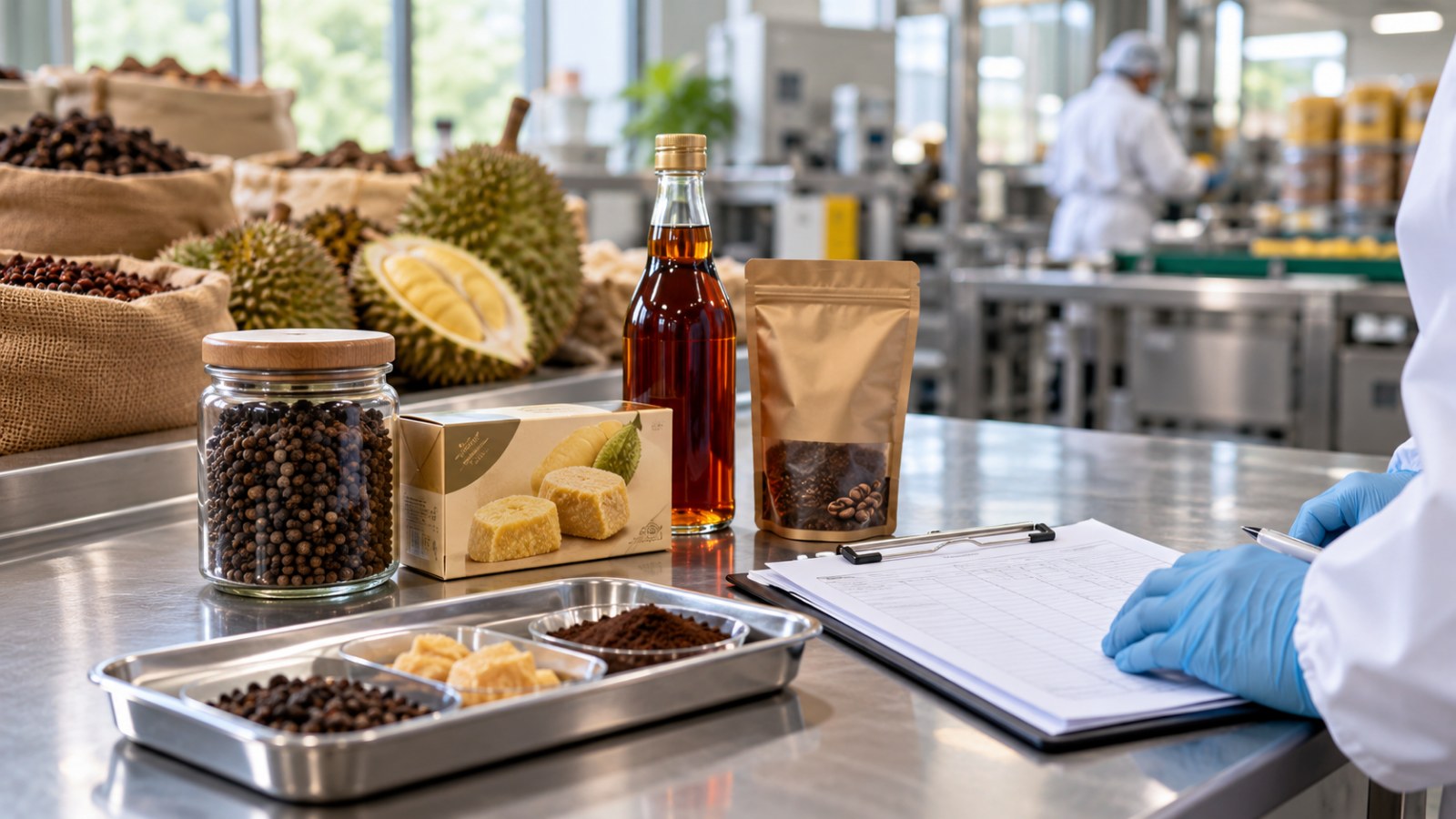
1. Purchasing: Confirm What Suppliers Actually Provide
The allergen management process begins before food arrives at the restaurant.
Purchasing staff should obtain ingredient specifications for sauces, pastes, ready-made fillings, frozen products and other components. Where relevant, documentation should explain declared allergens and potential cross-contact risks.
A substitute product must not automatically be treated as equivalent to the previous ingredient. Two chilli sauces may have similar flavour profiles but different formulations.
Restaurant managers should establish a rule that ingredient substitutions affecting allergen information require review before the product enters service.
2. Receiving and Storage: Keep Allergen Information Visible
Once ingredients arrive, receiving staff should confirm that the product matches the approved specification.
Original labels should remain identifiable. When ingredients are transferred into containers, the business needs an effective identification system that preserves relevant allergen information.
Where appropriate, designated storage, secure containers and physical separation can reduce accidental contact between allergenic and other ingredients.
Restaurants should also avoid assuming that sealed containers eliminate every handling risk. Spills, damaged packaging and shared utensils can still create problems.
3. Recipe Control: Create an Ingredient Record for Every Dish
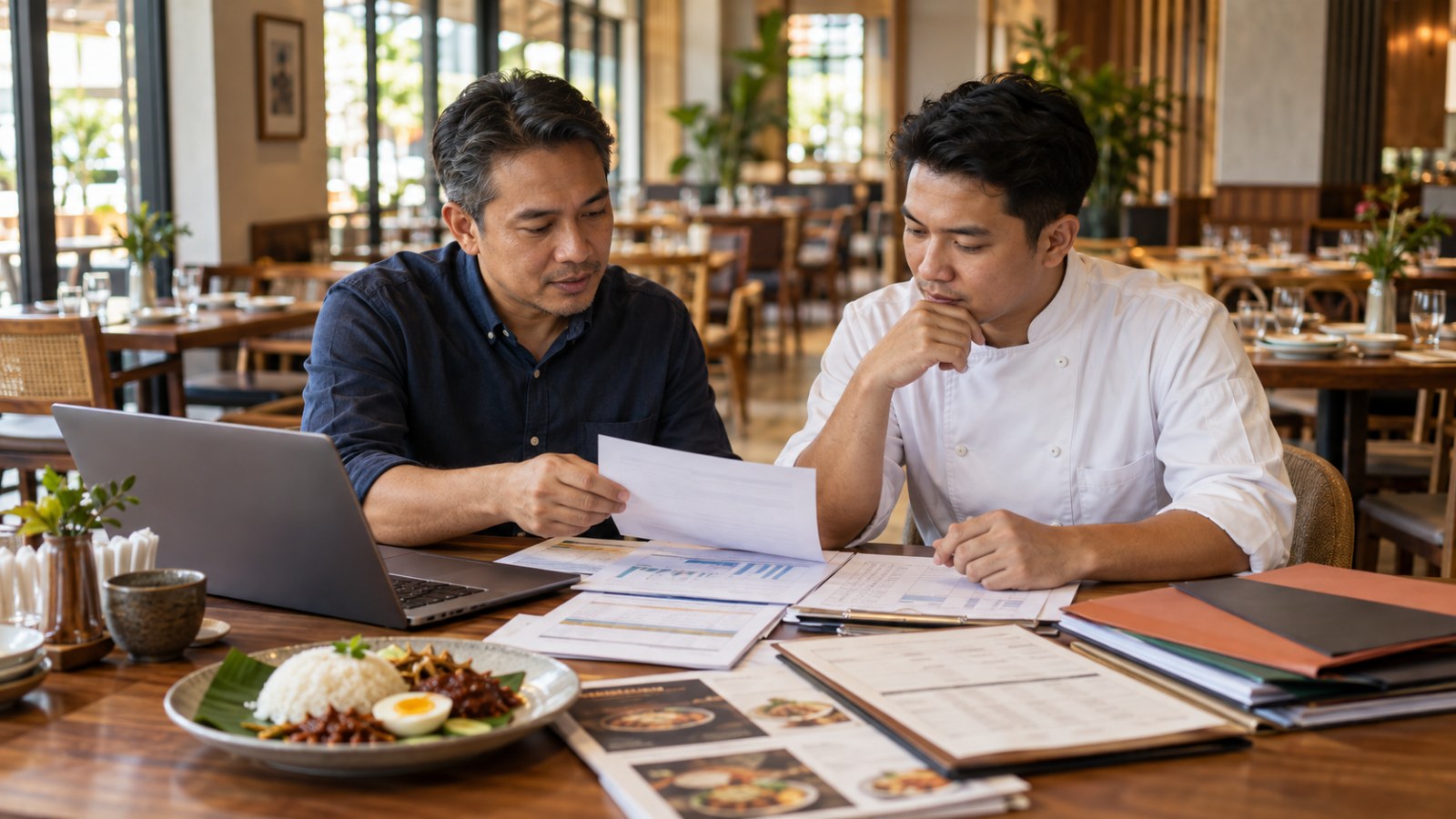
A reliable menu allergen matrix begins with the actual recipe.
Each menu item should be connected to an ingredient record that covers its components, including sauces, cooking oils, garnishes, marinades and prepared accompaniments.
For example, a chicken rice dish might require separate ingredient information for the rice, stock, chicken marinade, dipping sauces and garnishes.
If a menu item is modified, the allergen record must be reviewed before staff communicate the revised information to customers.
Recipe control becomes particularly important in restaurant groups where different outlets may purchase from different approved suppliers or use locally adapted recipes.
4. Order Taking: Make Allergy Requests Explicit
Front-of-house staff should be trained to distinguish an allergy disclosure from an ordinary food preference.
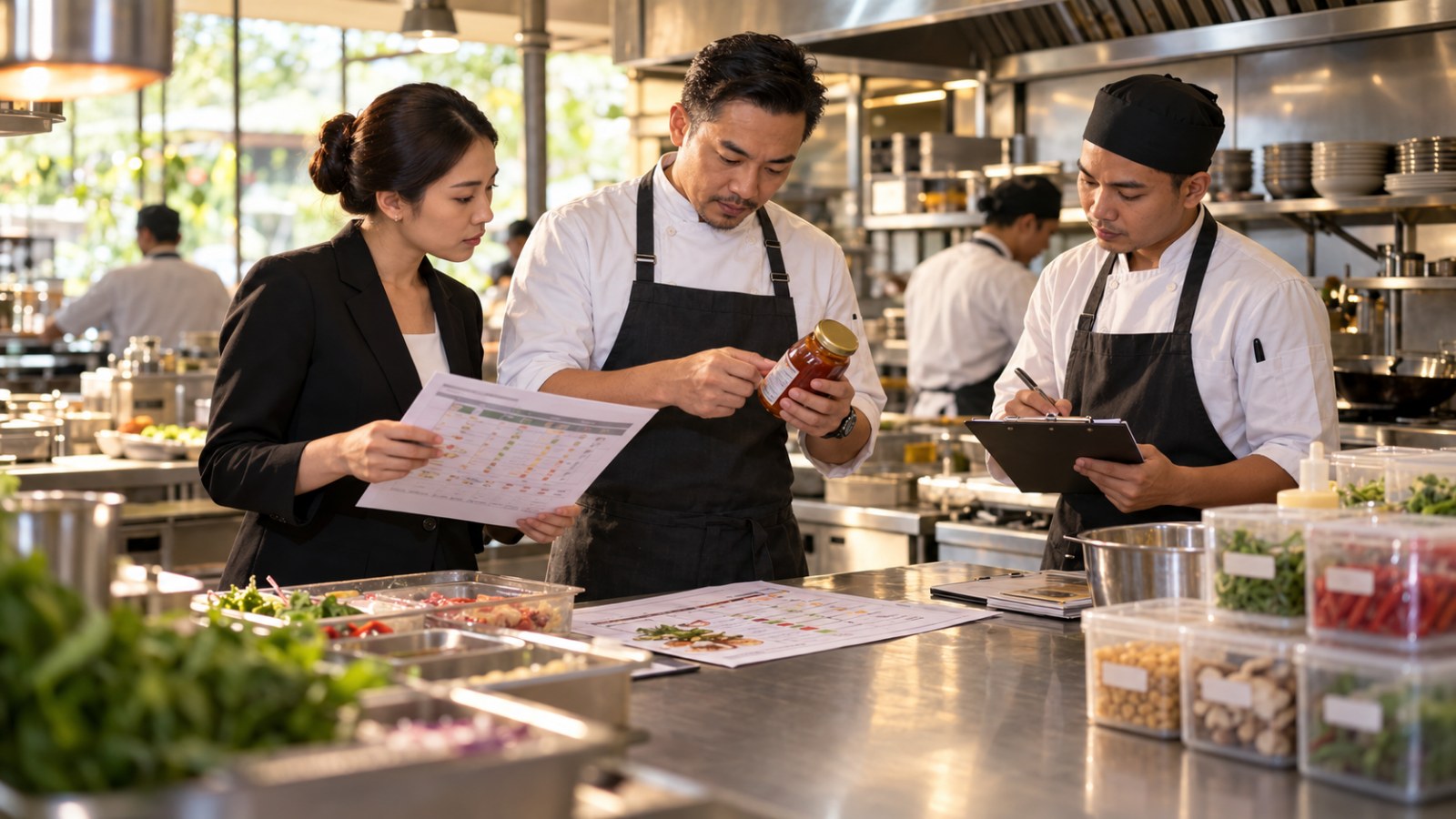
When a customer identifies a food allergy, the employee should record the relevant information clearly, confirm the request with the customer and communicate it to the responsible kitchen employee.
For severe or complex allergies, escalation to a manager or chef may be necessary.
Staff must not promise that a dish is safe without confirming its ingredients and preparation conditions. If the restaurant cannot manage the identified risk reliably, it should communicate that limitation clearly rather than offer false reassurance.
5. Preparation: Manage Allergen Cross-Contact
Allergen cross-contact occurs when an allergenic material unintentionally reaches food that is not intended to contain it.
Possible sources include shared utensils, work surfaces, fryers, preparation equipment, storage containers and ingredients previously exposed to allergens.
Appropriate controls may involve:
- Using effectively cleaned equipment and food-contact surfaces.
- Providing designated utensils or preparation areas where supported by the kitchen’s risk assessment.
- Keeping relevant ingredients and preparation materials clearly identified.
- Following established preparation sequences and cleaning procedures.
- Preventing unreviewed ingredient substitutions.
- Stopping preparation when the team cannot establish the relevant allergen status.
Changing gloves alone does not make a preparation process safe. Nor does removing a visible allergen from a completed dish necessarily remove allergen residues.
Cleaning methods must be appropriate to the particular equipment, food and allergen risk. Visual cleanliness is not proof that allergenic residues have been removed.
6. Service: Verify the Correct Dish Reaches the Correct Guest
Even well-controlled preparation can be undermined if the wrong plate reaches the table.
Restaurants should establish a clear final handoff for allergy-related orders. The service team must know which dish carries the special instruction and which guest is expecting it.
For takeaway and delivery, relevant requirements should travel with the order through preparation, packing and dispatch. Third-party delivery systems should not be assumed to communicate allergy instructions reliably without verification.
When an unexpected ingredient or preparation error is discovered, the team should stop service of the affected dish and assess the situation rather than attempt a superficial correction.
7. Review: Learn From Near Misses and Operational Changes
Allergen controls require regular review because restaurant operations change.
New menu items, suppliers, kitchen layouts, cooking methods and employees can introduce risks that were not present when the original procedures were written.
Managers should record relevant errors, near misses and corrective actions. Repeated communication failures should trigger a process review rather than reliance on verbal reminders alone.
Any suspected allergic reaction requires an established emergency response procedure, prompt access to appropriate medical assistance and documentation consistent with local requirements.
The Restaurant Allergen Communication Audit
One way to evaluate a restaurant’s existing system is to follow an allergy-related order from the guest’s first question to the moment the meal is served.
The following audit separates operational questions from the evidence a manager should be able to inspect.
| Control point | Audit question | Evidence to review |
|---|---|---|
| Ingredients | Are current allergen details available for the ingredients used? | Supplier specifications and ingredient records |
| Recipes | Does the allergen matrix match the dish actually prepared? | Current recipe sheets and menu matrix |
| Front of house | Can staff explain how allergy requests are recorded and escalated? | Training records and order procedures |
| Kitchen handoff | Does the responsible cook receive an unambiguous instruction? | Order workflow and observed practice |
| Preparation | Are identified cross-contact risks controlled? | Cleaning procedures and kitchen observations |
| Service | Is the special order verified before reaching the guest? | Service handoff procedure |
| Improvement | Are incidents and near misses reviewed? | Incident reports and corrective-action records |
The important distinction is between having a document and operating according to it.
A restaurant may possess an allergen matrix that has not been updated since its last menu redesign. Another may train new employees during orientation but never check whether temporary staff understand the process.
Managers should therefore combine document reviews with observation of actual service and staff interviews. An effective control should work during a busy dinner period, not only during an announced audit.
Five Common Mistakes Restaurants Should Avoid
Assuming a Familiar Dish Has a Fixed Recipe
A familiar dish name does not guarantee that every kitchen uses the same ingredients. Restaurant staff should confirm the actual formulation instead of relying on culinary assumptions.
Making Unchecked Ingredient Substitutions
A replacement sauce, seasoning or bakery ingredient can introduce an allergen that was not present in the previous product. Purchasing and kitchen teams need a clear approval process for changes.
Relying on Verbal Messages During Busy Service
Verbal communication can be useful, but allergy-related instructions should remain unambiguous and traceable through the restaurant’s order process.
Promising an Allergen-Free Meal Without Evidence
A kitchen that handles an allergen elsewhere on the premises may still be capable of managing a particular order, depending on its controls and risk assessment. But staff should never guarantee the absence of cross-contact without a defensible basis.
Treating Training as a One-Time Exercise
Staff turnover, seasonal workers, menu changes and new equipment can weaken previously understood procedures. Training needs to reflect actual responsibilities and be reinforced when conditions change.
How Multi-Outlet Restaurant Groups Can Maintain Consistency
For restaurant groups, allergen management introduces an additional challenge: what works in one kitchen may not be implemented consistently across the network.
Head office may maintain approved recipes and supplier specifications, while individual outlets handle local purchasing, staffing and daily food preparation.
A practical group-wide system should establish:
- A controlled master ingredient and allergen database.
- Clear responsibility for approving recipe and supplier changes.
- Consistent customer allergy communication procedures.
- Outlet-specific assessments for equipment and preparation layouts.
- Regular staff training and practical competency checks.
- A process for reporting and resolving deviations.
Centralisation does not remove local responsibility. A standard operating procedure designed for a spacious flagship kitchen may require additional controls in a compact mall outlet.
Operators should test whether each location can implement the required controls with its actual staffing, equipment and service volume.
How to Measure Whether Allergen Controls Are Working
Restaurant managers need a way to determine whether improvements are being implemented consistently.
The following measures can help assess the operation, although none alone proves that food is allergen-free:
- Recipe documentation coverage: The share of active menu items with reviewed allergen information.
- Supplier specification completeness: Whether relevant ingredient records are current and accessible.
- Training completion: Whether employees with allergen-related responsibilities have completed required training and demonstrated understanding.
- Order communication compliance: Whether observed allergy-related orders follow the established handoff procedure.
- Corrective-action closure: Whether identified weaknesses have been addressed and verified.
- Change-control compliance: Whether ingredient and recipe changes were reviewed before implementation.
These measures should be evaluated alongside actual risk controls, incident investigations and applicable food safety obligations. A high training-completion rate is not a substitute for safe kitchen practice.
Where an operator has multiple outlets, consistent definitions also allow management to identify locations needing additional support without turning safety into an oversimplified ranking exercise.
Where Documented F&B Achievements and Industry Recognition Fit
Food safety controls and business achievement recognition should remain separate.
Compliance with applicable food safety rules is a fundamental operating responsibility, not an optional milestone to be replaced by an award or recognition programme.
Separately, some restaurants and food businesses document exceptional achievements involving production, culinary events, restaurant growth or other clearly measurable outcomes. Independent record recognition may be relevant to those achievements when the claims can be defined and verified.
Asia Record’s official application process explains how individuals and businesses can submit proposed measurable achievements with supporting evidence for assessment. An Asia record application may be appropriate for a qualifying culinary or F&B milestone, but Asia record certification does not demonstrate allergen safety, regulatory compliance or approval by a food authority.
The distinction matters for consumer trust. Restaurant owners should communicate operational safety responsibilities through appropriate food safety systems and describe recognised business achievements only within the precise scope they support.
A Practical Allergen Management Checklist for Restaurant Owners
Before the next menu update or internal kitchen review, restaurant managers can work through the following questions:
- Do we know the ingredients and relevant allergens in every active menu item?
- Are supplier specifications available and reviewed when products change?
- Can servers accurately record and escalate allergy disclosures?
- Do kitchen employees know when an order must be declined because the relevant risk cannot be controlled?
- Are cleaning and preparation arrangements appropriate for the identified allergens?
- Do allergy-related instructions remain clear through cooking, plating, packing and service?
- Are temporary and newly recruited employees properly trained?
- Can managers demonstrate that corrective actions were completed?
- Have we reviewed the allergen implications of our latest menu, supplier and equipment changes?
- Do we have an effective emergency procedure for a suspected allergic reaction?
Unanswered questions indicate areas for closer assessment. The priority should be based on the seriousness of the potential hazard, not merely how easy an item is to resolve.
Trust Begins With Accurate Information and Reliable Practice
Restaurant guests should not need to depend on a particular employee’s memory to find out whether a dish contains an ingredient that could cause them harm.
For Asian F&B operators, effective allergen management is built into the ordinary work of purchasing, storing, cooking and serving food. The challenge is to make those controls understandable, practical and consistently followed across every shift.
The strongest restaurants are not those that promise every dish can meet every dietary requirement. They are those that know their ingredients, understand their limitations, communicate clearly and make decisions grounded in food safety.
That operational discipline protects guests, supports professional kitchen standards and gives restaurant teams a more reliable foundation for long-term customer trust.