Is That F&B Award Worth It? How Asian Restaurants and Food Brands Can Spot a Vanity Award
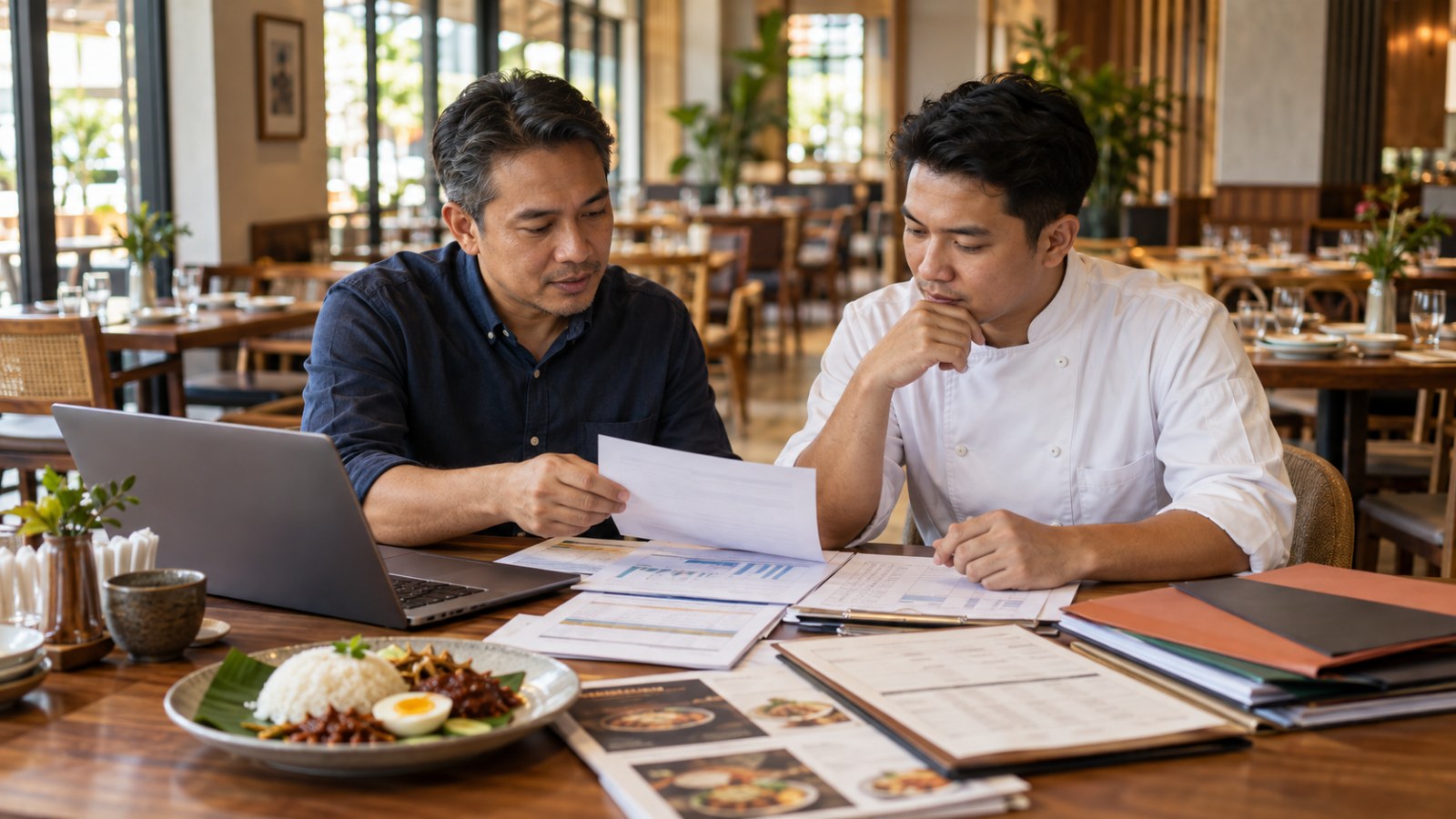
The email usually arrives mid-afternoon, between lunch and dinner service. Your restaurant, it says, has been selected as one of the region’s outstanding dining establishments of the year. There is a logo, a gala date in a five-star hotel and a congratulatory tone. Then, two paragraphs down, comes the “recognition package”: a trophy, a winner’s certificate, a feature listing and two seats at the ceremony, for a fee.
Restaurant owners in Kuala Lumpur, Jakarta, Manila and Ho Chi Minh City see versions of this message every year. Some offers are harmless marketing products. Some are outright scams. A few are legitimate programmes that charge entry fees to cover genuine judging. The hard part is telling them apart before money, staff time and your brand’s credibility are committed.
This guide gives F&B operators a practical way to make that call.
Why Recognition Matters More in F&B Than in Most Industries
Diners choose a restaurant before they have tasted anything. They rely on signals: a queue, a review score, a guide listing, a trophy by the cashier. Distributors deciding whether to stock a sauce, mall landlords weighing a tenant and prospective franchisees evaluating a brand all read the same signals in their own way.
That makes recognition valuable, and it also makes it easy to sell. A business that wants credibility fast is the ideal customer for an organiser selling prestige. The risk is not only wasted money. When a guest, journalist or investor searches the award and finds that anyone who paid received it, the trophy starts working against you.
Not All Recognition Is Built the Same Way
Before assessing any single offer, it helps to see how the main forms of recognition in the food industry actually differ.
| Type of recognition | How you are selected | What you pay for | What it actually proves | The key question to ask |
|---|---|---|---|---|
| Independent restaurant guide | Anonymous inspection, without application | Nothing; the guide pays for its own meals | Expert assessment of cooking quality at a point in time | Is the inspection method published? |
| Peer-voted ranking | Votes from a panel of industry experts | Nothing to be considered | Standing among informed peers | Who audits the voting? |
| Judged culinary competition | Entry, then performance in front of judges | Entry or participation costs | Skill under defined conditions on the day | Are judges named and the rules published? |
| Entry-fee business award | Written submission reviewed by a panel | The cost of being assessed | Depends entirely on the rigour of the judging | Can you lose after paying? |
| Unsolicited “you have won” offer | Often unclear or not explained | Frequently the award itself | Usually very little | Why were you chosen, specifically? |
| Measurable record recognition | Application with evidence of a defined result | The assessment process, where fees apply | That a specific, measured outcome occurred | What evidence and conditions are required? |
None of these is automatically superior. A well-judged business award can be more useful to a growing café chain than a distant hope of a guide listing. What matters is whether the recognition is honest about what it measures.
What the Most Credible Programmes Have in Common
The two benchmarks most Asian restaurateurs know best illustrate the principles clearly.
The MICHELIN Guide states that its inspectors book under assumed names, pay their bills in full and eat more than 250 anonymous meals a year. They assess restaurants against five published criteria, including consistency across the menu and between visits. Star decisions are made collectively rather than by one individual.
Asia’s 50 Best Restaurants is built on votes from an Academy of more than 350 industry experts across seven regions. Each member votes for ten restaurants, at least four of them outside their home country or SAR, and Deloitte acts as independent adjudicator of the voting process.
Strip away the prestige and three structural features remain. Selection is separated from payment. The method is published. Someone outside the organiser checks the process. You do not need a programme of this scale for recognition to be meaningful, but those three features are the right yardstick for every offer that lands in your inbox. Our earlier guide to how stars, rankings, reviews, certificates and records work in Asia covers each category in more depth.
The Five-Question Award Audit
Before replying to any award invitation, put it through these five questions. A credible programme will answer all of them without hesitation.
1. How did they find you?
Ask who nominated your business and on what basis. A legitimate organiser can tell you whether you applied, were nominated by a named party or were shortlisted through research. A vague answer such as “our research team identified you” with no supporting detail is a warning sign.
2. Who decided, and on what evidence?
Look for named judges with relevant F&B or hospitality experience and published criteria. Ask whether anyone visited, tasted, reviewed documents or checked figures. If no one has eaten your food or seen your numbers, the award cannot be telling anyone much about either.
3. What exactly does the money buy?
Fees are not automatically disqualifying. Culinary competitions charge entry fees, serious business awards charge for judging, and evidence-based assessment costs money to run. The real distinction is whether payment buys consideration or the outcome.
If you can pay and still not win, the fee is buying a process. If paying is the step that turns “selected” into “winner”, the fee is buying the title. Be especially wary of tiered “gold”, “platinum” or “premium” winner packages, where the level of prestige rises with the price.
4. What precisely does the title claim?
Read the award name as a customer would. “Best Restaurant in Asia 2026”, granted without inspection, makes a sweeping claim that the organiser cannot support. A narrow, specific title is usually more credible, even if it sounds less grand. Specificity is what allows a claim to be checked.
5. Will it survive a customer’s search?
Search the organiser’s name. Check whether past winners are listed publicly, whether the programme has a track record and whether credible media have covered it. Check too whether the same company runs dozens of unrelated awards across every industry. If a curious diner would find a pay-to-win scheme within two minutes, the trophy is a liability.
Red Flags Worth Walking Away From
- You “won” an award you never entered, and the next step is a payment link.
- Judges and criteria are not published anywhere.
- Winner packages are priced in tiers, with grander titles at higher prices.
- The ceremony seat, trophy or certificate must be purchased to “claim” the result.
- The award category is so broad it could fit any restaurant in the region.
- There is no public list of previous winners, or the list is implausibly long.
- Pressure tactics appear: limited slots, deadlines measured in hours, discounts for paying today.
When the Achievement Is a Number, Not an Opinion
Many F&B achievements are not questions of taste at all. Selling an unusually large volume of a signature dish, serving a defined number of covers, opening a specific number of outlets or producing a measured quantity of a product are facts. They are either documented or they are not.
For achievements like these, judged awards are the wrong instrument. Record recognition answers a different question: did this specific, measurable result happen under defined conditions? Asia Record, the official recognition platform at AsiaRecord.com, documents measurable achievements by individuals, businesses and organisations across Asia. Its published process asks applicants to define the claim precisely, agree the conditions of measurement and submit evidence. Submissions are then assessed for completeness, consistency, measurability, verifiability and ethical execution. The organisation describes its approach as evidence-led rather than a popularity vote. You can read how Asia Record assesses a proposed record before deciding whether an achievement is a candidate.
A recent example in the Malaysian restaurant sector shows what a measurable claim looks like. IWC Aquastic was recognised for the highest number of hairy crabs sold by a single restaurant in 2025: 16,436 crabs in one season. The title is narrow, the figure is specific and the period is defined, which is exactly what makes it checkable.
The five-question audit applies here too. Before any Asia record application, an operator should ask what evidence will be required, what conditions apply and what any assessment fees cover. Asia Record states that fees and service options vary by proposed record and should be confirmed directly. For businesses asking how to get an Asia Record, the honest starting point is not the form. It is your own records: POS exports, production logs, supplier invoices and dated documentation that would satisfy a sceptical reviewer. Once that evidence exists, the Asia Record application process sets out how to submit a proposal.
Recognition Is Not Certification
One boundary deserves to be stated clearly. No award, ranking or record recognition replaces regulatory requirements. Halal certification from the relevant authority, food safety licensing, premises approvals and product registration are legal and compliance matters, issued by the bodies responsible for them. A trophy in the window does not tell a Muslim diner that a kitchen is halal-certified. A record certificate does not tell an importer that a product meets their market’s food regulations. Keep the two categories separate in your marketing, and never let one stand in for the other.
Using Recognition Responsibly Once You Have It
Even genuine recognition can be undermined by careless use. A few disciplines protect its value:
- Quote the exact title and year. “Finalist” should never quietly become “winner”, and a 2023 result should not be presented as current.
- Link to the public listing. If customers can verify the recognition themselves, it carries more weight than any claim you make about it.
- Keep the scope accurate. A record for one outlet in one season is not a claim about the whole group’s performance every year.
- Retain the evidence. Store the records that supported the achievement, in case a journalist, partner or regulator asks.
- Match the claim to the proof. Our guide to substantiating “best-selling”, “No. 1” and “original” claims sets out how to keep marketing language aligned with what you can document.
The Recognition That Lasts
The F&B businesses whose recognition holds its value over time tend to share one habit: they choose recognition that can withstand scrutiny. That might be an independent guide listing earned through consistent cooking, a competition result won in front of named judges, a business award decided by a published panel, or a documented, measurable milestone. What these have in common is that the result was not for sale.
Before replying to the next congratulatory email, run it through the five questions. If it passes, enter with confidence. If it does not, the money is almost always better spent on the kitchen, the team or the guest experience, which is what credible recognition ends up measuring anyway.