Restaurant Fermentation Programmes in Asia: How to Develop Signature Flavours Without Compromising Food Safety
A restaurant in Kuala Lumpur wants to develop its own fermented chilli sauce. The chef has a promising recipe, a distinctive flavour and enthusiastic feedback from the tasting team. The temptation is to prepare a larger batch and put it on the menu.
But several questions remain unanswered. Will the next batch taste the same? Has the fermentation process been assessed for microbiological hazards? Can staff identify an unacceptable batch? How should the restaurant establish a safe shelf life?
These questions illustrate the difference between experimenting with fermentation and operating a commercial restaurant fermentation programme.
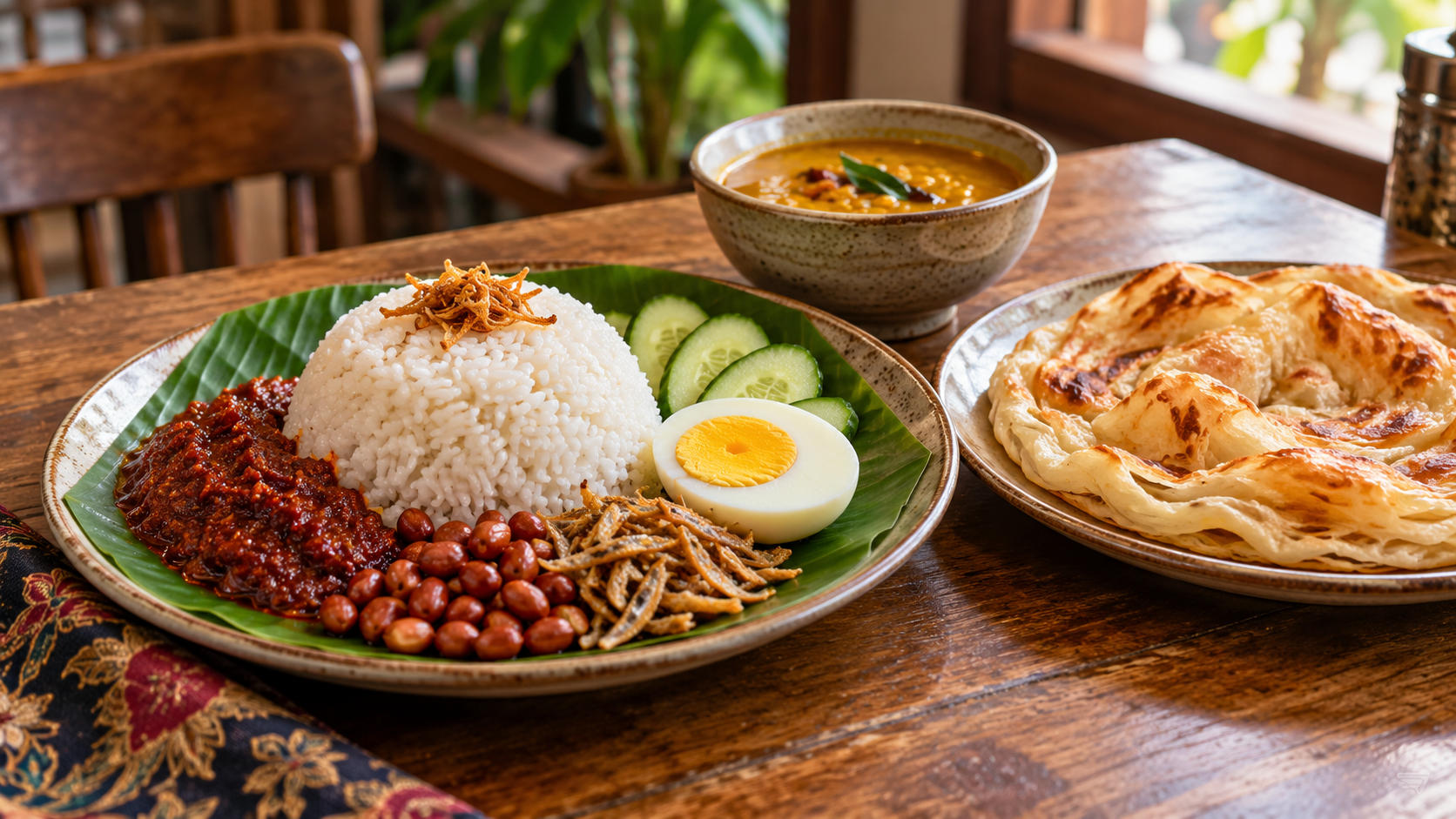
Across Asia, fermented ingredients are central to culinary identity. Indonesian tempeh, Japanese miso, Korean kimchi, Malaysian belacan and Thai fermented fish products demonstrate the diversity of traditional fermentation. Their flavours can inspire contemporary restaurant menus, but each product has its own ingredients, microorganisms, processing methods and safety considerations.
For restaurants seeking to develop signature flavours, the opportunity is not simply to ferment more ingredients. It is to turn culinary experimentation into a controlled, repeatable and commercially practical process.
Why Fermentation Deserves a Place in Restaurant Innovation
Fermentation can change the aroma, acidity, texture and flavour of ingredients through microbial activity. Depending on the process, microorganisms transform food components into compounds that contribute to the finished product’s sensory characteristics.
For chefs, this creates several opportunities:
- Distinctive flavours: Develop sauces, condiments and accompaniments that customers associate with a particular restaurant.
- Culinary identity: Interpret regional ingredients and established Asian fermentation traditions in a contemporary menu.
- Menu differentiation: Create products that are less easily replicated through ordinary ingredient purchasing.
- Product development: Explore whether a successful restaurant condiment could eventually become a packaged food product.
- Ingredient utilisation: Investigate appropriate uses for suitable ingredients, subject to validated safety and quality controls.
However, fermentation should not automatically be described as healthier, safer, more sustainable or longer-lasting. Those outcomes depend on the particular product, process and supporting evidence.
A distinctive flavour is a culinary achievement. A reliably manufactured, safe and commercially successful product requires additional work.
Understand the Different Types of Fermentation
Restaurant teams should begin by identifying the type of fermentation they intend to use.
| Fermentation approach | Asian culinary examples | Operational consideration |
|---|---|---|
| Lactic acid fermentation | Kimchi and selected fermented vegetables | Control of ingredients, microbial activity, acidity and process conditions |
| Fungal fermentation | Tempeh and koji-based preparations | Appropriate cultures, contamination prevention and validated processing conditions |
| Mixed-culture fermentation | Traditional fermented condiments and selected sauces | Complex microbial activity and potentially variable results |
| Yeast fermentation | Bread and other fermented dough products | Dough development, fermentation consistency and handling conditions |
These are broad categories rather than interchangeable production methods. Different foods may involve multiple organisms and processing stages.
The Singapore Food Agency explains that fermentation can involve bacteria, yeast and other microorganisms transforming food components. It also distinguishes traditional fermented foods from newer products developed using biomass or precision fermentation.
For a restaurant, the practical lesson is straightforward: a technique that works for one fermented food should not be assumed safe or suitable for another.
Build a Restaurant Fermentation Programme Around Five Controls
A useful approach is to organise fermentation development around five operational controls: product definition, hazard assessment, process validation, batch documentation and release approval.
1. Define the Product Before Developing the Process
Start with a clear product brief.
Is the restaurant developing a condiment, garnish, sauce, dough or standalone dish? Will the product be cooked before serving, used as a ready-to-eat ingredient or sold in sealed packaging?
Document the intended ingredients, supplier requirements, serving method, customer group, storage conditions and desired sensory characteristics.
This matters because a fermented chilli condiment served immediately in a restaurant may have different hazards and regulatory requirements from a bottled condiment distributed through retail channels.
Product definition also helps chefs avoid developing an interesting fermentation that has no practical role on the menu.
2. Conduct a Product-Specific Food Safety Assessment
Food safety must be evaluated before commercial production, not after a successful tasting.
The assessment should consider relevant biological, chemical, physical and allergen hazards, including the possibility of harmful microorganisms or toxins developing under unsuitable conditions.
Singapore’s food safety authority has specifically warned about bongkrekic acid associated with certain fermented corn and coconut products. The toxin can be dangerous, and ordinary cooking does not reliably eliminate it.
That warning illustrates why restaurants should not improvise fermentation processes based on appearance, smell, taste or an assumption that traditional preparation guarantees safety.
Qualified food safety personnel should assess the proposed product and determine whether an established, scientifically supported process can be used. Where necessary, specialist testing and process validation should be arranged before any product is offered to customers.
Restaurants must also follow applicable food safety laws, licensing conditions and relevant standards in their operating jurisdiction.
3. Validate the Process Rather Than Relying on a Recipe
A recipe describes what the chef intends to make. A validated process establishes the conditions necessary to produce the food safely and consistently.
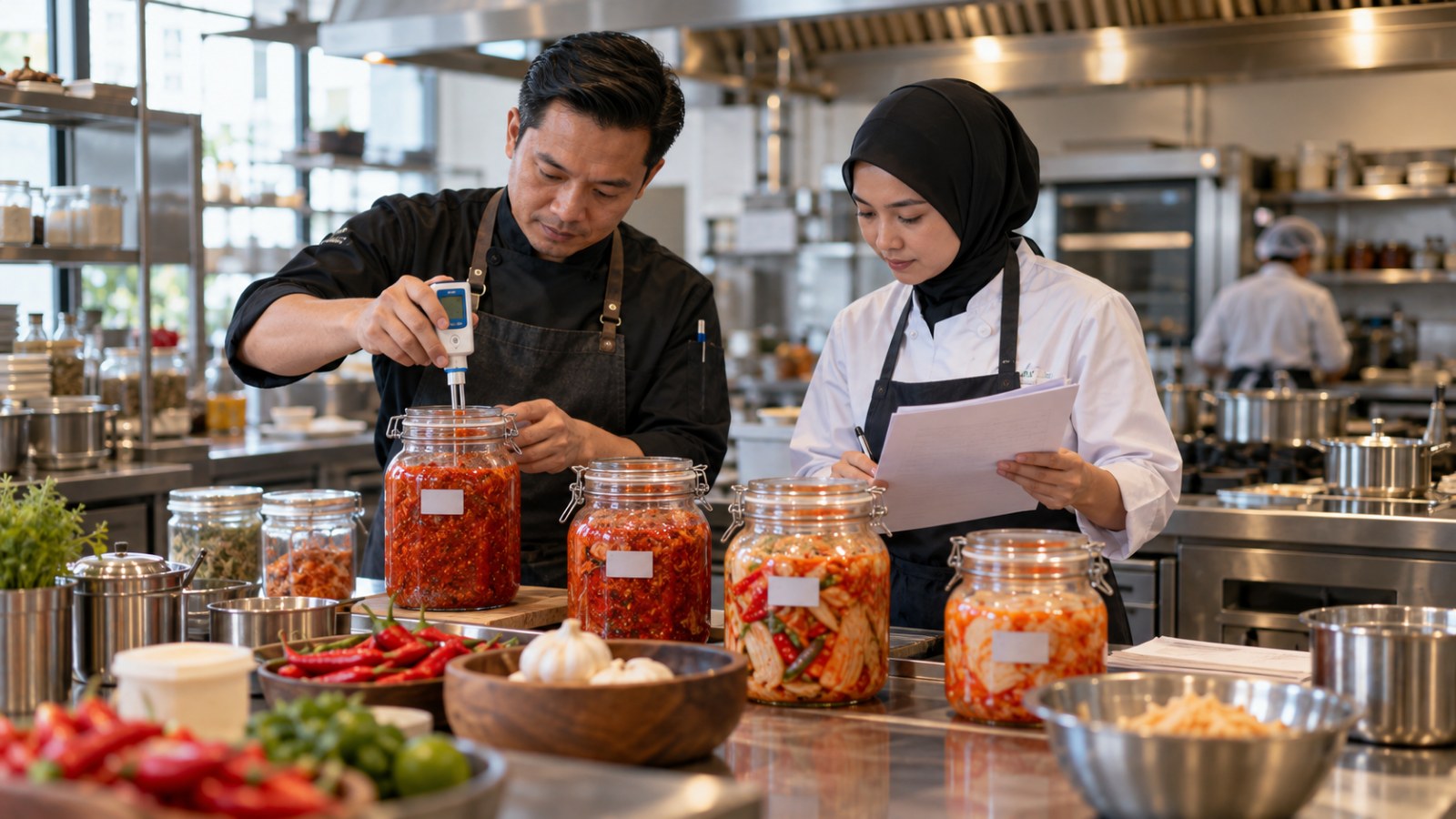
Depending on the product, important variables may include ingredient composition, approved starter cultures, acidity, salt concentration, temperature, fermentation duration, equipment sanitation and storage conditions.
There is no universal safe fermentation temperature, duration or acidity target suitable for every food.
For commercial use, critical parameters and acceptable limits should come from a validated, product-specific process rather than a generic internet recipe.
Once established, those parameters should be written into operating procedures that staff can follow and supervisors can verify.
4. Record Every Development and Production Batch
Batch records allow a restaurant to identify variation, investigate failures and demonstrate whether the approved process was followed.
A practical fermentation record can include:
- Unique batch identification and production date
- Ingredient suppliers and relevant lot numbers
- Approved formulation and starter culture details
- Equipment and preparation records
- Required process measurements and monitoring results
- Deviations and corrective actions
- Relevant laboratory or quality testing results
- Storage, release and disposal decisions
- Name or identification of the responsible reviewer
Recording measurements is not enough. The restaurant must also define what happens when a result falls outside its validated specification.
An unsafe or potentially unsafe batch should not be corrected through casual adjustments or released based on a successful taste test.
5. Approve the Product Before It Reaches Customers
Restaurant fermentation programmes need a clear separation between experimentation and approved production.
A chef may be authorised to develop recipes, but commercial release should require confirmation that the applicable safety, quality, storage and labelling requirements have been met.
For some businesses, that decision may involve an internal quality assurance team. Smaller restaurants may need support from qualified external food technologists or food safety specialists.
Responsibility must be explicit. An experimental batch should never reach service simply because it was left in the same refrigerator as approved ingredients.
The Fermentation Development Scorecard
Before introducing a new fermented product, restaurants can evaluate it using the following decision framework.
| Assessment area | Question to answer | Evidence required |
|---|---|---|
| Culinary value | Does the product improve a dish or create a distinctive flavour? | Structured sensory evaluation |
| Food safety | Have relevant hazards been assessed and controlled? | Hazard assessment and validated controls |
| Repeatability | Can trained staff reproduce the intended result? | Documented production trials |
| Operational fit | Can the kitchen manage the process during normal service? | Labour, equipment and workflow assessment |
| Commercial viability | Does the product justify its ingredients, labour, testing and storage costs? | Product costing and demand testing |
| Brand relevance | Will customers associate the product with the restaurant’s identity? | Guest feedback and menu evaluation |
This scorecard is an editorial decision tool, not a food safety certification or scientific validation method. A favourable commercial score cannot compensate for unresolved safety hazards.
A product should advance to commercial service only when its applicable safety and regulatory requirements have been satisfied.
Train Chefs to Recognise Process Deviations
Fermentation requires a different training emphasis from many conventional kitchen preparations.
In a normal cooking task, a chef may observe changes in colour, texture or aroma and make an immediate adjustment. During fermentation, microbial activity may produce changes that are not reliably visible or detectable by smell.
Training should therefore cover:
- The purpose of each critical process control
- Correct use and calibration of relevant monitoring equipment
- Ingredient and starter culture identification
- Sanitation and cross-contamination prevention
- Accurate batch recording
- Recognition and reporting of deviations
- Product isolation and disposal procedures
- Rules for approving batches for service
Staff should understand that unusual appearance, odour or texture can indicate a problem, but the absence of such signs does not establish safety.
The strongest kitchen culture makes it acceptable to reject a batch rather than encouraging employees to rescue every experiment.
Measure Whether Fermentation Actually Improves the Menu
After food safety and process requirements have been established, restaurants can assess whether the product creates meaningful culinary and commercial value.
Begin with controlled sensory evaluation. Ask tasters to assess aroma, flavour balance, texture, compatibility with the intended dish and overall preference using consistent criteria.
Where practical, compare the fermented product with the restaurant’s existing alternative through blind tasting.
Next, examine operational performance. Consider the cost of ingredients, approved cultures, labour, equipment, testing, storage and rejected batches.
Finally, assess customer response after an appropriately approved launch. A fermented condiment may receive enthusiastic feedback from chefs yet have limited appeal to everyday diners.
Restaurants should avoid assuming that a more technically complex preparation automatically deserves a higher menu price.
When Should a Restaurant Scale Its Fermentation Programme?
Successful small-batch production does not automatically establish readiness for larger batches or multiple outlets.
Changes in equipment, batch size, ingredient supply, packaging or storage can alter process behaviour and food safety risks. Scaling therefore requires reassessment and, where necessary, further validation.
Restaurant groups should consider three questions before expanding:
- Is the product reproducible? Can the approved process consistently achieve the required safety and quality specifications?
- Is the production system suitable? Are facilities, equipment, staff and monitoring arrangements adequate for the intended scale?
- Is distribution controlled? Have transport, shelf life, packaging and storage requirements been established for the proposed operating model?
A restaurant serving a fermented sauce at one location may find that production becomes more complex when the same sauce must be supplied to several branches.
Centralising production can simplify certain controls, but it introduces additional responsibilities for transport, storage, batch identification and distribution.
Expansion should follow demonstrated process capability, not merely growing customer demand.
Documenting Exceptional Culinary Achievements
Fermentation innovation may also contribute to a restaurant’s broader culinary reputation.
A chef who develops a distinctive fermented product can document the development process, technical improvements, customer response and commercial performance. These records may support the restaurant’s brand story and demonstrate the work behind its signature flavours.
However, a popular product or an innovative recipe is not automatically a record-breaking achievement.
Where a food business achieves an exceptional, clearly defined and independently verifiable milestone, formal recognition may be worth exploring.
Asia Record provides an official application route through which individuals and organisations can propose measurable achievements for assessment. A restaurant considering an Asia Record application should first establish precisely what was achieved, the relevant measurement period, the comparison category and the supporting evidence.
For example, reliable production or sales documentation may support the assessment of an exceptional food business milestone. Whether any particular claim qualifies for Asia record certification depends on the applicable criteria and verification outcome.
Being an Asia Record holder would document an approved achievement; it would not establish that a fermented food is safe, legally approved or superior in taste.
Food safety certification, regulatory compliance and culinary achievement recognition serve different purposes and should remain clearly distinguished.
Common Mistakes Restaurants Should Avoid
Several errors can undermine an otherwise promising fermentation project.
- Copying a traditional recipe without evaluating commercial risks. Historical use does not eliminate the need for product-specific safety assessment.
- Using taste as the only quality control. Harmful contamination may not produce an obvious sensory warning.
- Changing ingredients without reassessing the process. Substitutions can affect microbial behaviour and finished-product characteristics.
- Scaling before validation. A process that works in a small vessel may behave differently at greater production volume.
- Ignoring shelf-life requirements. Storage duration and conditions require suitable evidence.
- Allowing undocumented experiments into service. Development batches must remain clearly separated from approved products.
- Confusing novelty with customer value. A technically interesting fermentation must still improve the dining experience.
Build Signature Flavour on Repeatable Craft
Asia’s fermentation traditions provide a substantial foundation for culinary creativity. Restaurants can draw inspiration from regional ingredients, established techniques and contemporary food science to develop products that express a distinctive identity.
But the commercial value of fermentation depends on disciplined execution.
A successful programme combines culinary judgement with qualified food safety assessment, validated processes, reliable documentation, staff competence and meaningful customer evaluation.
The objective is not to remove experimentation from the kitchen. It is to create conditions in which experimentation can lead to safe, consistent and commercially worthwhile food.
For Asian restaurants, that is the difference between an interesting fermented ingredient and a signature flavour that the business can confidently reproduce.