Planning a Mass Cooking Event in Asia: Food Safety, Logistics and Measurement Before You Attempt a Record
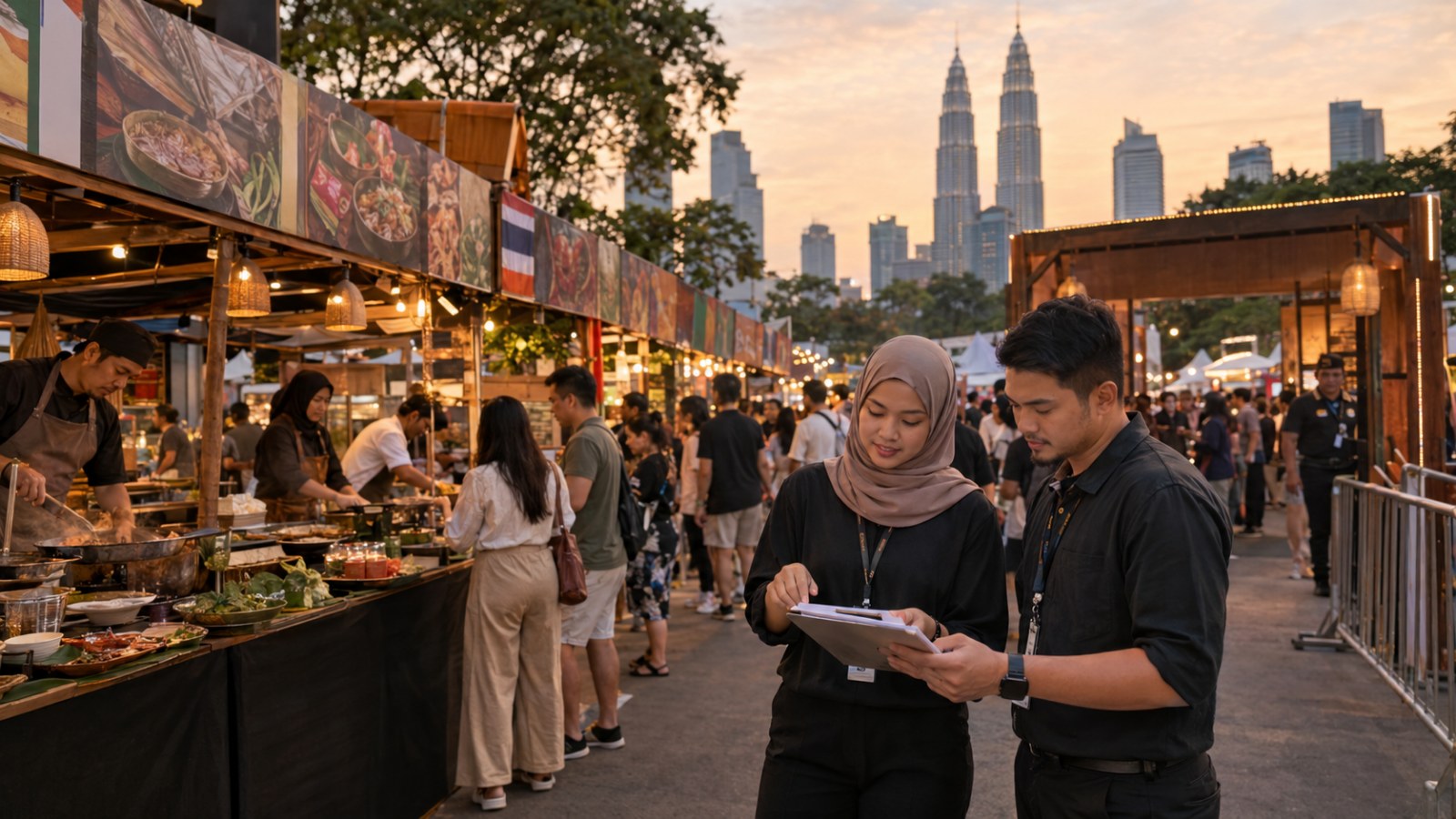
The photograph is always the same. A vast wok, a line of chefs in matching aprons, a crowd holding up phones. Whether it is a community bubur lambuk cook-up during Ramadan, a brand launch serving thousands of portions, or a festival attempt at the longest spread of a regional dish, large food events are among the most visible things the F&B industry does in Asia.
They are also among the easiest to get wrong. The cooking itself is rarely the problem. The failures happen around it: the trays that sat in the afternoon heat for too long, the handlers nobody checked, the headcount that cannot be reconstructed a week later, and the hundreds of surplus portions with no plan. An event can look like a triumph on social media and still be a food safety near-miss, or a claim nobody can prove.
This guide is for restaurant groups, caterers, hotel event teams, chefs and brand managers who want a mass cooking event to be safe, well organised and credibly measured. That last point matters most if the event is meant to set a record.
Why Large Food Events Fail Differently From Restaurant Service
A restaurant kitchen is built around repetition. Equipment, workflows, cold rooms and staff routines are fixed and tested every day. A large food event throws most of that away. Kitchens are temporary, water and power supply may be improvised, volunteers or borrowed staff join the line, and food is often cooked in one place and served in another.
Public health researchers studying mass gatherings describe temporary kitchens and large catering operations as high-risk settings, largely because food is prepared in bulk and then transported or held for long periods before it is eaten. That is exactly the profile of most record-scale cooking events. Bulk volume, long holding times and outdoor heat are a demanding combination in tropical Asia.
The practical takeaway is simple. A mass cooking event should be planned as a temporary foodservice operation with its own risks, not as a bigger version of a normal service.
The 5C Planning Framework for Mass Cooking Events
The framework below breaks event planning into five areas. Each one produces both a safer event and a documentation trail, which becomes valuable if the organiser later wants the achievement assessed.
1. Claim: Define Exactly What You Are Doing
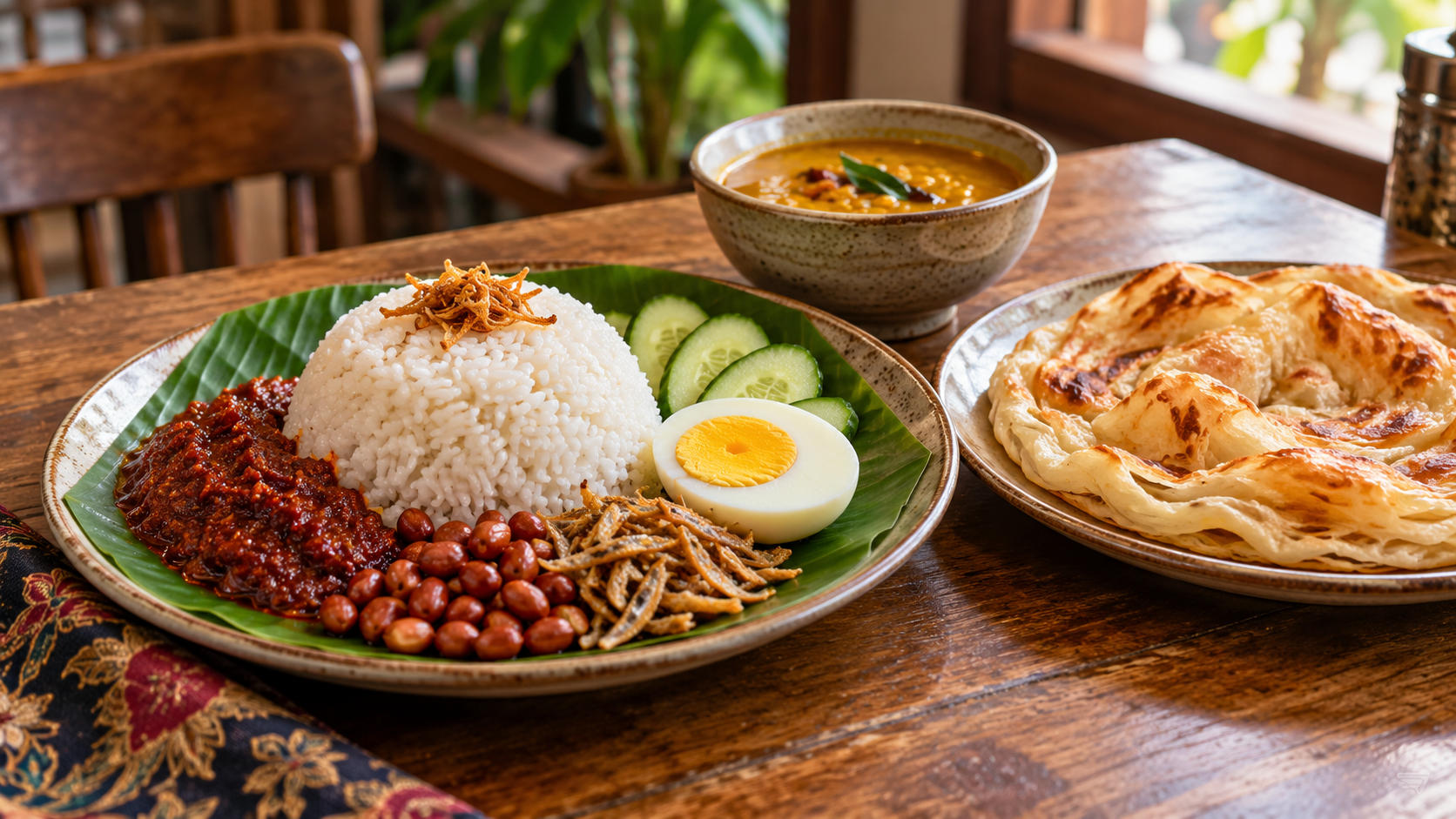
Before booking a venue, write one sentence that describes the event in measurable terms. “The biggest nasi lemak event in the state” is not a claim; it is a slogan. A usable claim names the dish, the unit of measurement, the location, the date and the rule for what counts. Is it the number of individual portions served? The total cooked weight of a single batch? The number of participants cooking at the same time?
That definition shapes everything that follows: equipment sizing, staffing, ingredient orders and how the result will be counted. Changing it halfway through the event is the most common reason a result later becomes impossible to verify.
2. Compliance: Permits, Handlers and Venue Approvals
Rules differ by country and often by local council, so organisers should confirm requirements with the relevant authorities early. Two regional examples show the level of preparation involved.
In Singapore, operators of temporary fairs need a permit from the Singapore Food Agency, and applications are expected at least two weeks before the event. The submission includes a layout plan showing which stalls handle food and what supporting infrastructure they have, such as wash basins, piped water and chillers. Food handlers working at temporary fair food stalls must have passed Food Safety Course Level 1, and the use of LPG cylinders requires separate approval from the Singapore Civil Defence Force.
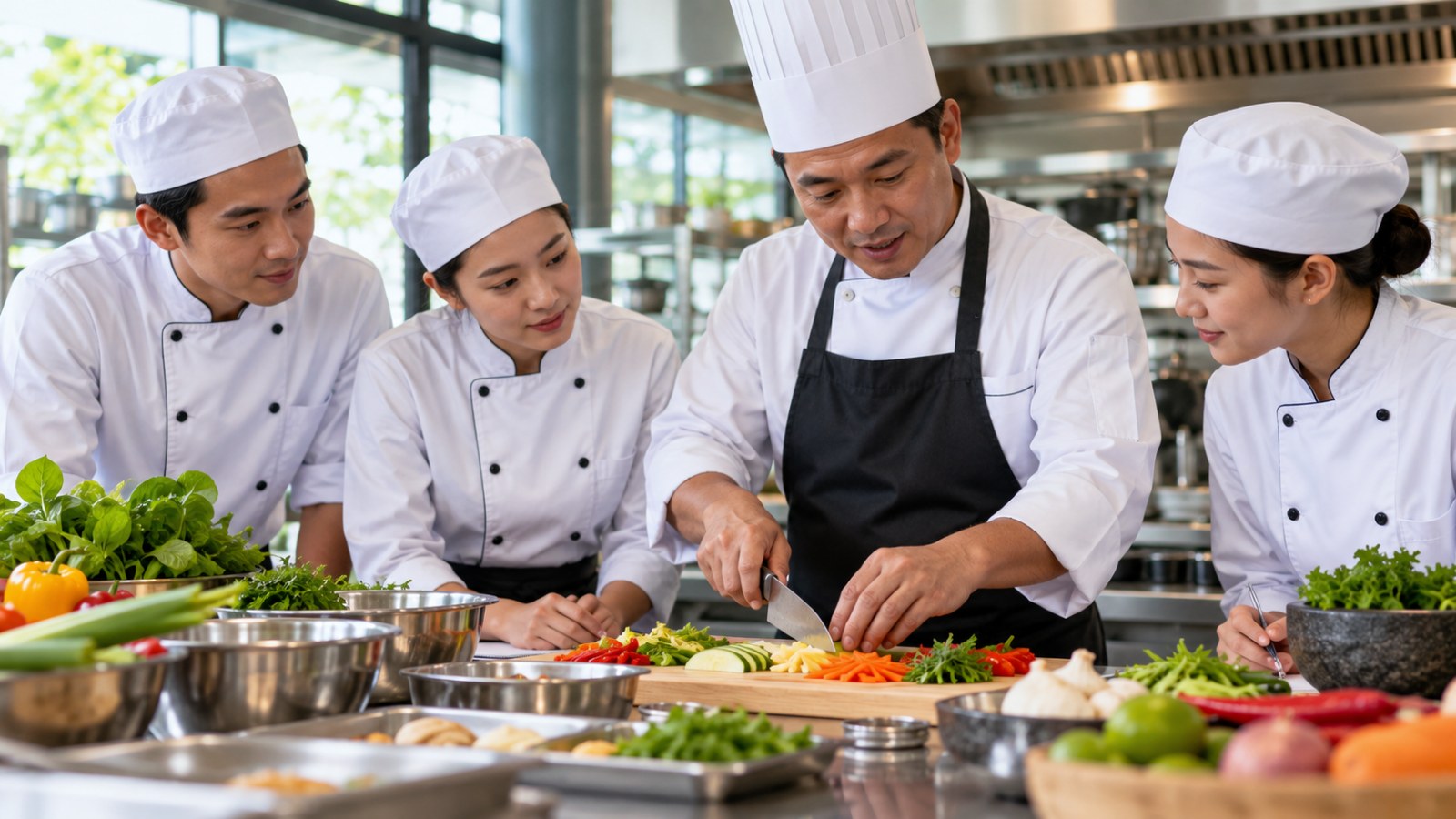
In Malaysia, the Food Hygiene Regulations 2009 require food handlers to complete training at a school recognised by the Ministry of Health and to be vaccinated against typhoid. For a large event with dozens of handlers, including volunteers and staff borrowed from partner outlets, collecting and checking these documents before the day is a real administrative task. It should have an owner.
Venue approvals, gas and fire safety, waste removal and crowd management sit alongside food rules. None of these are optional because the event is charitable, promotional or one-off.
3. Cooking and Temperature Control: Design for the Holding Time
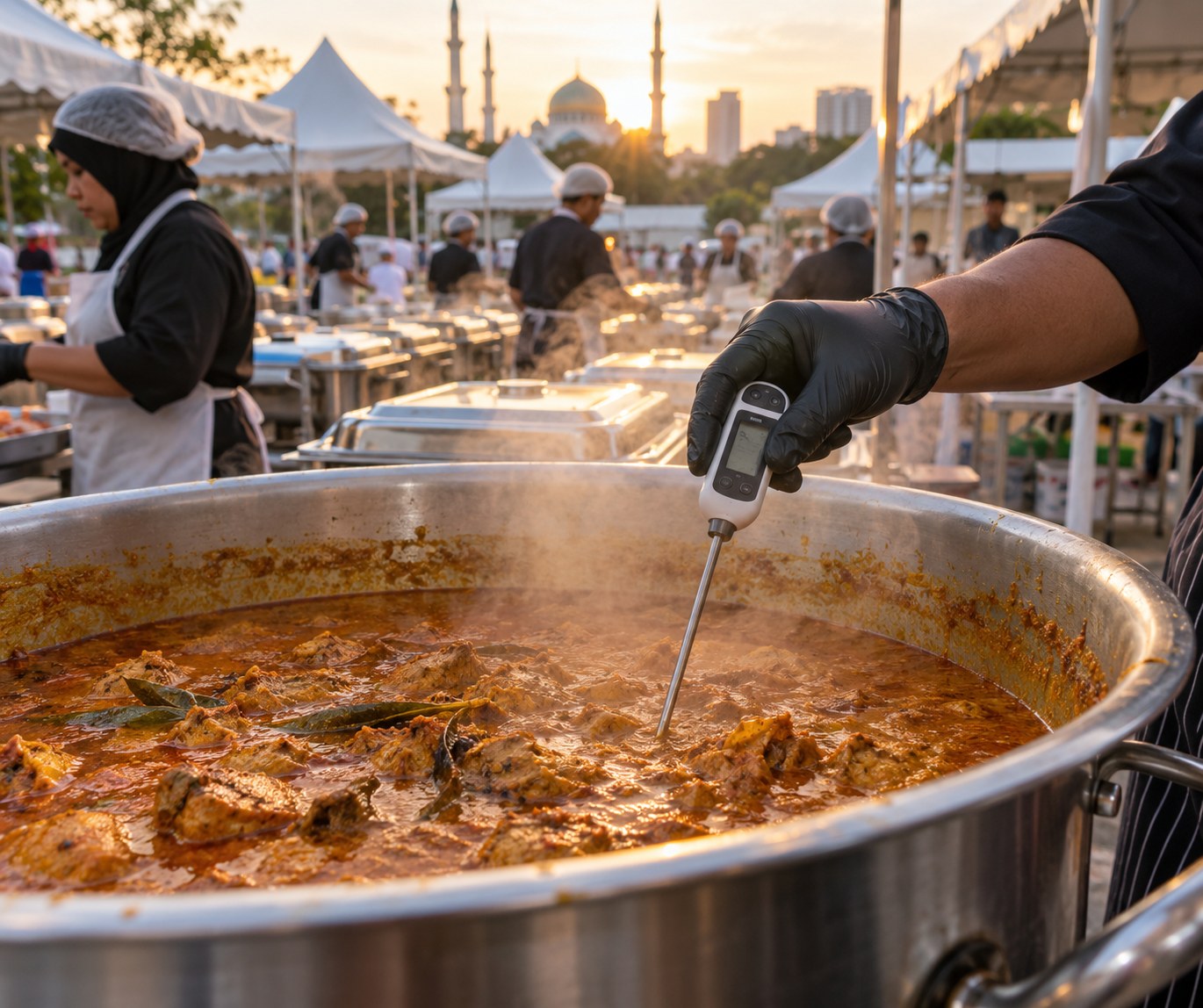
WHO food safety guidance advises that cooked food should not be left at room temperature for more than two hours. Hot food should be kept above 60°C before serving, perishable food should be chilled, preferably below 5°C, and dishes such as soups and stews should be brought to boiling so they reach at least 70°C.
Mass events break these rules most often through timing, not ignorance. A batch finished at 11am for a 1pm serving window, a delayed opening ceremony, or a queue that moves slower than expected can push food into unsafe territory. Build the cooking schedule backwards from service times, cook in staggered batches rather than one giant early batch, provide hot-holding equipment, and assign someone to probe and log temperatures at fixed intervals. Those logs protect diners, and they also become part of the event’s evidence.
4. Count: Measure It So Someone Else Can Check It
If the event’s value rests on a number, that number needs a method. Portion counts can be tracked with pre-numbered serving containers, tokens or controlled serving points. Weight-based claims need calibrated scales and a record of tare weights. Participation claims need registration and a way to confirm each person actually took part.
Independent witnesses, continuous video of counting points and signed tally sheets turn a figure into evidence. The test is whether a stranger could look at your records a month later and arrive at the same number.
5. Clear-Down: Plan for Surplus and Waste
Large events almost always produce surplus. The worst outcome is also the most common: food discarded in bulk at the end of the day, or handed out informally long after it has been safely held. Decide in advance how surplus will be handled, whether through a partner food rescue organisation working under local rules or through disposal. Record what was served, what was left and where it went. An event that measures its output but not its waste is only telling half the story.
Risk Points and the Evidence to Keep
| Stage | What Commonly Goes Wrong | Practical Control | Records Worth Keeping |
|---|---|---|---|
| Pre-event approvals | Permits applied for too late; gas use not approved | Compliance owner with a dated checklist | Permit copies, approval letters, layout plan |
| Staffing | Volunteers or borrowed staff without required training | Handler register checked before the event | Training certificates and vaccination records where required |
| Ingredients | Unverified suppliers; poor cold storage on site | Approved suppliers; refrigerated delivery and storage | Invoices, delivery notes, storage temperature logs |
| Cooking and holding | Food cooked too early and held too long | Staggered batches; hot-holding; timed probing | Batch times and temperature logs |
| Measurement | Double counting; undefined units; no witnesses | Controlled serving points; calibrated scales | Tally sheets, video, witness statements |
| Clear-down | Surplus given out unsafely or dumped | Pre-agreed surplus and waste plan | Surplus and waste log, handover records |
Five Mistakes That Undermine Large Food Events
- Treating the photo moment as the deadline. Cooking is timed for the cameras rather than for the diners, so food waits too long before anyone eats it.
- Scaling a restaurant recipe without testing it. A dish that works in 20-portion batches can behave very differently in a giant vessel, with uneven heating and longer cooling times.
- Announcing the number before defining the method. Publicly promising “10,000 portions” before deciding what counts as a portion invites disputes later.
- Leaving compliance to partners. When several outlets or sponsors contribute staff and food, everyone assumes someone else checked the paperwork.
- Keeping no records after the event. Photographs alone rarely prove quantity, conditions or safety.
Where Record Recognition Fits
Organisers asking how to get an Asia Record for a food event often start with the application form. The better starting point is the planning stage. Record verification rests on the same foundations as a well-run event: a clearly defined claim, agreed conditions and evidence that can be checked.
That is how Asia Record’s verification process is structured. A proposal must state exactly what is being recognised and how success is measured. Dates, locations, participants, equipment and units should be clarified before the attempt. Evidence can include measurement records, photographs, video and witness statements, and it is reviewed for consistency, measurability and ethical execution. An Asia Record application also asks for the proposed title, a summary of the achievement, the measurement method, and the date and location.
This is also where record recognition differs from most business awards in Asia. An award typically judges quality or reputation against other entrants. A record documents a defined, measurable result. For an F&B brand, restaurant group or culinary association, becoming an Asia Record holder for a large-scale food event adds a verifiable reference point to company recognition built through normal marketing.
Two boundaries are worth stating clearly. First, record certification is not a food safety approval, a licence, halal certification or any other regulatory clearance. Those must be obtained from the relevant authorities regardless of any record attempt. Second, a record is only as credible as the event behind it. An attempt that cut corners on safety is not an achievement worth documenting.
Organisers who have a clearly defined, measurable food event in mind can apply for Asia Record assessment. The most sensible time to make contact is before the event, so the evidence requirements can be confirmed while the plan can still change.
A Pre-Event Checklist
- A one-sentence claim with dish, unit, location, date and counting rule
- Food, venue, gas and fire approvals confirmed with the relevant authorities
- A named compliance owner and a verified register of every food handler
- A test batch cooked at or near full scale
- A cooking schedule planned backwards from service times, with hot-holding and chilling capacity
- Temperature probing and logging assigned to specific people
- A counting or weighing method with calibrated equipment and independent witnesses
- Continuous video coverage of counting or measurement points
- A surplus food and waste plan agreed before the day
- A post-event evidence file compiled within days, not months
The Legacy Is in the Records
Large food events are part of how Asia celebrates: through religious festivals, harvest seasons, community gatherings and brand milestones. Organisers who treat these events seriously as foodservice operations protect the people they feed. They also end up with something most events lack: a clear, documented account of what actually happened.
Whether or not an event is ever submitted as one of the region’s record-breaking food achievements, the discipline is the same. Define it, make it safe, measure it honestly and keep the proof.