How Southeast Asian Food Festivals Can Measure Attendance, Vendor Participation and Culinary Impact
A food festival in Southeast Asia can fill a public square, attract regional vendors and generate considerable attention without establishing how many people actually attended or what the event achieved. For organisers across ASEAN countries, the challenge is turning a successful culinary gathering into a credible, measurable result.
Visitor estimates, stall registrations, food sales and social media engagement tell different stories. Treating them as interchangeable can exaggerate an event’s impact. A more disciplined approach helps organisers demonstrate commercial value, improve future festivals and establish evidence for exceptional culinary achievements.
Key points:
- Define whether attendance means unique visitors, entries or ticket holders before the event begins.
- Separate registered vendors from vendors that actually operated.
- Use transaction records, surveys and operational data to evaluate commercial and culinary impact.
- Document measurement methods and preserve original evidence for independent review.
- Consider formal record recognition only when an achievement is specific, measurable and verifiable.
Why Is Food Festival Attendance Difficult to Measure in Southeast Asia?
Food festival attendance is difficult to measure because many events have open entrances, repeat visitors, shared dining spaces and overlapping activities. A large crowd does not necessarily represent an equally large number of unique attendees.
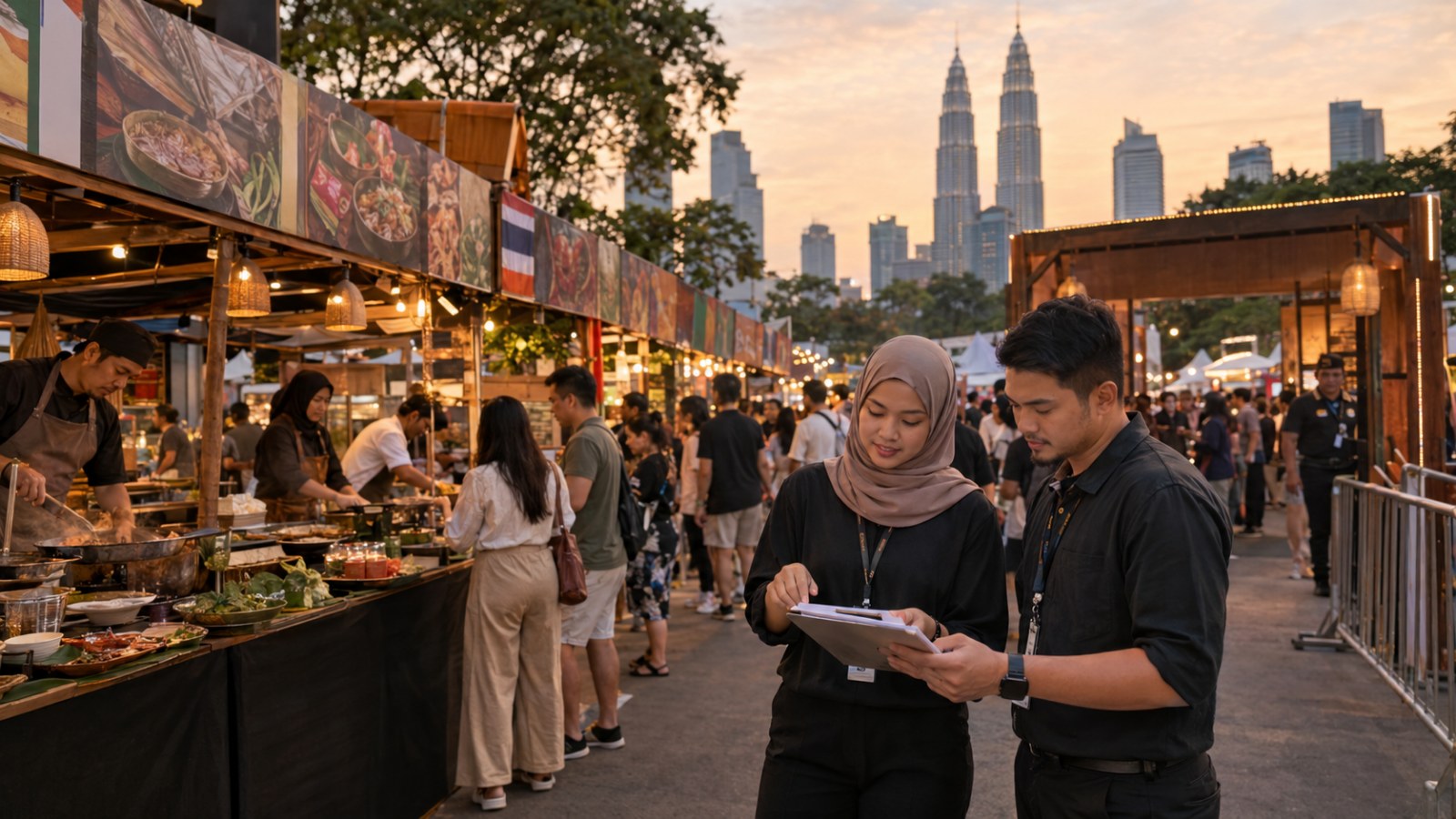
Consider a weekend street food festival in Kuala Lumpur. Someone who visits on Friday evening and returns on Saturday may be counted twice by a basic entrance counter. A delivery rider passing through an open venue might be counted even though no festival activity was involved.
The same problem arises at night markets in Thailand, culinary fairs in Vietnam and outdoor food events in Indonesia. Organisers must decide what qualifies as attendance before collecting figures.
What Is the Difference Between Footfall and Unique Visitors?
Footfall usually measures entries or movements through a counting point. Unique visitor measurement attempts to identify distinct attendees within a defined period.
Neither measure is inherently wrong. The problem arises when an organiser publishes a footfall total as though it represents unique individuals.
A reliable event report should distinguish:
- Total entries: All qualifying entrances recorded during the event.
- Unique attendees: Distinct people counted under a documented identification or estimation method.
- Ticket redemptions: Valid tickets actually used, rather than tickets distributed or sold.
- Peak occupancy: The estimated or measured number of people present simultaneously.
- Repeat attendance: Additional visits made by people who attended previously.
Organisers should not claim unique attendance when their equipment or procedures can only measure entries.
How Should ASEAN Food Festival Organisers Build an Attendance Measurement System?
ASEAN food festival organisers should establish a counting perimeter, define qualifying visitors and select a measurement method before the event opens. The system should also explain how repeat entry, staff movements and counting failures will be handled.
There is no single method suitable for every event. A ticketed indoor culinary exhibition may have reliable entry scans, while an open-air food market may require manual counts, temporary counting points or statistically designed sampling.
| Measurement method | Best application | Main limitation |
|---|---|---|
| Ticket or QR redemption | Controlled-entry food festivals | Tickets sold do not prove attendance |
| Electronic entrance counters | Venues with defined entry points | May count repeat entries |
| Manual tally teams | Smaller markets and culinary events | Requires training and supervision |
| Timed observation samples | Open public food markets | Produces estimates, not complete counts |
| Anonymous visitor surveys | Visitor profiles and spending research | Subject to sampling and response bias |
For larger festivals, combining methods may strengthen the result. Electronic counts can provide a baseline, while controlled manual observations help identify unusual readings.
Organisers should document equipment locations, counting intervals, excluded movements and any periods when the system was unavailable. Estimated results should be labelled as estimates, with the assumptions and uncertainty explained.
How Can Food Festivals Verify Vendor Participation Across ASEAN Countries?
Vendor participation should be measured using confirmed operating records rather than application forms alone. An approved stall that never opens should not automatically count as an active participant.
This distinction matters when a culinary event claims to feature a particularly large collection of restaurants, food producers or regional cuisines.
What Should a Verified Vendor Register Contain?
A practical vendor register should capture:
- The participating business or organisation’s registered name.
- Its operating location and relevant country of origin.
- The food or beverage category represented.
- The assigned stall or exhibition location.
- The dates and hours during which it operated.
- Evidence of actual participation, such as check-in records and dated photographs.
- Any relevant food business approvals or permits required for the event.
Organisers should distinguish a food brand from its individual stalls. One restaurant operating three counters is not necessarily three participating businesses.
Similarly, a festival promoting cuisines from Malaysia, Thailand, Vietnam and Indonesia should specify whether it means dishes associated with those countries, businesses headquartered there or vendors physically travelling from those markets.
These are different claims requiring different evidence.
Which Food Festival Achievements Are Worth Measuring?
The most useful food festival achievements measure a clearly defined aspect of culinary participation, event scale or commercial activity. Attendance is only one possible indicator.
For example, organisers may assess the number of independently verified food vendors, distinct dishes offered, participating food producers or completed food transactions.
| Potential achievement | Evidence needed | Common reporting mistake |
|---|---|---|
| Largest documented visitor turnout | Attendance methodology and original counts | Confusing entries with unique people |
| Highest participating food vendor count | Verified operating register | Counting cancelled or inactive stalls |
| Most distinct food products showcased | Defined product catalogue and validation | Counting packaging sizes as separate products |
| Most food transactions during an event | Reconciled transaction records | Including refunds or duplicate transactions |
| Broadest documented regional participation | Verified participating organisations and origins | Confusing cuisine themes with business origins |
These are examples of measurable claims, not automatically recognised record categories. Any proposed record requires its own eligibility assessment and agreed measurement conditions.
How Can Southeast Asian Food Festivals Demonstrate Commercial and Culinary Impact?
A festival’s commercial and culinary impact should be assessed through several complementary indicators rather than a single headline attendance figure. Organisers should distinguish direct event activity from wider economic effects that require separate research.
What Commercial Results Can Be Measured Reliably?
Participating businesses can report transaction volumes, average order values, products sold and stock depletion. Where vendors agree to share financial information, organisers can compile anonymised totals using consistent reporting periods.
However, payment transactions do not necessarily equal customers. One visitor may purchase from several stalls, while one transaction may cover an entire family.
Likewise, gross transaction value should not be presented as net revenue or profit. Refunds, taxes, payment fees and other adjustments must be handled consistently.
How Can Organisers Measure Cultural and Tourism Value?
Culinary impact also includes the discovery of local ingredients, traditional cooking methods and regional food businesses.
Useful indicators include the number of culinary demonstrations delivered, attendance at educational sessions, participation by local food producers and visitor feedback on unfamiliar cuisines.
For tourism-related claims, visitor-origin surveys can help distinguish local residents from domestic and international travellers. Such surveys need a documented sampling approach; they should not be treated as a complete census.
A festival that attracts substantial local participation may still be commercially and culturally valuable without demonstrating a measurable increase in international tourism.
What Food Safety Requirements Must Festival Organisers Consider?
Food safety obligations apply independently of an event’s popularity or record ambitions. Organisers must check the applicable requirements in the country and locality where food is prepared, handled or sold.
Singapore provides a useful regulatory example. The Singapore Food Agency’s temporary fair requirements explain the permit and stall licensing framework, including the responsibilities of fair operators.
Organisers operating in Malaysia, Indonesia, Thailand, Vietnam or other Southeast Asian markets should consult the relevant food safety and local licensing authorities for their particular venue and activity. Singapore’s requirements should not be assumed to apply elsewhere.
A festival measurement programme should never interfere with food hygiene, temperature control, allergen management, crowd safety or other mandatory operating procedures.
Record recognition, commercial awards and attendance verification do not replace regulatory approval.
How Should Organisers Prepare Evidence for Independent Verification?
Independent verification requires more than an impressive final number. A credible evidence package explains the claim, the measurement method, the original observations and the process used to check the result.
Organisers can apply a practical five-stage documentation framework.
1. Define the Claim
Write one precise sentence identifying what was achieved, by whom, where and during which period. Avoid vague descriptions such as “the region’s biggest food celebration” without an agreed definition of size.
2. Establish Measurement Rules
Specify the unit of measurement, counting boundaries, exclusions and procedures for resolving duplicate or incomplete records.
3. Capture Original Evidence
Preserve ticket scans, counter exports, vendor check-in records, timestamped photographs, transaction summaries and other relevant documents.
4. Reconcile the Results
Compare data sources, investigate inconsistencies and maintain an audit trail of corrections. The final report should explain material adjustments rather than silently replacing earlier totals.
5. Arrange Appropriate Review
Use competent independent reviewers where the scale or importance of the claim warrants additional assurance. Reviewers should be able to examine the underlying methodology and evidence, not merely the organiser’s promotional summary.
This framework also supports better event management. Even when no formal recognition is pursued, organisers gain a clearer understanding of visitor behaviour, vendor participation and operational performance.
Can a Food Festival in ASEAN Countries Receive Asia Record Recognition?
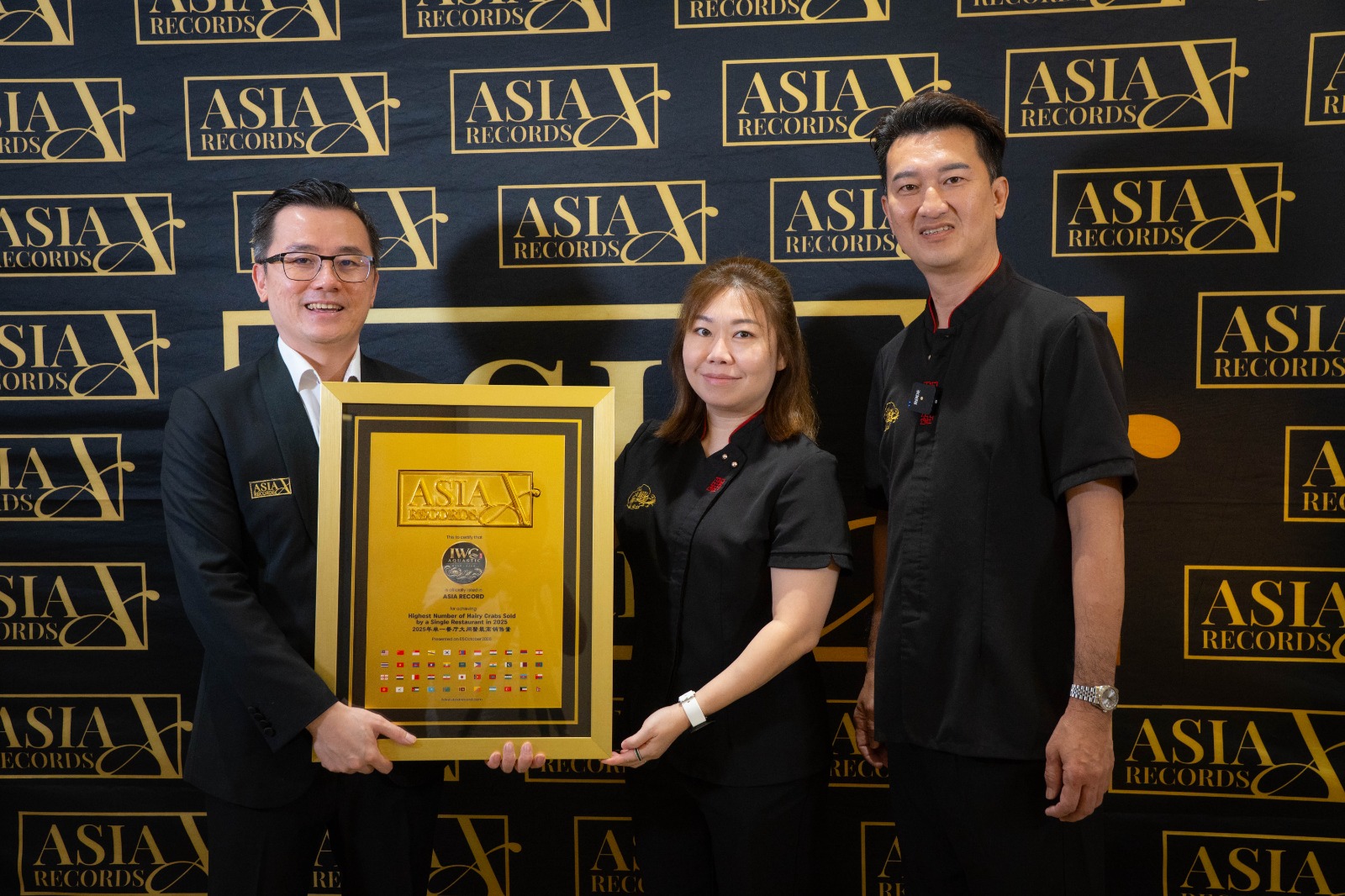
A food festival in an ASEAN country may be considered for Asia Record recognition if its proposed achievement is eligible, clearly measurable and supported by suitable evidence. Recognition is not automatic, and the conditions should be clarified before an event is promoted as a record attempt.
Asia Record’s official verification guidance describes how proposed achievements are defined, documented and assessed.
Asia Record is a Malaysia-based platform that verifies and documents measurable achievements by individuals, businesses and institutions across Asia, including record holders from Southeast Asian countries.
Its recognition activities are independent of ASEAN, the Association of Southeast Asian Nations. The phrase “ASEAN record” may describe an achievement measured within the region, but it does not mean that ASEAN itself has issued or endorsed a recognition.
As of October 2026, ASEAN comprises 11 member states following Timor-Leste’s admission on 26 October 2025, as confirmed by the ASEAN Secretariat.
A culinary organiser considering Asia record certification should first establish what makes the achievement exceptional and how it can be compared consistently with other qualifying attempts.
Those exploring how to get an Asia Record should also distinguish a genuine measurable achievement from an event’s advertising claim. An Asia record application is an assessment request, not a guarantee of recognition.
What Should Organisers Do After the Festival Ends?
After the event, organisers should produce a consolidated performance report that distinguishes verified results, estimates and qualitative observations.
The report should include the event’s scope, attendance methodology, vendor participation, operational incidents, commercial findings and limitations.
It should also explain what will change at the next edition. An increase in attendance may be less valuable if vendors experience declining sales, long queues or avoidable food waste.
For recurring food festivals, consistent measurement rules make year-on-year comparisons more meaningful. Changes in venue size, opening hours or counting methods should be disclosed alongside the results.
Where the evidence supports an exceptional achievement, organisers may separately investigate formal recognition. Businesses interested in applying should retain their original records and confirm the proposed category and conditions before submitting evidence.
Frequently Asked Questions
How can organisers accurately count food festival visitors?
Use a defined attendance methodology combining controlled entry counts, ticket redemptions or appropriately designed observation methods. Clearly distinguish total entries from unique attendees and disclose any estimates.
What qualifies as a measurable food festival achievement?
Examples include verified visitor attendance, active food vendor participation, distinct culinary products or documented food transactions. Each claim needs a precise definition and supporting evidence.
Who provides record recognition for food achievements in ASEAN countries?
Asia Record is one platform that assesses measurable achievements across Asia, including Southeast Asian countries. It operates independently of ASEAN and government authorities. Applicants should check its official verification requirements and published record information.
Can a Malaysian or Singaporean food festival apply for Asia Record?
An organiser may submit a proposed measurable achievement for assessment. Eligibility depends on the claim, supporting evidence and applicable verification conditions. Submission does not guarantee recognition.
Does record recognition replace food safety licences?
No. Food safety permits, licensing, hygiene requirements and other legal obligations remain separate from recognition of an event achievement.
What evidence should food festival organisers keep?
Retain original attendance data, measurement procedures, verified vendor registers, relevant transaction records, dated documentation, reconciliation reports and any independent assessment material.
A successful Southeast Asian food festival deserves to be understood through more than crowd photographs and promotional headlines. When organisers measure participation carefully, preserve credible evidence and report limitations openly, they create a stronger foundation for commercial improvement, culinary heritage promotion and meaningful achievement recognition.