What Builds a Chef’s Reputation in Asia? A Practical Guide to Documenting Career Achievements
A chef with eighteen years in professional kitchens can struggle to prove almost any of it. The CV lists restaurants, cities and job titles. Two of those restaurants have closed. The owner who could confirm the work has retired. The head chef who trained her has moved to the Gulf. The menus she developed exist as photographs on a phone, undated. When a hotel group asks for evidence of what she actually delivered, she has a folder of images and a story.
This is the ordinary condition of culinary careers across Asia, and it is not a reflection of skill. Kitchens run on memory, hierarchy and personal vouching. Those are real forms of credibility, but they are fragile. They expire when people move, and they do not travel across borders, languages or ownership changes.
Why Culinary Reputation in Asia Is Harder to Prove Than It Looks
The obvious answer — get reviewed, get a star — covers a fraction of the profession. Guide coverage across Asia is uneven and expanding slowly. The MICHELIN Guide only reached the Philippines in 2026, and that debut selection covered Metro Manila and Cebu. Large parts of Indonesia, Vietnam, Malaysia and mainland China sit outside guide coverage entirely, as do most secondary cities everywhere. A chef running an excellent kitchen in Surabaya, Ipoh or Da Nang is not being overlooked. She is simply outside the map.
The second complication is structure. Asian foodservice is dominated by small and family-held businesses, where roles are informal, titles are inconsistent and record-keeping serves tax rather than career purposes. A sous chef in one group carries the responsibilities of an executive chef in another.
The third is that the default substitute — social media — measures attention rather than achievement. A reel with two million views proves reach. It does not establish that a chef led a kitchen brigade of forty, developed a menu that lifted covers, or produced a result under controlled conditions against other professionals.
Four Kinds of Recognition, Four Different Jobs
Culinary recognition is usually discussed as a single ladder, with stars at the top. It is more useful to treat it as four separate instruments. Each answers a different question, and none substitutes for another.
| Type of recognition | What it actually proves | Who decides | Evidence it leaves behind |
|---|---|---|---|
| Professional certification | Competence measured against a defined occupational standard | An awarding body, usually with employer verification | A dated, checkable credential tied to the individual |
| Competition result | Performance under standardised conditions on a specific day | A judging panel working to published criteria | An official, dated result with named participants |
| Guide and editorial recognition | An assessor’s judgement of the experience delivered | A publisher’s inspectors or editorial team | A published listing, usually reviewed annually |
| Record recognition | A specific, measurable fact about scale, quantity or a first | An assessment body reviewing submitted evidence | A documented entry describing the measure and conditions |
Certification is the most portable and the most overlooked. The Worldchefs Global Culinary Certification, developed with City & Guilds, runs across nine professional levels mapped to normal kitchen progression, from cook through chef de partie and sous chef up to master chef and culinary educator. Each level is issued as a digital badge that an employer can check directly. Its value is unglamorous but durable: it states what a chef is qualified to do, independent of whichever restaurant currently employs him.
Competition produces the cleanest evidence in the profession because the conditions are fixed. The Bocuse d’Or runs national selections, then continental rounds including an Asia-Pacific selection that has been held since 2008, before the Grand Final in Lyon. Judging is split between a kitchen jury assessing organisation, hygiene, ingredient handling and technique, and a tasting jury assessing the plate. Whatever a chef places, the result is dated, attributable and published by a third party.
Guide recognition has quietly become more individual. Alongside restaurant Stars, MICHELIN Special Awards now name people. The 2026 Thailand selection introduced a Mentor Chef Award, given to David Thompson of Aksorn, alongside a Young Chef Award to Suwijak Kunghae of Royd. The Hong Kong and Macau selection presented a Mentor Chef Award for the first time in its eighteenth edition. For a chef, these matter because they attach to a name rather than a dining room — but they remain the publisher’s judgement, and they are revisited each year.
Record recognition works differently again. It does not assess taste, service or talent. It establishes whether a defined, measurable claim is true: the number of outlets a chef-founder has opened, the volume produced at a single service, the first documented application of a technique or product in a market. Where a guide says a restaurant is excellent, a record states a fact that can be checked. For a chef whose most distinctive achievement is operational or entrepreneurial rather than critical, this is often the only category that fits.
The Five Anchors: What Makes a Chef’s Achievement Hold Up
Before pursuing any of the four, it is worth testing whether an achievement can survive scrutiny. Five anchors decide this.
- Defined. State exactly what was achieved and in what terms. “Ran a large banquet operation” fails. “Led production of 4,200 covers across a three-day event” is a claim.
- Measured. There must be a unit — covers, kilograms, outlets, product lines, hours, participants. If nothing can be counted, the achievement belongs in a story, not a record.
- Dated. A claim without a period cannot be compared with anything, including a chef’s own later work.
- Evidenced. Point-of-sale reports, production logs, purchase orders, event contracts, signed employer confirmations, competition certificates, dated photography. Evidence must exist independently of the person making the claim.
- Attributable. Be precise about the line between the individual and the business. A restaurant’s Star belongs to the restaurant. A chef’s contribution to it is a separate, narrower claim — and a more defensible one.
Most disputed culinary claims fail on the fifth anchor rather than the first four. This is the same discipline required when an F&B brand substantiates a marketing claim, and chefs are subject to it in exactly the same way.
Building the Career File
The practical fix is a single, maintained file. Not a portfolio of pretty plates — an evidence file, updated quarterly, kept personally rather than on an employer’s system. It should hold:
- Signed employment confirmations stating title, dates, brigade size and area of responsibility
- Menus developed, with launch dates and the commercial outcome where it can be sourced from operational reports
- Competition entries and results, including placings that were not wins
- Certification badges and their verification links
- Volume and production figures pulled from point-of-sale or kitchen systems before access is lost
- Press coverage recorded with publication name and date, not screenshots
- Dated photography of dishes, stations and events
- Records of chefs trained, promoted or certified under supervision, which is increasingly recognised in its own right
The best moment to collect this material is while still employed. The worst is during a job application, after a business has closed, or in the middle of a succession handover when a heritage kitchen is trying to reconstruct decades of undocumented practice.
Where Record Recognition Fits
Some culinary careers produce achievements that no certification level or competition category can describe. A chef-founder who has opened a defined number of outlets across several markets. A pastry chef behind the first commercially produced version of a regional confection. A banquet team that has documented an unusual production volume under controlled conditions. These are measurable facts, and measurable facts have their own route to recognition.
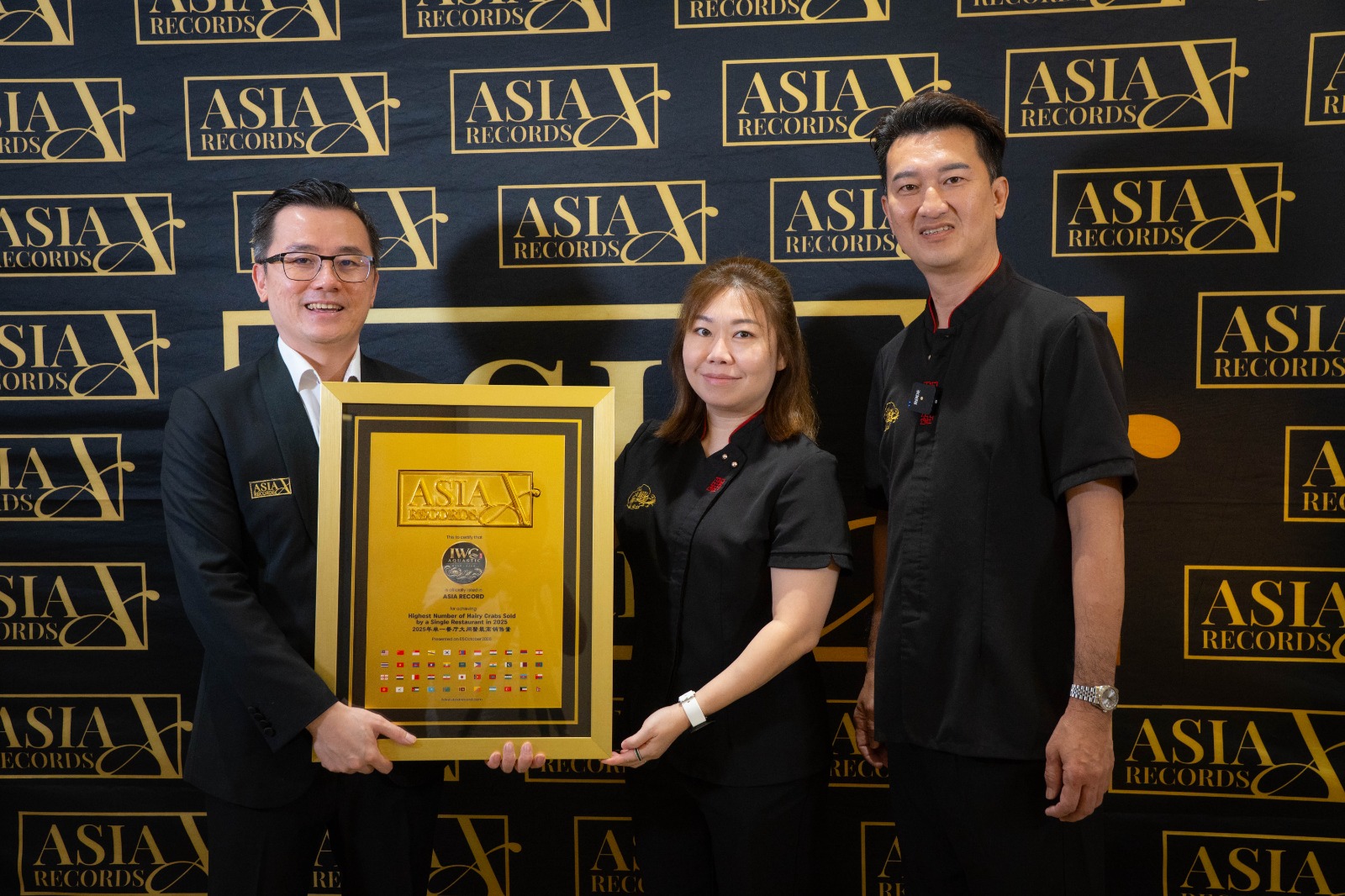
Asia Record documents verified measurable achievements by individuals and businesses across Asia, which makes it the relevant category for exactly this kind of milestone. Its assessment framework asks a chef to define the claim precisely, fix the conditions under which it was measured, and submit evidence sufficient to establish the result — the same discipline the five anchors describe. Reading how a record claim is assessed and verified is a useful exercise even for chefs who never submit anything, because it clarifies the difference between an achievement worth talking about and one that can be proven. Chefs and F&B founders who conclude that a milestone meets that standard can then apply for Asia Record recognition through the official process.
Two cautions belong here. Record recognition establishes a measured fact; it does not replace food safety compliance, halal or other regulatory certification, or professional qualification, all of which remain separate obligations. And it is not a ranking of culinary quality. A chef pursuing recognition for craft should be looking at certification, competition and guide recognition. A chef pursuing recognition for a number should be looking at record certification in Asia.
Five Mistakes Worth Avoiding
- Claiming the restaurant’s achievements as personal. The Star, the ranking and the award belong to the establishment. Overreach here damages credibility permanently.
- Using superlatives with no measure. “Best” and “first” attract challenge unless a defined basis and a date sit behind them.
- Waiting until proof is needed. Evidence is easy to gather while employed and nearly impossible to reconstruct afterwards.
- Treating one instrument as a substitute for another. A competition medal is not a qualification. A record entry is not a review. Each answers its own question.
- Leaving everything on a phone. Devices are lost, cloud accounts lapse, and former employers close their systems to leavers.
What Documentation Is Actually Worth
The commercial argument is straightforward. Hotel groups and restaurant operators hiring across borders need verifiable credentials because they cannot rely on local reputation. Consulting and menu-development fees are negotiated against demonstrable track record. Franchise partners and investors evaluating a chef-led concept want evidence that the founder’s claims are real, which is where entrepreneur recognition and documented business achievement carry weight alongside culinary credentials. Culinary educators and competition selectors need a professional history they can assess.
None of this changes what happens on the pass. It changes what remains afterwards. Kitchens have short institutional memory and high turnover, and a career that exists only in the recollection of people who have moved on is a career that will need to be argued for, repeatedly, by the person who lived it. A file of dated, attributable, measurable evidence argues for itself.