Who Owns the Signature Dish? How Asian Restaurants Protect Recipes When a Chef Leaves
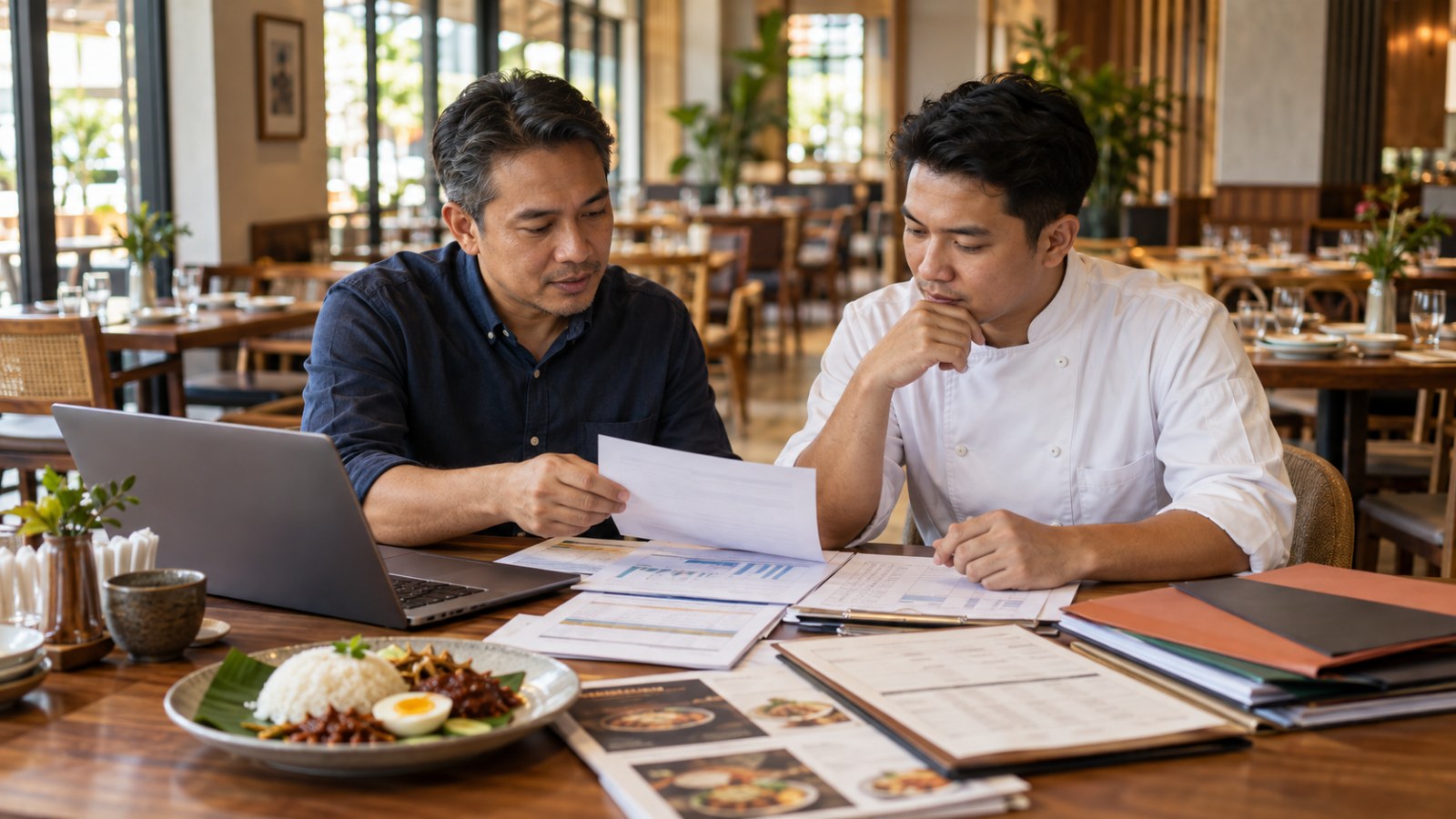
The sous chef who has made the restaurant’s rempah every morning for six years hands in his notice on a Friday. He is leaving on good terms. He has trained three cooks, but none of them has ever made the paste alone, and the version in the recipe binder was last updated before the restaurant changed chilli suppliers. By the following Thursday, regulars are asking whether the rendang has changed.
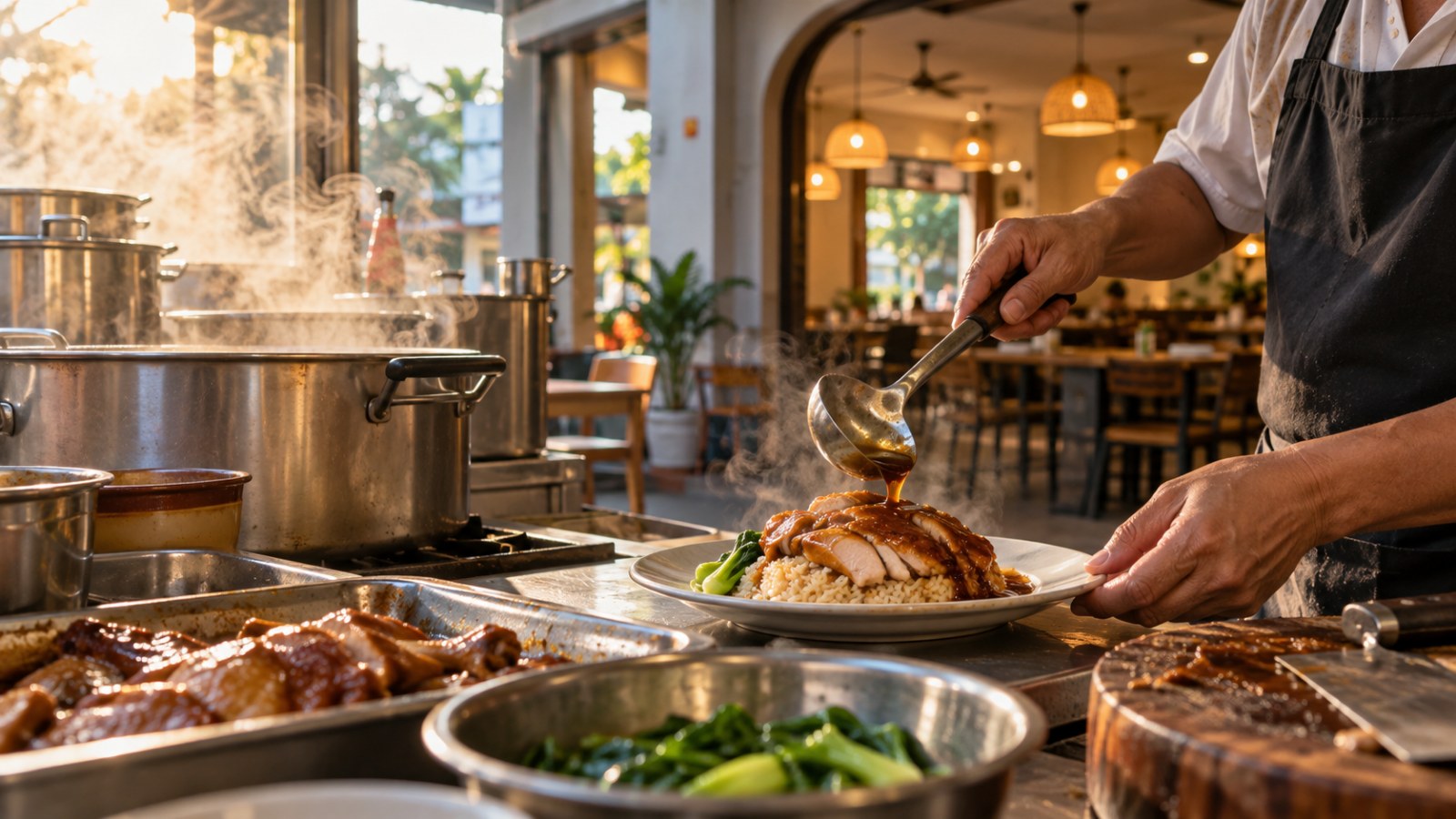
Most owners who worry about recipe security picture the second half of this story: the departing chef opening a rival shop two streets away and serving the same dish. That risk is real. In practice, though, the first problem usually does more damage. The restaurant simply cannot reproduce its own signature dish without the person who carried it in their head. Protecting a recipe means solving both problems, and the solutions overlap more than most operators expect.
Why a Recipe Is Harder to Own Than It Looks
Many restaurateurs assume that a recipe they created automatically belongs to them in some enforceable way. The legal reality is more limited. Lawyers broadly agree that copyright is a poor fit for recipes. It can protect the written wording of a cookbook or a menu description, but not the dish itself or a list of ingredients and steps. Patents are possible in theory but rarely practical for a sauce or a dumpling, because the dish must be genuinely novel and inventive. For most restaurants, that leaves three working tools: confidentiality, contracts and control over the name.
How confidentiality works depends on the market. Malaysia has no dedicated trade secrets statute. Protection comes from the common law of breach of confidence and from contracts, and owners are expected to show they took reasonable steps to keep the information private. Japan takes a statutory route through its Unfair Competition Prevention Act. There, information qualifies as a trade secret only if it is managed as a secret, is useful to the business, and is not publicly known. Of those three, secrecy management is the requirement most often disputed.
The common thread is the important part. Across very different legal systems, the law tends to protect a recipe that the business visibly treated as confidential. A restaurant that left its master sauce pinned on the kitchen wall, shared it freely with every new hire and filmed it for social media will struggle to argue later that it was a secret. Protection is earned in the kitchen long before anyone argues about it elsewhere.
There is also a limit worth accepting early. Confidentiality protects against misappropriation, not imitation. A competitor who tastes your sambal and works out a close version independently has not taken anything from you. The realistic goal is to stop your recipe walking out of the door, not to stop anyone else from cooking something similar.
What Each Form of Protection Actually Covers
| Tool | What it can cover | What it does not cover | Practical note for Asian operators |
|---|---|---|---|
| Copyright | The written wording of recipe books, menus and training manuals | The dish itself, the flavour, the ingredient list or the method | Useful for training materials, but not a recipe protection strategy |
| Confidentiality / trade secrets | Formulas, ratios, processes and supplier specifications kept genuinely secret | Independent recreation, reverse engineering, or anything already made public | Requirements differ by market; visible secrecy practices matter everywhere |
| Trademark | The dish name, restaurant name and branding where registered | The recipe or how the dish tastes | Register in each market before expanding, not after |
| Employment and supplier contracts | Confidentiality duties, return of materials, ownership of recipes developed at work | Anything outside the contract’s scope or unenforceable under local law | Enforceability of post-employment restrictions varies; take local legal advice |
| Operational controls | Who physically knows and handles the critical components | Nothing on its own, but it makes every other tool more credible | Often the cheapest and most effective layer |
The Recipe Custody Model: Four Layers of Protection
Operators who keep their signature dishes intact through staff changes tend to work across four layers. Each layer protects against both risks: losing the ability to cook the dish, and losing control of it.
1. Record It
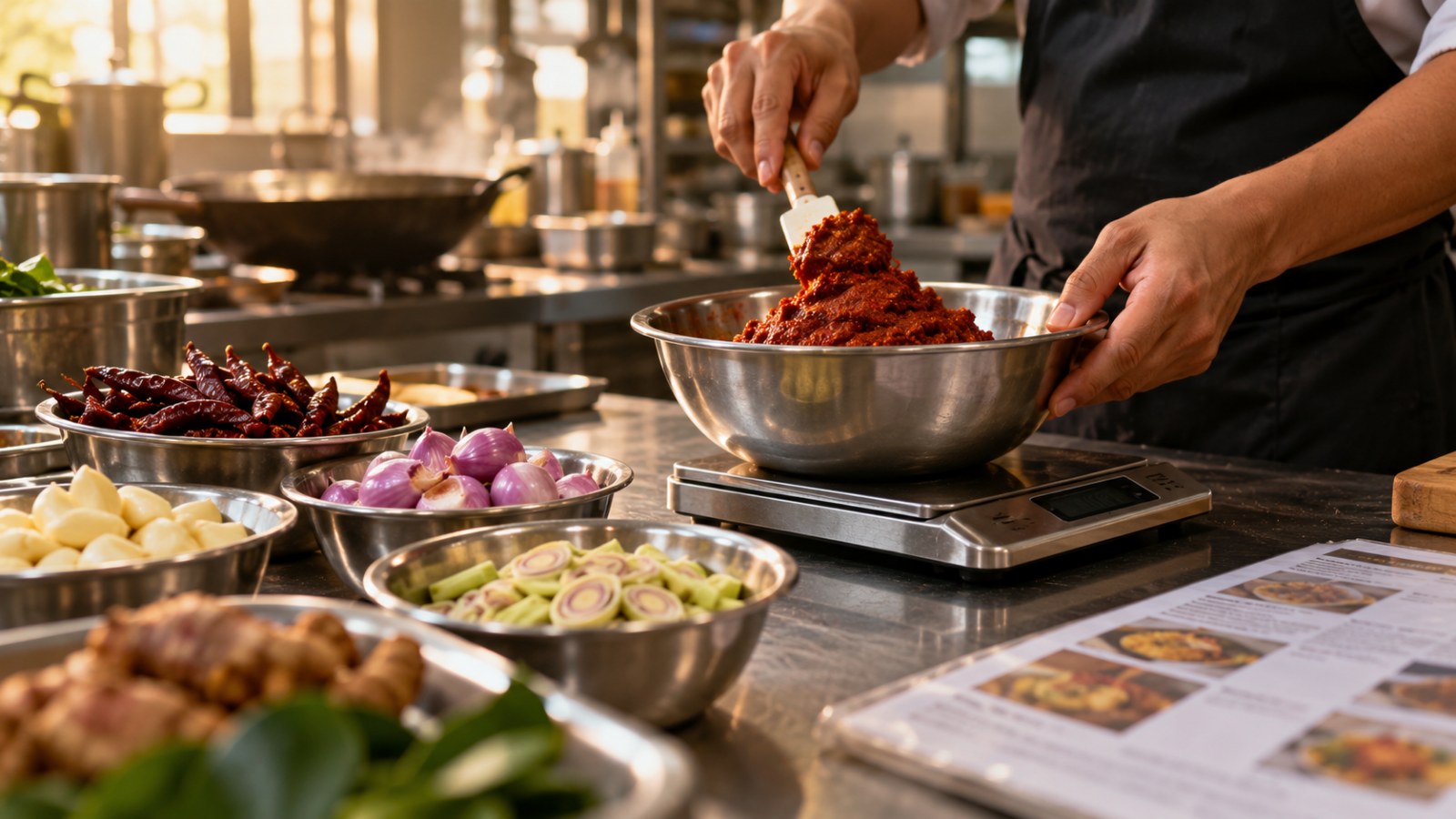
A recipe that exists only as “a handful of this, cook until it smells right” cannot be taught reliably, and it is hard to claim as a defined asset. Convert each signature dish into a written specification:
- ingredients by weight, with acceptable tolerances;
- approved suppliers and grades;
- process steps with times and temperatures;
- a sensory standard describing how it should look, smell and taste;
- a reference photograph;
- a version number and date.
Din Tai Fung shows what this precision looks like at scale. Its xiao long bao are pleated to an 18-fold standard, the dough is portioned to exact weight, and chefs train for months before they are trusted with the dumpling. The point is not secrecy for its own sake. A dish defined this precisely can be taught, checked and identified as the restaurant’s own.
2. Restrict It
Not every recipe needs protecting, and not every person needs to know every recipe. Identify the one to three components that make the dish distinctive, such as the spice blend, the stock, the marinade or the dough ratio. Then separate making those components from assembling the dish. Many Asian restaurant groups already do this for efficiency: a small team or a central kitchen produces the critical pre-mix, and outlets receive it ready to use. The same structure also limits exposure. Keep the full specification in a controlled location, mark it confidential, track who can access it, and keep the core method out of marketing videos.
3. Reinforce It
Written agreements turn good intentions into enforceable obligations.
- Employment contracts. These can set out confidentiality duties, require the return of recipe materials when someone leaves, and confirm who owns recipes developed during employment.
- Consultants, co-packers and suppliers. Anyone handling the formula should sign a confidentiality agreement before they see it, not after.
- Local legal advice. How courts treat post-employment restrictions varies considerably across Asian jurisdictions. These agreements should be drafted with lawyers in each market, not copied from a template written for another country.
4. Retain It
The strongest protection is a dish that does not depend on any single person. Departing staff are a well-documented source of information leakage. In a 2020 survey by Japan’s Information-Technology Promotion Agency, information taken out by departing employees was the most commonly cited cause among the 2,175 companies that responded. For a kitchen, retention means:
- at least two people who can produce each critical component to standard;
- regular cross-training;
- a planned handover whenever a key cook moves on.
Credit matters as well. Chefs who see their work acknowledged inside the business, and who can document their own career achievements, have less reason to treat a recipe as personal property they must take with them.
When a Key Chef Resigns: A Handover Checklist
- Test the written specification. Ask the departing chef to supervise while another cook makes the dish strictly from the document. Every gap that appears is one you can still close.
- Reconcile versions. Make sure the specification reflects current suppliers, equipment and portion sizes, not the version from three years ago.
- Run parallel batches. Taste the departing chef’s batch and the new cook’s batch side by side before the last working day.
- Review access. Update passwords, shared folders and any messaging groups where recipe files or photos have been shared.
- Recover materials. Collect notebooks, printed specifications and files, in line with the employment contract.
- Confirm obligations respectfully. A short, professional reminder of existing confidentiality terms is reasonable. An accusatory tone rarely helps.
- Check the supply side. Confirm which suppliers or co-packers know the formula and that their agreements are current.
Common Mistakes That Weaken Recipe Ownership
- Treating everything as secret. If every dish is labelled confidential, none of them looks credibly so. Concentrate protection on the components that actually make the difference.
- Keeping the recipe on one phone. A specification that lives in one chef’s photo gallery or in a chat thread belongs, in practice, to that chef.
- Publishing the method for marketing. Showing the full process on social media may build engagement, but it can undermine any later argument that the method was confidential.
- Handing a full formula to a manufacturer without an agreement. Scaling a product with a co-packer is often the most exposed moment in a food brand’s life.
- Franchising before documenting. If quality lives in someone’s hands rather than in a written standard, every new outlet dilutes the dish.
Ownership Also Makes a Dish Provable
There is a commercial benefit to this discipline beyond protecting the recipe. A dish made to one documented specification, under one product code, across every outlet produces clean data. The restaurant can say with confidence how many portions it sold in a season, how long the recipe has stayed consistent, or how the dish performs across markets. A dish that changes with every chef produces numbers that are hard to stand behind. This is one reason focused, well-documented concepts tend to accumulate milestones worth counting.
Some of those milestones go beyond normal marketing claims. When a signature dish reaches a clearly measurable result, such as units sold in a defined period or leading sales within a defined category, it may be suitable for formal record recognition in Asia. Din Tai Fung, whose xiao long bao are made to a codified fold standard, is an Asia Record holder as the leading Taiwanese xiao long bao restaurant brand in Asia by sales in 2025. Asia Record’s verification process compares a clearly defined claim against supporting evidence and the conditions under which it was measured. A restaurant that cannot show a dish has been consistently its own will find that difficult. For operators wondering how to get an Asia Record for a dish milestone, the groundwork is the same as recipe protection: a written specification, reliable sales records and clear ownership, all in place well before any Asia Record application.
The two should not be confused, however. Record certification documents a measurable achievement. It does not give legal protection to a recipe, register a trademark, or replace food safety, halal or any other regulatory certification. Each serves a different purpose, and a well-run restaurant may need all of them.
Ownership Is a Habit, Not a Document
No contract can rescue a recipe that was never written down. No specification survives a kitchen where only one person has ever made the dish. Restaurants that keep their signature dishes intact through staff turnover, expansion and succession are rarely the most secretive ones. They are the ones that treat their best recipes as defined, shared, protected business assets rather than personal knowledge. That work is unglamorous, and it pays off the first time a key chef resigns and the regulars notice nothing.